How to choose the creative carrier for art works? In the process of preparing the collection of works, students will inevitably encounter the situation of lack of inspiration, confinement of thinking, and lack of understanding of the industry market. Art learning has never been limited to books and classes, and watching exhibitions is a very good solution. Just before the National Day, Mr. Li from Natural Light Chongqing Campus participated in the Venice Biennale, one of the three major art exhibitions in the world, and summarized some creative directions worthy of students' attention in this top-level art event. This sharing is divided into two parts. Today we mainly talk about the use and reference of artists for comprehensive materials. Tomorrow there will also be an issue on exploring the use of different media in art works. Next, Mr. Li will use these exhibition experience to guide us how to carry out immersive learning in the artistic creation of top masters from all over the world. Let's follow Mr. Li to "watch the exhibition from the cloud"!
Venice Biennale:
The Venice Biennale (La Biennale di Venezia) is an art festival with a history of more than 100 years and one of the most important art activities in Europe. The art exhibition is held every two years to collect the works of famous artists from all over the world for the same theme. Finally, the works will be exhibited in Venice.
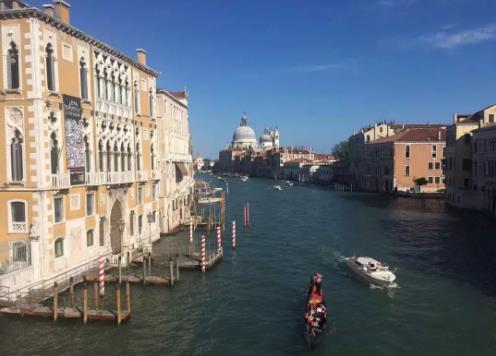
This year's theme is May You Live in Interesting Times. The curator of this Biennale Ralph Rugov interprets the theme as follows: "With the rapid spread of digital media, we are also full of fake news and distorted values, and art should show its responsibility in this situation. This exhibition will also focus on those artists and works that challenge the existing thinking habits. They will also use some materials and multimedia technology to deepen our understanding of art and the situation. "
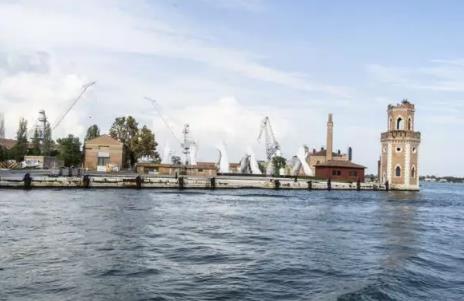
Themed art exhibitions also have important guidance and reference significance for the creation of our students' art collections, Portfolio Coaching Students should learn to think about the perspective of the artist's view of the problem and the way of thinking divergence from the works to find the inspiration for the topic selection and creation of the collection.
From the above interpretation, we also roughly understand that this theme is about art, politics, science and technology. For artistic creation of this kind of theme, traditional materials and media can no longer meet the desire of artists to express, so they are also trying to explore new development directions. Today I summarized some outstanding works in the art exhibition, Lead everyone to learn how artists choose the creation carrier, get inspiration from the unique properties of different materials, and find the appropriate expression for the creation of art works.
Establish emotional connection
As a diversified creative medium, comprehensive materials are often used by artists in their works. In recent years, with the increasing penetration of the concept of sustainable development, comprehensive materials are also developing towards a more natural and environmentally friendly direction, and waste utilization is a common trend.
The use of waste materials is also a method that students who choose the theme of environmental protection often use. Compared with traditional materials, innovation in materials can only save costs, and can also better convey the design intent through diversified expressions.
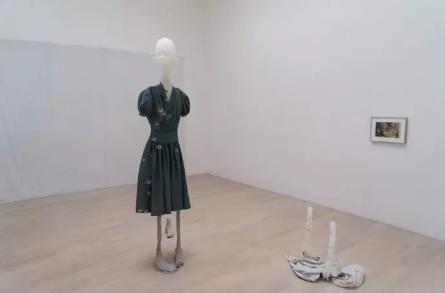
Cathy Wilkes installation works
However, due to the limited materials that students can borrow in daily life, it is difficult to make innovative changes in form and technique, and even homogenization occurs. In response to this problem, I saw some artists' works in this Biennale. Although they also use common materials such as cloth and waste furniture, their works convey more profound emotional significance through changes in artistic techniques and ingenious design ideas.
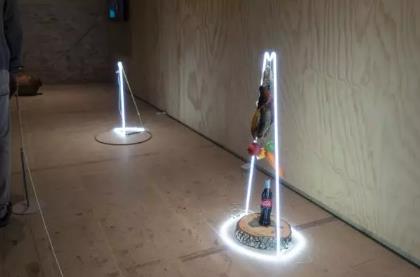
Gabriel Rico's installation works
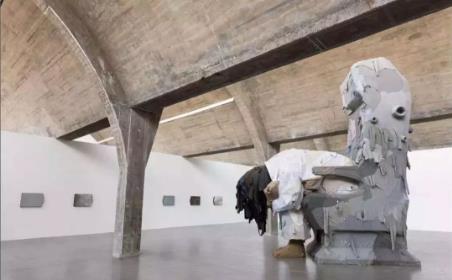
Yin Xiuzhen, a famous contemporary artist in China, exhibited two large-scale installation works in this Biennale. The first one is to present a full bookshelf, on which books are made of clothes and cloth, and each book uses a person's clothes, symbolizing different life experiences.
Clothes and clothes are materials chosen by many artists. They are rich in texture, easy to get and large in size. As our daily necessities, old clothes are also materials that symbolize temperature, women and tenderness. When changing people's cognition of waste materials and combining them with daily materials, generally speaking, in psychology, this emphasizes the emotional value and narrative value of design works.
Similarly, in another work, the Trojan Horse, cloth is also used as the main material. It presents an anti impact posture when people encounter an emergency on the plane. The whole work is very large, and it also conveys this tension and anxiety to every viewer in the space.
The figure sitting on the chair was actually created by Yi Xiuzhen based on her daughter, which also symbolizes that we are all on the same plane, and we all have to face the same past and future, expressing the artist's anxiety about the times.
Restore the truth with materials
In fact, comprehensive materials are simply any materials that we can see and use in our daily life. But when they are used as the medium of creation, we need to make more attempts by understanding their characteristics, state and texture.
In the process of creating art collections, many students always try to prove their "creativity" by changing the original properties of materials in the past. In fact, if students conduct in-depth research on materials of a certain category, they will find that our "inherent impression" has automatically associated the original properties of different materials and formed specific pictures, And the creation of this kind of authentic art collection will also produce richer and more interesting connections.
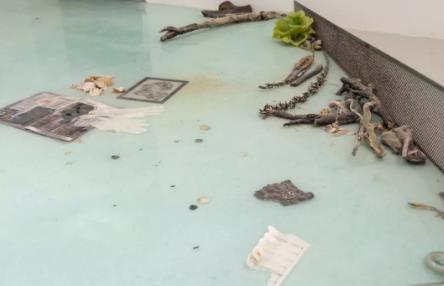
A group of installation works by French female artist Laure Prouvost - "DEEP SEA BLUE SURROUNDING YOU" were displayed in the French Pavilion of this Biennale.
The whole work is displayed in an empty room, combining objects and space in an immersive and mixed media way. There are various seemingly unrelated objects scattered in the room, such as newspapers, branches, animal carcasses, electronic equipment, etc., but this wet material, light blue ground, we will automatically associate this with a seaside scene.
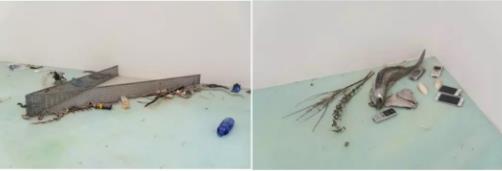
In fact, the inspiration of this group of works really comes from an artist's experience of traveling to the seaside of Venice. She strengthened the memory of seeing the marine pollution at that time with bizarre expression techniques, blurred the boundary between virtual and real, and this immersive exhibition method also more vividly demonstrated the real shock, It is urgent to appeal for environmental protection.
Use deconstruction to build visual impact
Deconstruction and reconstruction is a form that artists often use in material innovation. It is also a direction worth learning for students to create art works. We can try our best to choose materials with strong plasticity. By breaking up and re combining the composition, we can get new external forms and give new meaning to the daily visible materials.
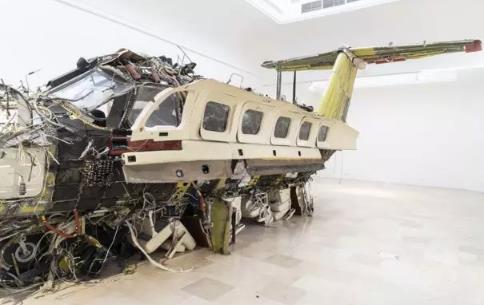
Roman Stanczak's sculpture - Flying
The most important thing for students to use materials to deconstruct is to fit Collection Theme Is also the basis for all works using comprehensive materials; Secondly, before determining the design scheme, we must carry out detailed research on materials. By mastering the physical properties of materials, we can also help students save a lot of time in subsequent material tests.
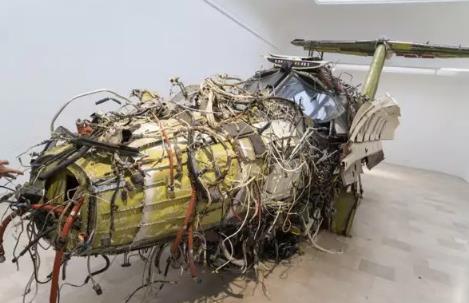
Roman Stanczak's sculpture - Flying
In the process of exploring and constructing different materials, students must fully mobilize their subjective initiative, think about how to change the physical form of materials from multiple perspectives, such as bending, dyeing, cutting, splicing and even combining materials with completely different properties, and constantly try different methods to obtain new visual expression.
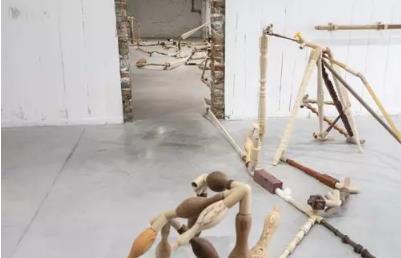
In this biennial exhibition, I also saw the works of Xie Shuni, an artist who is good at combining sculpture and video media. Her work on display this time is called Negotiated Differences, which is a group of devices spreading everywhere like a root. It is composed of 3D printing components and wood parts, and the whole work spread throughout the exhibition site.
Xie Shuni connects railings, handrails, bowling pins and other abstract objects with wood, metal and plastic components, thus integrating handicrafts, mechanical technology and digital technology.
Xie Shuni explained the form of expression of this group of works as follows: "These new installation works are the crystallization of my work over the past 20 years. I hope that the audience can get inspiration from them, think about their own initiative from a new perspective, and see the complex relationships in different forms in the contemporary world from a new perspective."
Share teacher introduction
Miss Li
Master of Fine Arts Institute of Reims, France
Good at: performance art, installation, image, space design, cross media creation
Graduated from France Reims Higher School of Art and Design, majoring in contemporary art. He is committed to contemporary art creation, and is good at transforming the vivid details, feelings and reflections of daily life into artistic language in a perceptual and delicate way. Through the comprehensive use of space, materials, images, sounds and the manipulation of its object language to create, express personal feelings. Study the dialogue between the work and the space it is placed in, and the viewer's viewing mode, walking route and the rhythm of the scene.
Today, Miss Li explained to us that in this Venice Biennale, the artist's discussion of comprehensive materials will also bring us an issue next time. The use of different media in art works. What inspiration do these creative media closely follow the times have for our art collection creation?
This article belongs to the original article of Natural Light International Art Education Team. Without permission, it cannot be reproduced commercially in any form. If it is found, it must be investigated for legal responsibility.