Last time, we shared with you the art works created by some of the world's top artists using comprehensive materials at the Venice Biennale, which are of great significance to us in terms of form, technique and theme. Today, we will continue to discuss with Mr. Li at the Venice Biennale some works that are also worth our attention, such as the collection of overseas works of design majors, and how to conquer art colleges with multimedia creation media!
The progress of science and technology has promoted the change of life, and many art schools have also opened many new majors in line with the new trend of future development, such as Huangyi's information experience design, Glasgow's VR design, LCC London School of Communication "Digital" and "multi-dimensional interaction" are at the core of sound art design, including other traditional six major majors, which have more or less added more multimedia creation elements. These trends also point out the direction for the creation of our design professional overseas works collection! So, let's use the latest information from the Venice Biennale to lead us to think about how to conquer art schools with multimedia creation media!
Part 1: Narrativity of sound, light and electricity
In this Biennale, I found that the proportion of art works borrowed from acousto-optic forms of expression is very high, far exceeding the number of traditional art works. I also tried to summarize the reasons for this phenomenon. First, diversity of interactive forms is the trend of art exhibitions; Secondly, narrative works of art need to be assisted by sound and light to create a more focused environment for participants.
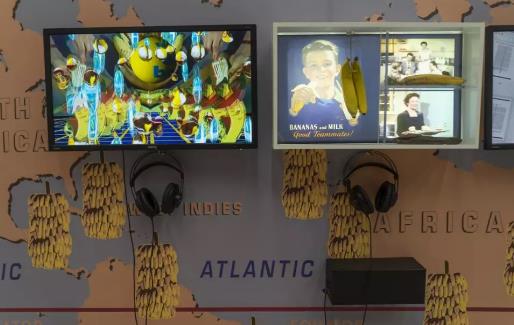
This is very useful for those of us who also choose narrative theme creation. Many students may think that as a visual form of expression, the dynamic expression of sound and video is not applicable. In fact, otherwise, we need to think about more forms of expression and presentation in addition to focusing on the content and purpose of the work.
The cooperation of sound, light and electricity can not only better convey the theme of our works, but also help our works to jump out of the "picture frame" and create more channels to communicate information and tell stories with admissions officers.
For example, I saw a group of paintings in this exhibition. The objects in the paintings are typical visual elements of South American countries, such as Indian aborigines, bald eagles and black heads. However, the three illustrations displayed in the red light shrouded hut are easily reminiscent of Venezuela's national situation, which is more impressive.

In addition, I saw similar works in the Korean National Pavilion. The works were played entirely in the form of images. The video theme was "History has failed us, but it doesn't matter". This short film is a female perspective to explore the issue of East Asian people's view of gender diversity. In the arrangement of the exhibition, the video display was surrounded by soft white curtains, It also highlights the female atmosphere of the whole work.

The above two works, through the changes of sound, color and light to match the theme of the whole work, create a more complete atmosphere, so that the audience can participate in the communication and dialogue with the work itself.
Part 2: Immersive sensory impact
In fact, the concept of immersion has only begun to rise in recent years, but it has quickly integrated into various art fields, including installation, interaction, drama, film, etc., which have emerged in a variety of interdisciplinary and interdisciplinary forms, which also inspired us not to ignore the importance of interaction and technology in creation.
The most important thing of immersive design is to create a sense of space. How to create a space with sensory impact through multi-dimensional design techniques in a limited space is also the direction that many space majors need to think about.
Taking the interior design profession as an example, we think of the interior space as a long-term exhibition hall, where residents are our audience. We choose a theme, and then we need to arrange the configuration of the entire space in coordination with the user's life activities, in addition to the main furniture, including sound, smell, lighting, routes, colors, materials, etc, It is necessary to create this thematic spatial context around the user's psychology and lifestyle.
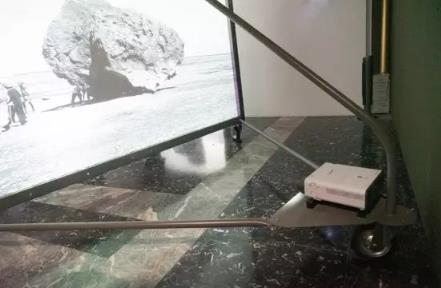
The National Pavilion of Japan in this Biennale also created an immersive art space. The whole space is a closed hut, with monitors clearly hung on the walls around. A group of images of working people moving large stones by the sea are played in turn.
The audience entering the scene is arranged to sit on the orange seat to enjoy, and the orange cushion will trigger the suspended clarinet to make a sound similar to the waves. This way is also to guide people to transform what they see and feel into thinking, thinking about how we live together with animals, plants and land in this space-time environment, and considering the coexistence of human and non-human or new lifestyles and other issues.
Part 3: Diversified interaction modes
The last point is also the most significant feature of multimedia as a creative medium, which is to increase the variety of interactive ways of works of art. In the past, all the forms of interaction we could think of for interaction or installation works of art were voice, touch and activity. But now, with the progress of science and technology, AR and VR technologies appear, the form of interaction has broken the shackles of space and become more intelligent and personalized.
The change of the interaction mode is also to increase the richness of the user experience. For some art majors, the user experience is higher than the function itself, such as game design, interaction design, product design, etc., so the creation process of the design majors' overseas work collections of these students should not be ignored, Let our works become more "intimate".
But after all, our Collection of Art Studied Abroad There is no real space for the admissions officer to experience in person, so students must establish clear thinking logic when dealing with these interactions, so that they can fully display the whole cycle of users from the beginning of use to the end of experience in the works through plot arrangement and scene changes, and also let the admissions officer understand the process of interaction from each scene, Try to be reasonable.
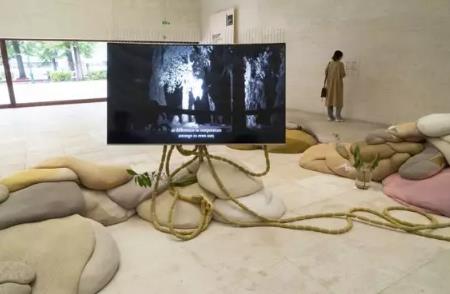
Two artists from Norway and Sweden created an immersive interactive experience hall in the Nordic Pavilion of the Biennial Exhibition. The theme of this exhibition is: "Weather forecast: predicting the future". In this space, there are many different forms of art works expressing the same theme.
Climate is the common environment of all terrestrial ecosystems, but human activities have caused significant changes in the environment and climate of the whole earth. The two artists, by examining the complex relationship between human beings and nature, remind everyone of the sensitivity and unpredictability of climate in a diversified interactive form.
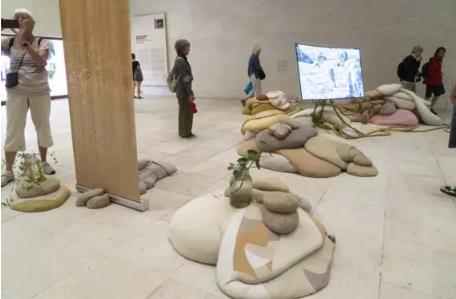
In this space, the audience can interact through touch, dialogue, reading and other forms. In addition, according to different viewing angles, real and virtual weather reports are interspersed in the museum, which can better reflect the shock of the real world between this magical reality.
The change of interaction mode is not only to interact with the object itself, but also to put this information fusion mode in the real surrounding environment, causing more thinking.
Share the teacher's introduction:
Miss Li
Master of Fine Arts Institute of Reims, France
Good at: performance art, installation, image, space design, cross media creation
Graduated from France Reims Higher School of Art and Design, majoring in contemporary art. He is committed to contemporary art creation, and is good at transforming the vivid details, feelings and reflections of daily life into artistic language in a perceptual and delicate way. Through the comprehensive use of space, materials, images, sounds and the manipulation of its object language to create, express personal feelings. Study the dialogue between the work and the space it is placed in, and the viewer's viewing mode, walking route and the rhythm of the scene.
How to conquer art colleges with multimedia creation media in the collection of overseas works for design majors? Today, Natural Light brings you the sharing and introduction of Teacher Li's Venice Biennale. I hope it can help you to create your overseas work collection. If you have other questions, please come to Natural Light for free advice.
This article belongs to the original article of Natural Light International Art Education Team. Without permission, it cannot be reproduced commercially in any form. If it is found, it must be investigated for legal responsibility.