How about studying Japanese art as a pure art major? Generally speaking, pure arts majors in Japanese colleges and universities are divided into two major directions: craft research (sculpture, ceramics, dyeing and weaving, wood craft, etc.) and painting research (Japanese painting, printmaking, oil painting, etc.). Due to the particularity of Japanese teaching, under the leadership of different professors in different universities and even in the monk stage, the style, tendency and field are also different. How about pure art in Tama University of Fine Arts? Let's get to know about it today.

Tama University of Fine Arts It is currently the largest top art university in Japan and one of the "Five Beauties of Tokyo" with Musashino. Tamami has always adhered to the teaching philosophy of "respecting the freedom and perseverance of art", that is, fully respecting the personality and creativity of students.
How about pure art in Tama University of Fine Arts?
The division of pure art majors in Tama University of Fine Arts is very similar to that of Dongyi, with Japanese painting, oil painting, printmaking, sculpture and arts and crafts. The arts and crafts department includes glass, metal, jewelry and ceramic arts and crafts.
The cultivation of Tamomi in the direction of pure art focuses on the development of designers' subjectivity and creativity, and encourages students to create freely beyond the existing framework.
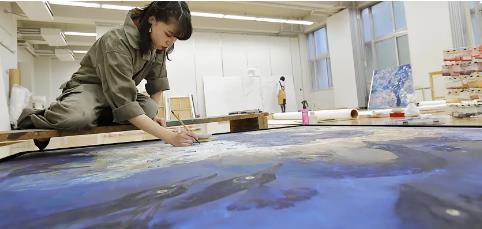
Tamami Japanese Painting
Compared with the previous two universities, the pure art major of Tamomi will not be so "pure", especially in the later stage, there will be more interdisciplinary integration. Taking printmaking as an example, in addition to studying traditional printmaking techniques, the scope of study will also extend to photography, CG and digital printing.
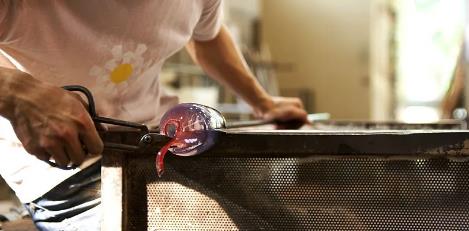
Tamomi Technology Discipline
Here, we will focus on more "pure" pure arts majors for analysis and explanation, and talk about the process disciplines with more branches and varieties. The process discipline of Tamami aims to cultivate artists who are technical and have a strong perception of materials.
The curriculum is divided into three stages. The first stage is to master basic courses. Students will learn the technology of processing and producing basic materials such as ceramics, glass, metal, etc; In the second stage, in-depth learning will be carried out from the aspects of processing technology, tool use and machine operation methods; The third stage will not be limited to the handicraft field, expand the scope of the field, and learn more advanced technologies.
Of course, there are many other factors that can be considered when students choose a school, besides the professional choice. For example, Tamomi is also suitable for students who are highly active and want to have a rich after-school life.
The art exhibitions and related art activities held by Tamomi are more than those held by other colleges and universities, and everyone's participation is also higher. For example, the "Art Festival" activity, in addition to the exhibition of works, includes band performances, flea markets, stage performances, etc., and ends with a fireworks show.

Tamami Art Festival
The art festival has three days and two sleepless nights. It is a special festival for Japanese art students to show their rich and colorful artistic achievements.

Tamami Library
Finally, we have to mention the Tamami Library, which is known as one of the "ten most beautiful libraries in the world", and it is also a beautiful scenery on campus. The inner space of the library has a strong sense of art, which makes people feel free and casual, and has reached a perfect combination with the artistic atmosphere of the school itself.
In addition, in addition to the unique setting of majors in Japan, students should not forget the special factor of tutorial system and apply in accordance with the direction of supervisors. Of course, for training institutions and portfolio counseling, students need to find more professional institutions for studying Japanese art to ensure the best application results. With 5 years of experience in helping students and applicants in Japan, the Natural Light Craftsman One Research Association has a team of famous Chinese and Japanese teachers, and has 12 research bases across China and Japan. It has excellent strength and resources to escort your application!
More recommendations on studying pure art in Japan:
How about the pure art major of Musashino University of Fine Arts in Japan?
How about pure art major of Tokyo University of Arts?
This article belongs to the original article of Natural Light International Art Education Team. Without permission, it cannot be reproduced commercially in any form. If it is found, it must be investigated for legal responsibility.