When it comes to pure arts, most students first think of Britain and the United States as their school choice directions. Indeed, both Britain and the United States have mature teachers and systems, and their professional development is also cutting-edge. Compared with studying in Japan, studying in pure art is more pure. In order to make students better understand studying in pure art in Japan, let's introduce the pure art major of Tokyo University of Arts today?
As the only national university of art in Japan and one of the main institutions of Japan's Super International University Program, Dongyi University has no need to say much about its status in Japanese art institutions. While Japanese art study abroad pure art is a relatively authoritative major in Dongyi, and its high requirements are proportional to the admission rate, but it still cannot stop it from becoming a popular major.

Tokyo University of the Arts How about a pure art major?
The process research is subdivided into carving gold, forging gold, casting gold, lacquer art, pottery, dyeing and weaving, wood technology, and glass plastic arts; Painting research is subdivided into Japanese painting, print, mural, oil painting, painting techniques and materials. Of course, due to the particularity of the tutorial system, these branches will be different according to the direction of each professor.
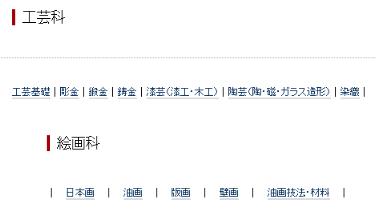
Dongyi University pays special attention to cultural inheritance in the training of pure arts talents. For example, the Department of Arts and Crafts aims to train students to start with basic knowledge, absorb multiple cultures, and combine traditional handicrafts, craftsmanship spirit and emerging crafts; The Department of Painting is committed to pursuing the creativity of contemporary painting, while inheriting and developing the traditional technology and spirit of Japanese art.
The discipline of sculpture has the longest history. It was founded in 1887 and was officially named Sculpture Department in 1949. This course focuses on cultivating students' research on various carving techniques and forms, and absorbing advanced resources at home and abroad to broaden their horizons and define future art.
The materials studied in this course mainly fall into four categories, namely clay, stone carving, wood carving and metal. Students will learn traditional techniques such as "carving", "embossing", "inlaying", "jointing", "colored gold" and "cloisonne" to deepen their understanding of materials.
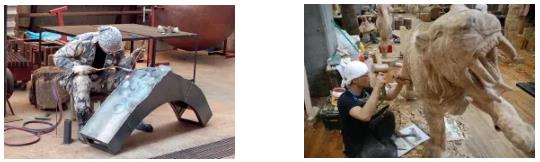
Dongyi Chunyi Major
In the specific curriculum, the first stage focuses on the combination of basic knowledge and practice; In the second stage, they were divided into different material fields to receive individual guidance, and created their own characteristics according to the direction of material development; In the third stage, one-on-one teaching will be carried out according to the research purpose of the students, and they will not stick to the existing fields, carry out cross field project cooperation, and give lectures from the perspective of cultivating comprehensive talents. recommend: What are some good universities for undergraduate and graduate students of "Japanese International Studies Institutions" to choose from when they go to Japan?
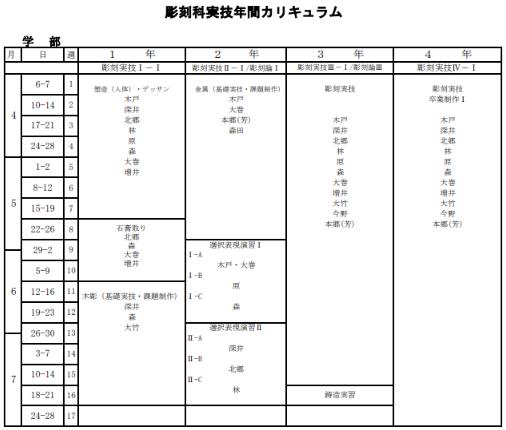
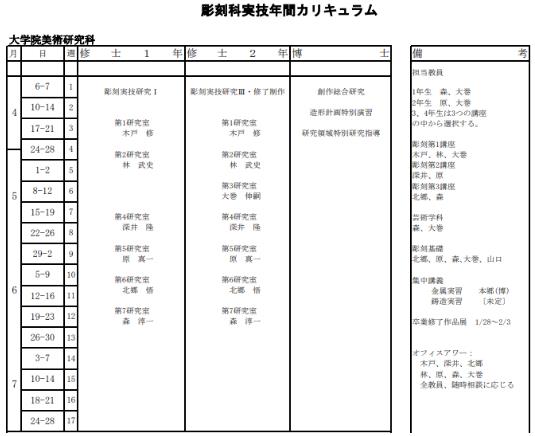
Teaching Arrangement of Chunyi Major of Dongyi University
In addition, each grade also has a two-week art museum training activity, which will visit various Buddha statues and ancient buildings in Nara and Kyoto, and learn professional knowledge about the performance and materials of the Buddha era.
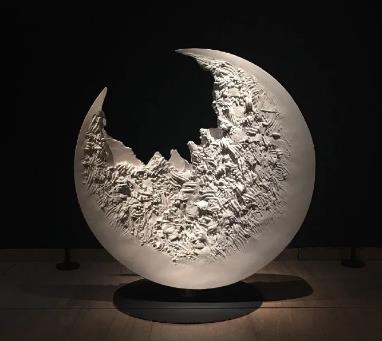
Zhang Wei's sculpture works, graduated from the sculpture department of Tokyo University of Arts, Japan
On the whole, the pure arts major of Dongyi University is very comprehensive, and its branches are very detailed. The difficulty lies in the doubling of the number of foreign students in recent years, which makes it difficult to apply successfully. It is not difficult to see that, compared with British and American universities, pure arts majors in Japanese universities focus on the inheritance and development of Japanese traditional arts, which is a manifestation of the protection of traditional culture and the reason why it is more "pure".
More Japanese colleges and universities recommend art study abroad:
Game Design of Tokyo University of Technology
Interior design major in Japan, a representative major of interior design from the perspective of Tokyo Wumei
This article belongs to the original article of Natural Light International Art Education Team. Without permission, it cannot be reproduced commercially in any form. If it is found, it must be investigated for legal responsibility.