Basically, every famous artist and designer has its own system. For modern architecture, the most far-reaching influence is undoubtedly the teaching system and architectural style developed from the famous Bauhaus period, and even extends from architecture to other art forms. The architectural epic is not only a synonym of "Bauhaus". It has to be said that under the development of the 21st century era and the artists' research, different styles and forms of great shock and influence have also been extended. Today we will introduce 10 modern architectural styles.
10 groups of modern architectural styles
Bauhaus
Bauhaus style was formed in the 1920s, its core is "democratic rationality", and its extended form is "modernization and standardization", which advocates simple form, highly functional and rational design concept. Oppose the decorative design style. Attach importance to the balance and unity of geometric ideology of architectural appearance.

Gropius House/Walter Gropius
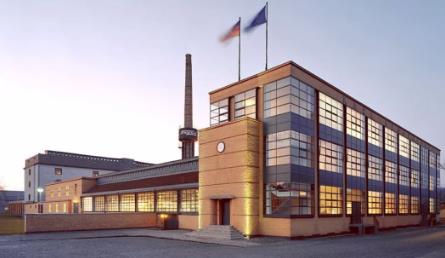
Fagus Factory/Walter Gropius+Adolf Meyer
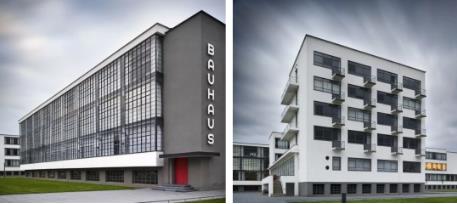
Bauhaus Dessau Campus/Walter Gropius
Dutch style school
God created the world, and the Dutch created the Netherlands with design. Its core theme is to completely abandon the characteristics of traditional architecture, furniture, product design, painting and sculpture, and become the most basic geometric structure monomer, or independent individuals called "element" and black, white and three primary colors as the main creative elements.
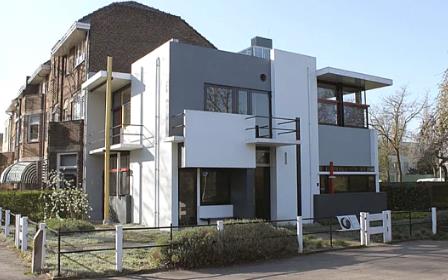
Schroder House/Harriet Litveld
De Stijl and red, yellow and blue. Maybe you are a little unfamiliar with this name, but when it comes to the famous Mondrian geometry, three primary colors and black and white with three primary color blocks, I believe that many people will remember it. It is widely used in furniture, decoration, decoration and other fields.
Speaking of the origin of the Dutch style school, it was founded by Mondrian and others in the Netherlands from 1917 to 1928. It advocates rejecting any concrete elements and expressing the pure artistic spirit in the way of pure geometric abstraction.
Representative figures of abstract art: Kandinsky, Mondrian, Malevich.
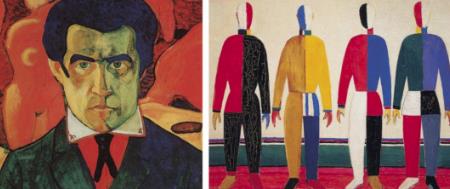
In 1931, Malevich's work Morning Shift
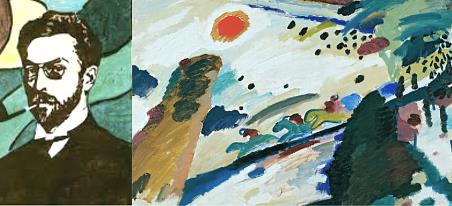
In 1950, Kandinsky's Murnau
Regardless of Mondrian's Composition of Yellow, Red and Blue, Malevich's abstractionism has already become the world's classic logo. In the design, construction and fashion circles are deeply influenced by it. The plane, straight line and rectangle become the pillars of art, and the color is also reduced to red, yellow, blue, black, white and gray. recommend: Creation of overseas works collection of architectural design, 7 offers from British universities in 6 months
Constructivist style
Constructivism arose in the Soviet Union from the 1920s to the early 1930s, so what is "construction"? It is to build new knowledge on the basis of old knowledge, so as to achieve the grand state of material recombination and element superposition.
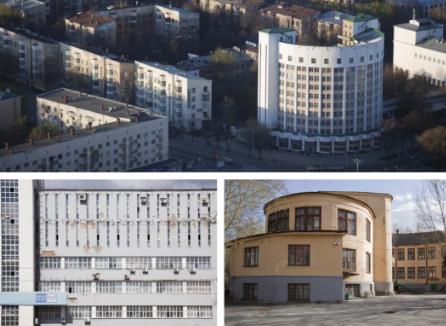
The Constructivism Architecture of Yekaterinburg
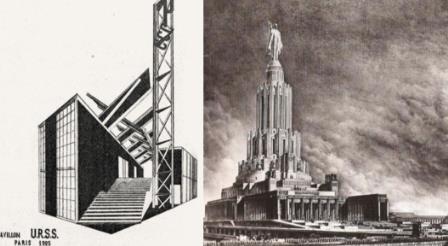
The Soviet Pavilion of the Paris World Expo designed by Melnikov in 1925
In fact, constructivism has accepted cubist mounting and relief techniques, from addition and subtraction of traditional sculpture to composition and combination; At the same time, it also absorbed the geometric abstraction concept of absolutism, and even applied it to hanging objects and relief structures. What we do not know is that it has an important impact on modern sculpture.
Expressionism
The core of expressionism is the existence of vitality. It was popular in Germany, France, Austria, Northern Europe and Russia at the beginning of the 20th century. It explored the creative use of heavy industries such as reinforced concrete, as well as the imagination and utopian conception of special-shaped buildings.
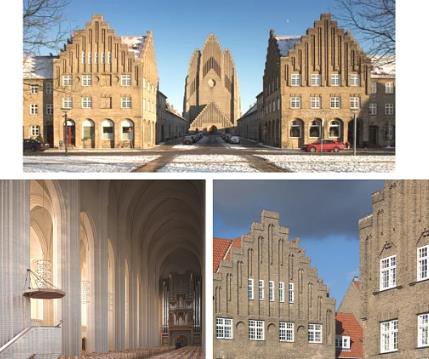
Glentrevi Church/Peter Vilhelm Jensen Klint
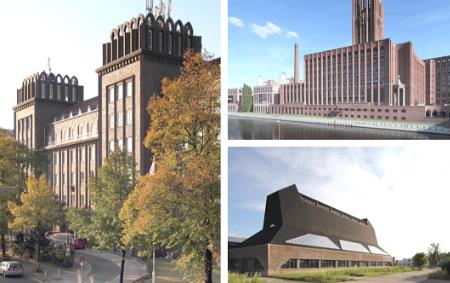
History of Berlin Expressionism
And expressionism may be a basic concept that many people have is a form of artistic expression full of vitality. But what we don't know is that modernism design developed from architectural design. It uses design to avoid social revolution and create idealism and utopianism.
In contrast, the modernism formed by the combination of all inclusive expressionist design is called a pragmatic utopia, which adapts to the idea of any "progressive" political world and makes the distinctive modernism style architecture active in every corner of the world.
Functionalism
As the name implies, the design pays attention to the functionality and practicality of the product, that is, any design must guarantee the reflection of the product function and its use, followed by the aesthetic feeling of the product. In short, functionalism is the supremacy of function, "form follows function".

Functionalist Villa Renovation "Indian Ship"/Idhea
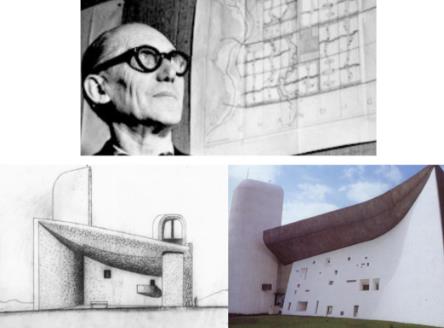
Functional architecture in 1950 - Langxiang Church
Le Corbusier is the most famous architect in the 20th century. He is an important founder of modern (constructivist) architecture and a leader of functionalist architecture, known as the "father of functionalism".
Minimalism
Minimalism is developed from the Dutch style school in the 1920s. It focuses on the art form of "tracing the essence of things from the appearance", unimproved building materials and simple lines, and emphasizes the creation and use of clear geometric lines.
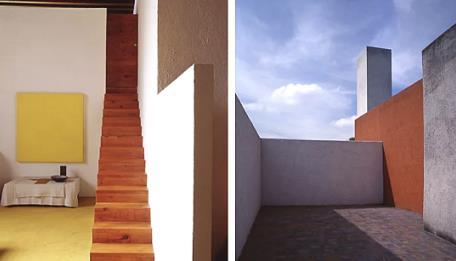
Balagan Apartment/Louis Balagan
As a new direction of visual design, the core principle of minimalism is to keep the key and attractive parts of minimalism.
Line, shape, color, blank, composition and other elements are effectively organized. To put it bluntly, it is the combination of modernism and simple blank technique.
When it comes to minimalism, it is really a mysterious architectural style. John Pawson is the most representative architect of minimalism. His works are deeply influenced by the oriental culture and Zen freehand brushwork, with a wide range. From his architectural style, it seems that Japanese Zen style can be seen, and it also feels that there are similarities and differences with Muji.
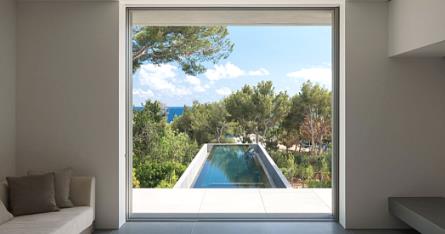
John Pawson's Interior Design Style in 2004
Whether it is a monastery, a house, a pan or a ballet, everything can be traced back to quality, space, materials, proportion, form, geometry and light. It has to be said that the process of achieving minimalism is extremely difficult and complex, and John has given architecture a minimalist form as well as rich connotation, which is the secret of his architectural charm!
Barbarism
Brutalism is intended to be a wild art form, rough and exposed concrete, emphasizing the interpretation of the connotation of modern architecture from its exaggerated outline, focusing on function and structure, instead of sticking to materials and details, like a late magnate poet, who has composed brilliant poems in one go.
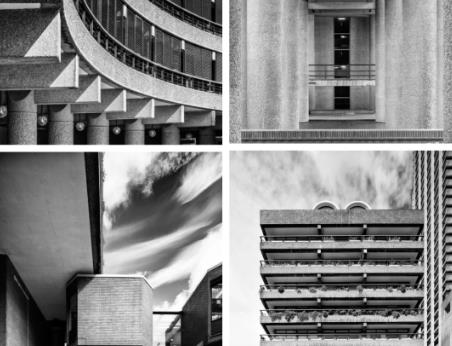
Barbican Village House/Chamberlin, Powell and Bon Architects
When it comes to the organizational style, Le Corbusier is the most famous representative figure. From the architectural works of the Masai Apartment and the Chandigarh Court in India, we can see that a large number of exposed and distinctive concrete exposes their roughest aspects, exaggerates those heavy components, and coldly collides them together.
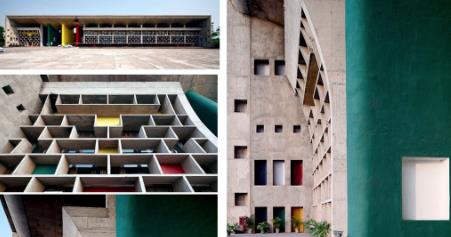
Le Corbusier's architectural work Changdigar Court in 1956
The service facilities of the house are exposed through the true representation of structures and materials, with exaggerated and heavy concrete components, exposed structures and facilities without decoration as the formal characteristics.
Postmodernism
Post modernist architecture has three characteristics: decoration; Symbolic or metaphorical; Integrate with the existing environment.
"The combination of traditional components through non-traditional methods", the so-called post-modernism, does not mean a theory or school, but an era, a cultural situation and phenomenon.
Zaha Hadid can be said to be the "mother of postmodern architecture". Most of her architectural works are based on the three-dimensional suspended space concept and the artistic form full of texture outside, combined with the bold and imaginative theme concept, and filled with the vision of the mysterious and unknown world.
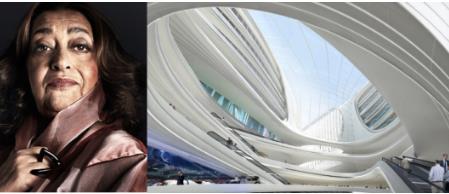
1997-2000 Zaha Hadid, Weil am Rhein, Germany
From her works, we can easily see the flowing external contour lines, curved serpentine balconies and roof structures. The vast diversified design makes her a model of European urban renaissance, while interpreting a new young and fashionable lifestyle.
deconstruction
Deconstruction originated in France in the 1960s. Jacques Derrida, the leader of deconstruction, is the decomposition or dismantling of a structural structure, or the dismantling and reconstruction of a thing or symbol. It is harmonious and irregular, creating an irregular, chaotic but full of confusion space.
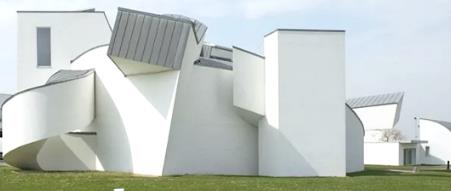
Vitra Design Museum/Frank Gehry Architects
The word "deconstruction" appeared in the field of architecture, starting from the architect BERNARD TSCHUMI.
You can also understand what is the visual impact of architectural form beyond function from the mutual reflection of point, line and surface structures of the park!
High tech school
A late modernist architectural style emerged in the 1970s, which combines elements of high-tech industry and technology into architectural design. It emphasizes the transparency of design and construction. The interior and exterior of the building convey the structure and function of the building. The most widely used materials are steel, glass and concrete. Compared with the old school architecture, the high-tech school can pay more attention to industrial aesthetics and the mechanical beauty.
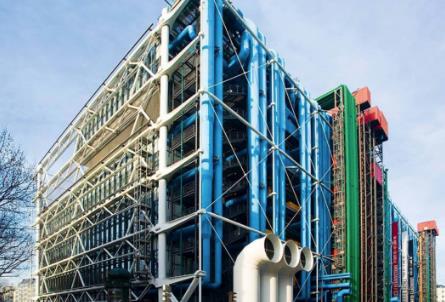
1977 Lloyd's office building
The standard of high technology school is: solid, practical and beautiful.
The outstanding representatives of high-tech school are Richard Rogers, Renzo Piano and Norman Foster.
Speaking of this, Natural Light recommends a related book High tech School: Industrial Style and Its Source, which takes the Pompidou Center as an example, and believes that designers should gradually integrate some elements and cores commonly used in architectural techniques, such as modern machinery, glass and other industrial styles, to build an unprecedented school. It is not limited to modern building materials (steel bars and glass), but also needs to emphasize the theme and connotation conveyed by different buildings, and interpret the style and height of high technology.
Today, Natural Light introduces 10 kinds of modernist architectural styles, integrates their style characteristics, represents people and extracts many interesting elements from them. I believe you have also been inspired. Students applying for architectural design should not only pay attention to the appearance, structure and function of buildings when preparing their works. There are many abstract concepts to think about and study. For example, the sense of form and rhythm of architecture.
More architectural design style recommendations:
Architectural design style, recommended by overseas architectural design colleges
The style requirements of art study in British and American countries on architectural design works
This article belongs to the original article of Natural Light International Art Education Team. Without permission, it cannot be reproduced commercially in any form. If it is found, it must be investigated for legal responsibility.