How to understand and apply the core principles of interaction design in the interactive design portfolio training class? Interaction design has become a crucial part of user experience. Among them, the accessibility principle and Fitz's law as the core principles of interaction design jointly guide designers to create intuitive, efficient and satisfactory user interfaces. Guangxianjun will deeply discuss the application of these two principles in interaction design, and analyze how they complement each other and jointly improve the user experience.
Cornerstone: easy access principle
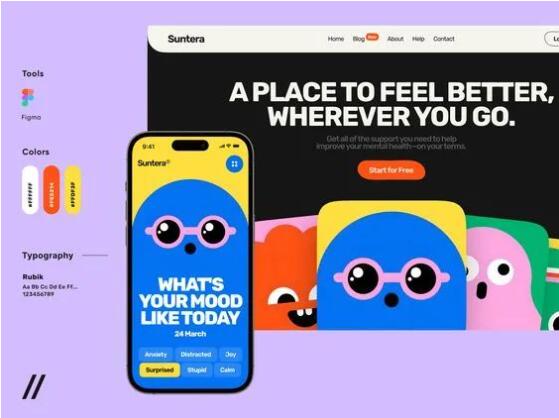
Inspiration of interactive game works collection: exploring innovative ways of interactive stories
Easy access principle, also known as "recognition is better than recall" It is emphasized that the user's memory burden should be minimized in interaction design. This means that information and operations should be as obvious and intuitive as possible, and users need not bother to recall or search. This principle reflects the user centered design concept, focusing on how to enable users to interact with products or services in the most natural and easy way.

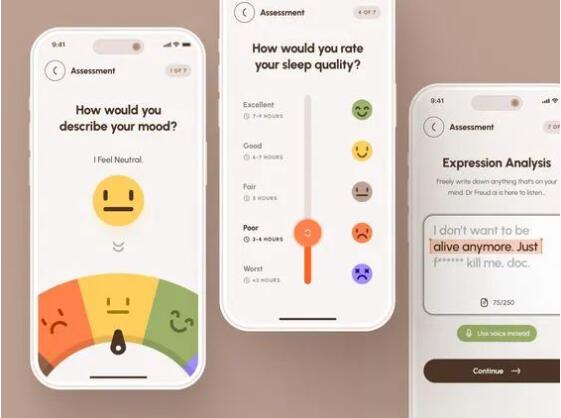
In interface design, the application of accessibility principle is particularly obvious. Through clear visual hierarchy and layout, the designer ensures that users can identify various functional areas and key operating points at a glance. For example, in the mobile application interface, the commonly used function buttons will be placed at the bottom or side of the screen, forming the so-called "safe zone", so that no matter how the user holds the device, they can be easily reached. In addition, clear labels and icons are also an important embodiment of the accessibility principle. They help users quickly understand the role of each interface element, thus reducing the possibility of misoperation.
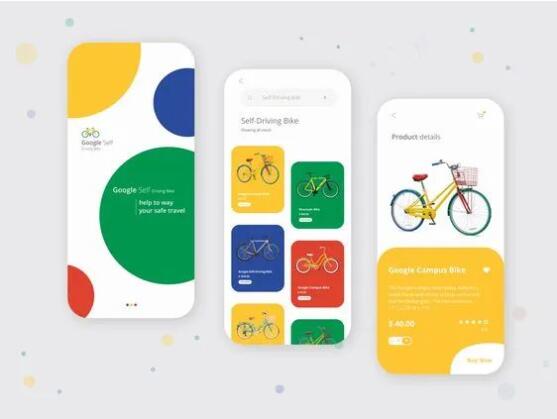
The accessibility principle also plays an important role in navigation design. A clear and consistent navigation structure allows users to switch smoothly between different pages and levels without having to remember their current position and how to operate next. Designers help users build up their overall understanding of the website or application by creating easy to understand menus and paths and providing breadcrumb navigation and other auxiliary tools, thus improving the efficiency and accuracy of navigation.
Application of Fitz's Law
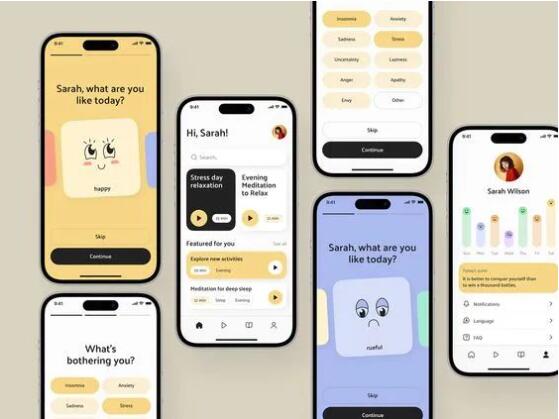
Fitz's law is a more specific and quantitative design principle. It focuses on the movement characteristics and time relationship when users perform directional operations (such as clicking, dragging, etc.). According to Fitz's Law, the size and distance of the target will directly affect the time required for the user to complete the operation. Therefore, in interaction design, designers need to set goals and paths reasonably to improve users' operational efficiency.

In the design of buttons and links, the application of Fitz's law is particularly critical. Too small buttons or links will not only increase the difficulty of users' operation, but also may lead to false touch and inaccurate click. Therefore, designers need to reasonably determine the size of buttons and links according to users' operating habits and device characteristics. On mobile devices, due to the large touch area of fingers, the size of buttons and links usually needs to be increased accordingly so that users can click easily.
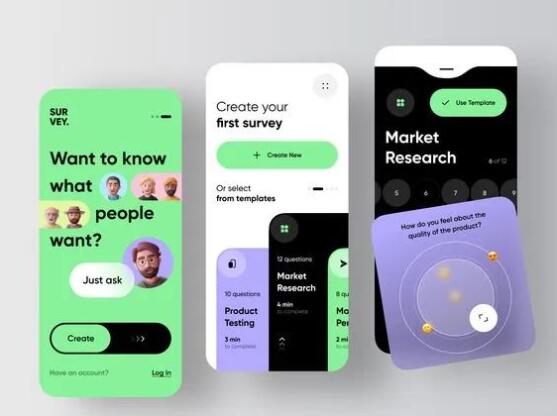
Fitz's law also provides powerful guidance in layout and typesetting. Designers can optimize the user's operation path by reasonably arranging the location and spacing of interface elements. For example, in form design, placing relevant input boxes and buttons together can reduce the eye movement and finger sliding distance of users, thus improving the efficiency of filling in forms.
synergistic effect
It is worth noting that the accessibility principle and Fitz's law do not exist in isolation. They are often intertwined and work together in interaction design. An excellent interaction design often not only conforms to the user's cognitive habits (accessibility principle), but also can effectively guide the user's operation (Fitz's Law).
For example, in the login interface of mobile applications, designers usually place the input box and login button together to form a compact operation area. This not only conforms to the principle of easy access, allowing users to identify the location and function of the login area at a glance, but also conforms to Fitz's Law, reducing the distance that users need to move their fingers to the login button after entering the user name and password, thus improving the efficiency of login operations.
Interaction Design Trends
With the continuous progress of technology and the continuous change of user needs, interaction design is also constantly developing and innovating. In the future interaction design, Guangguang Jun boldly foresees the following trends:
1. More natural and intelligent interaction mode With the development of artificial intelligence and machine learning technology, future interaction design will pay more attention to the application of natural language and gesture recognition, so that users can interact with products in a more natural and intuitive way.
2. Personalized and emotional design : The personalized needs of user experience will become more and more prominent. Designers need to pay more attention to the emotional and psychological needs of users, and create interactive experiences that can arouse resonance and emotional input of users.
3. Seamless connection across platforms and devices: With the popularization of the Internet of Things and smart home, users will switch frequently between different devices and scenarios. Future interaction design needs to pay more attention to the seamless connection between cross platforms and cross devices to ensure that users can obtain consistent and smooth experience in different environments and scenarios.
Today's summary
As the core principle of interaction design, accessibility principle and Fitz's law jointly guide designers to create excellent user interfaces. In the future interaction design practice, students should continue to explore more application scenarios and combinations of these two principles to meet the changing user needs and technology development trends.
Through continuous optimization of the user interface, improve the user experience, and create more brilliant offers for students' work collection~
Illustration Design Study Abroad: What do beginners draw on sketch books?
This article belongs to the original article of Natural Light International Art Education Team. Without permission, it cannot be reproduced commercially in any form. If it is found, it must be investigated for legal responsibility.