Professor UAL Lunyi gives suggestions on the composition of postgraduate work collection! You need to know what you want to do? How do you do it? What is the future plan? How to make a collection of pure art works for British graduate students? With ethics as the standard, how to arrange the postgraduate portfolio?
Postgraduate courses are focused, and they all have their own curriculum philosophy and very clear positioning. So we must study the relevant courses, think about the contents of the course and its concept, and think about whether the concept of the course is consistent with what you want to do and your experience.
The course is not only about design, but also about writing, reading and production.
Less is more, although the number of postgraduate works is less for undergraduate students, the quality is more refined and complex. The work of graduate students is more meaningful and profound.
You need to know what you want to do? How do you do it? What is the future plan?

If you are an interdisciplinary student, you need to know whether this course is suitable for you, and show this in your works. The professor wants to know your opinion on this course.
When you are working on your portfolio, you can apply your own skills to the subject you want to learn in your unique way.
This is the most important point of portfolio research!
So what exactly is research question? Let's take a look at its functions:
one topic found
Key points and entry points of development
Define the boundaries and scope of the subject

Does it sound like the project description? Personally, I think it is a bit like a question version of the project description, which clearly and effectively conveys the issues discussed in your work to your audience through a long difficult sentence.
But who will answer the question? You are right. So research question will guide you to continue a series of experiments and research to try to answer your own questions.
At the stage of master's study, due to the ample time left for the graduates, we will continue to repeat the cycle of "asking questions - finding answers by ourselves - finding new questions in the process of finding answers - continuing to find answers - there are new questions", research question In this process, it will be constantly modified until it is finally changed into a question that you and your teacher think is accurate, in-depth and can well construct your project.
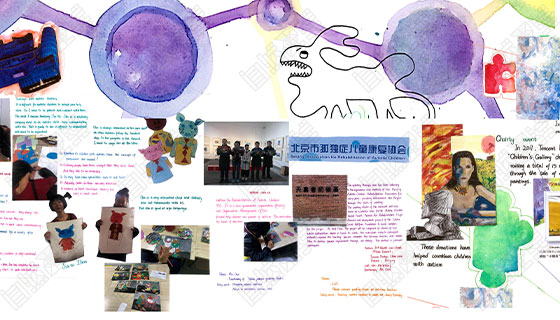
succeed in applying for sth. Saint Martin Costume Design 's portfolio
Of course, this is not the case in the process of our work collection. The most realistic reason is that we don't have time. But it is undeniable that this is a very good methodology, which can help us determine a specific and profound theme. I don't have time to change it more than ten times, so I'll change it two or three times!
I have to say that typesetting is really the inner volume. Everyone pursues to be cool. There are many things in the fortress, and many people do the same thing
But please try to avoid the following points:
1. The project presentation is not concise and clear enough
There are too many typesetting pictures, such as the finished product pictures displayed from multiple angles; Too much text will increase the reading time of the admissions officer, question the ability of visualization, and reduce the persuasiveness of the collection. Typography only needs the most important content.
2. Unreasonable distribution of works
The number of pages for each project is generally 5-6. The distribution of cover, research, visual experiment and finished products should be reasonable. Avoid excessive proportion of research and process.
3. Random typesetting
Typesetting can integrate works with different styles, and unified font size and typesetting layout can link all works together. If the layout style of each work is completely different, it is easy to appear messy.
4. The visual impact of typesetting is not enough
A good collection of works should not only look at the displayed works, but also have their own style. Label each work to reflect her characteristics and personality.
The above is a summary of the composition of graduate students' work collections, and emphasizes the process of researching research questions, finding problems and solving problems. If you have more ideas about the composition of graduate students' work collections, please contact Natural light art study abroad Our teachers communicate!
This article belongs to the original article of Natural Light International Art Education Team. Without permission, it cannot be reproduced commercially in any form. If it is found, it must be investigated for legal responsibility.