How do we design our own interactive design portfolio for studying abroad? What problems should be paid attention to in the creation of interactive design works? What content do art overseas students like to see in the interactive design works? The following is a summary of what the art overseas admissions officers like to see for international students who like interactive design.
What does the admissions officer like to see in the interactive design portfolio?
1. What problems have you solved
UX is a science. In addition to doing user research, wireframes, prototypes, tests and iterations, what else can you do for me? I don't need you to repeat these. What I really want to see is how you solved a specific problem with your design.
Maybe you will say that what I do is all the needs of the product manager, and what I do is all the student projects are just big homework, but in fact, everything changes. The reason why you design a product or a function of a product is always to solve a problem. Even if it is a small example, you have made a design that your friend likes, and there is a reason for this design to exist. How did you think about your final solution? What I care about is this.
2. How do you think and solve problems
Design is not purely subjective, and interaction design is not. Interaction design emphasizes functionality and problem solving. As a daily review many Want to go abroad for interactive design I value your thinking ability and how you solve problems.
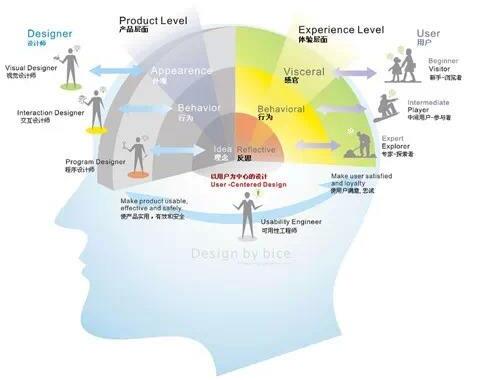
To put it mildly, it is your "process". You may be very confused. The first item just said that if I came up, I would pass immediately. Well, this process is not like the process. If you still list what you do at this step, tell me that I did user research, then I did wireframe, and then I did high fidelity blah blah, then I'm sorry, but you still out. Most of the time, what we need is not a person who can simply repeat a process, but a person who can understand why the characteristic process needs to be used in a specific scenario, that is, the "why" behind the matter.
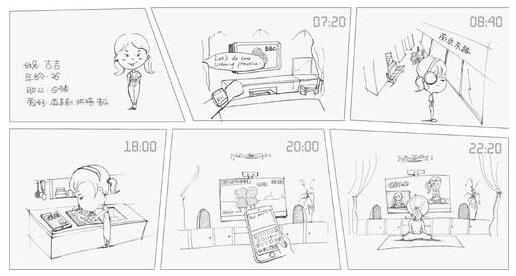
This sounds simple, but I think it is the most difficult step in the practice of interaction design portfolio. Because you need to integrate the problem you solved and the method you used into the process of describing how you solved the problem.
3. Be able to show the results, and be sure to show the results
As just said, interaction design is not purely subjective. Whether a design has played its original role can be measured. For example, for a dating website, if you have the function of making users like other users, in order to enhance the communication between users and strengthen user stickiness, it can be measured whether you have done this.
I guess you also like to see more grounded chestnuts, so I'll use students' examples. During her undergraduate years, XUAN has been making an app for her schoolmates, and accumulated many users in the process, so she clearly wrote her own results in her interaction design portfolio. I suggest that when you have such results again, you must show them.
4. Nobody doesn't like surprises. Let's have an egg
There is not much to explain about this. Every time you see a small egg with ingenuity in the applicant's interactive design portfolio, it will definitely be a bonus.
5. What kind of designer are you
In fact, I look at your interaction design portfolio and most want to know what kind of designer you are? Do you have your own style and analyze and deal with problems by yourself.
You may say that as an interaction designer, I don't want to limit myself. My style is what the project is. Then you may have misunderstood what I mean by style here. I mean the style that you think as a designer.
In fact, it is difficult to do this, because projects in different periods and you in different periods will have different thoughts and work processes, so what should we do? Here are some tips.
6. Design principles to be followed
Visibility: the better the function visibility is, the more convenient it is for users to find and understand the use method;
Feedback: feedback the information related to the activity so that the user can continue the next step;
Limitation: display user operation at a specific time to prevent misoperation;
Mapping: accurately express the relationship between control and its effect;
Consistency: ensure consistent performance and operation of the same function of the same system;
Inspiration: full and accurate operation tips.
What do admissions officers like to see in the interactive design works? Today, Natural Light introduced these to you, hoping to help you create your interactive design portfolio! If you still have a detailed introduction to the major of the university, welcome to seek free advice from natural light.
Recommended articles of natural light art study abroad institutions:
What kind of interaction design works does the interviewer want to see
Interactive Design for Studying Abroad in the United States: Electronic Arts Breaking the Traditional Art Media
Interactive Design Collection Production Tutorial: Are you suitable for learning interactive design?
This article belongs to the original article of Natural Light International Art Education Team. Without permission, it cannot be reproduced commercially in any form. If it is found, it must be investigated for legal responsibility.