Students who are going to study interactive design in the UK, did you first think about whether Lunyi would set up the major of interactive design? The London Media College of Lunyi does offer the specialty of Interaction Design Arts. Students who want to apply for art study come to see how the courses of Interaction Design Specialty of London Media College are arranged? What can you learn from it?
Creativity, experience and communication, undergraduate interaction design major is a practice oriented course that focuses on the relationship between people and design projects, and focuses on experience. This course is an exploration of potential physical experience. During the learning process, dynamic pictures and film production will also be combined. The research process involves design prototype and physical output.
Interaction Design Course Structure of London Media College
The first year of undergraduate study in interactive design at the London School of Communication
Introduction to Interactive Art Design
London School of Communication They will help students find their own learning methods and complete their own projects, and build confidence for students step by step through the teaching of writing and practice workshops, inquiry and practice courses.
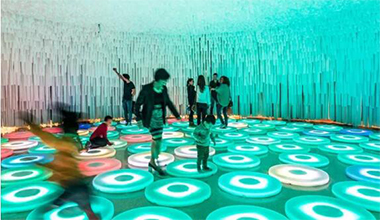
Exploration and Practice
The focus on leading scientific fields is further reflected through specific practical activities and projects. Introduce students to the core principles of design and the importance of research, and design experiments.
Theoretical Learning 1
Through academic writing, lecture and seminar, students will be introduced to different histories and theories, as well as debates on published information, interface design or visual and cultural presentation.
High Tech, Low Tech, No Tech introduce design through materials, models and stories. The purpose of this course is for students to consider the application of technology and materials in their Studio projects, as well as appropriate design solutions.
The second year of undergraduate study in interaction design at the London School of Communication
Requirements and realizable functions
This course will strengthen the introduction and teaching of interaction and design skills. It can deal with the design of living environment; How people influence each other through interaction design, encourage students to do more research, and get inspiration and enlightenment from it.
UK interaction Overseas Study Theoretical Learning 2
Through academic writing, literature and seminar, you will have the opportunity to learn theoretical knowledge of art and design from different aspects, which will play a good role in predicting specific decisions.
Cooperation projects
Under the guidance of tutors, cooperation projects will be carried out, there will be opportunities to cooperate with students in other majors, and there may also be some cooperation with external parties.
Film production physical output expansion
This course unit is designed to assist in project development and extension of previous concepts. This course encourages students to experiment with new media and technology and constantly explore the limits. The course highly covers the application of technology and experience the output sensing of programs in the real environment.

The third year of undergraduate study in interactive design at the London School of Communication
Path A
Main projects of the studio
It is also a process of accumulating personal works to assess students' accumulation of three years of study, provide students with opportunities to practice, and use critical analysis thinking ability and skills to design projects.
Auxiliary repair project of the studio (1)
The minor program is individual oriented and focuses on research, so as to find the most appropriate practical method and support the project results.
Theoretical Learning 3 (40 credits)
Professional research on concepts and theories, and application of knowledge and analytical skills in practical operation. Students are required to write a self assessment of 8-10000 words based on their knowledge and visual theory.
Or Rote B:
Main projects of the studio
It is also a process of accumulating personal works to assess students' accumulation of three years of study, provide students with opportunities to practice, and use critical analysis thinking ability and skills to design projects.
Auxiliary repair project of the studio (2)
The minor program is individual oriented and focuses on research, so as to find the most appropriate practical method and support the project results. If you want to choose Route B, you need to complete one more project than the minor project required by junior students.
Theoretical Learning 3 (20 credits)
Professional research on concepts and theories, and application of knowledge and analytical skills in practical operation. Students are required to write a 4-5000 word self-assessment based on their knowledge and visual theory.
There are two paths to choose for the third year of the undergraduate program at London Media College. The difference between the two paths is that one pays more attention to theory and requires 40 credits, while the design of minor programs can only provide one; The other pays attention to practice. Two minor programs need to be provided, while only 20 theoretical credits can be completed.
In addition to the interaction design major of the London School of Communication, what other art schools do you want to know about the interaction design major of art study abroad?
Natural light art education article recommendation:
What are the components of the interaction design portfolio, physical interaction or spatial interaction?
This article belongs to the original article of Natural Light International Art Education Team. Without permission, it cannot be reproduced commercially in any form. If it is found, it must be investigated for legal responsibility.