For art students who are preparing to apply for art study in the United States, interaction designers must understand the development direction of interaction design before applying. They must either study the interaction of machines or the interaction with people. Is the interaction designer's work collection physical interaction or spatial interaction? So the natural light art study abroad gives the secrets of making interactive designer works to children's shoes who want to study in interactive design!
Interaction Design is abbreviated as IxD, which can also be understood as Human Computer Interaction design. It aims to make electronic products, environmental environments, system systems and services better conform to human use laws through design. Interaction design centers on human beings, and carries out more reasonable design around human emotion, physiology, psychology and other factors. Human hearing, vision, smell, touch, taste, language communication and other elements are important scientific reference factors for interaction design. Interaction design is a new subject that combines art, design, science and engineering technology.
Five important components of interaction designer's portfolio
Five Dimensions of Interaction Design。

1D Words
Language is the most basic part of interaction. The interaction between people is basic communication through language. People also communicate with machines through language. The language here can be written form, phonetic form, or action form.
The Siri system we are familiar with on Ipad is a typical system that operates through speech recognition Cognitive dimensions. C++, JavaScript and other languages used in computer programming are also the language communication forms adopted in the interaction between people and machines. In an interface, interaction designers usually use language and text to guide users to carry out the next operation. The text here is called copywrite.
In the United States, a good interaction designer and a good copy writer need to have good language communication and writing skills.
2D VisualRepresentations
The visual representation of the interaction designer's work collection refers to the interaction between the user and the machine through the operation interface. The interface here includes but is not limited to "typesetting design, icon design, graphic design", etc.
Universities that pay more attention to interface design teaching include School of Visual Arts Temple University Temple University, Pratt Institute, etc.
3D Physical Objects orSpace physical interaction or spatial interaction
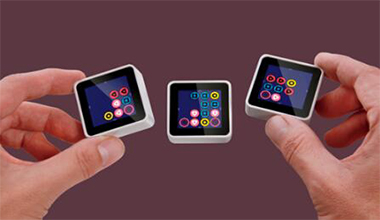
3D objects or spaces that interact with users are an important third part of interaction design. Recent popular research directions of interaction designers, such as Tangible Design touchable interaction design, Fabric hardware prototype development, Physical Computing entity interaction, are all users' "interaction with 3D objects or spaces" Or "interacting in three-dimensional objects or space".
Universities that have done such research well, such as Carnegie Mellon University, Massachusetts Institute of Technology, Parsons the New School for Design, University of Washington University of Cincinnati University of Cincinnati, Arizona State University, etc.
4D Time
The concept of time refers to the time consumed by the user when interacting with the interface, which can be understood as the design form of "changing its content with time", including: sound effect design, experimental video or animation, etc.
In the interactive design department Design+Technology of Parsons the New School for Design, the famous Parsons School of Design, there is a small branch of research called Time Travel. Students often express their interpretation of time by using flowing images. Both the University of Southern California and the Art Center College of Design have strong interactive media design majors.
5D Behavior
Behavior refers to the interaction between users and the interface and how users react to the interface.
Sherry Turkle, a famous female psychology professor at MIT's School of Interaction, is a pioneer in studying the impact of human behavior on interaction design. Professor Turkle is an outstanding psychologist, human behavior research scientist, and a pioneer in the field of interaction design. Her famous books The Second Self: Computers and the Human Spirit, Alone Together: Why We Expect More from Technology and Less from Each Other
In addition to the famous colleges and universities that study interaction design listed above, more and more colleges and universities have begun to add the discipline of interaction design, such as California Institute of the Arts, Rhode Island School for Design, etc. According to the statistics of studying abroad in Natural Light Art, a total of 30 American universities provide graduate courses in interactive design, and 35 American universities provide undergraduate courses in this major.
It is worth noting that each university has its own research direction. In addition to the reputation of the school, the reputation of interaction design projects, and the faculty, students also need to consider whether their research direction matches their own research interests when applying for the university.
For example, the Interactive Design Department of Rhode Island School of Design is more inclined to research on pure art installations, interactive spaces, etc., while the interaction major of the California Institute of Arts is project research based, which means non course teaching, but students themselves do research with research projects under the guidance of supervisors, similar to the traditional post doctoral academic research form of science and engineering.
American Interaction Design Professional Interaction Mode
Interaction design, also known as interaction design (English Interaction Design, abbreviated as IxD or IaD), is a design field that defines and designs the behavior of artificial systems. Artifacts are artifacts, such as software, mobile devices, artificial environments, services, wearable devices, and the organizational structure of the system. Interaction design is to define the interface related to the "interaction" (that is, the reaction mode of artifacts in specific scenarios) of the human creation.
Physical interaction:
Natural human-computer interaction is a human-oriented interaction mode. It focuses on the barrier free interaction between people and computers in the way of natural communication between people, such as voice interaction, body language interaction, and other gesture language interaction. Compared with traditional human-computer interaction, such as; Mouse, keyboard and other interactive methods, natural human-computer interaction is undoubtedly more concerned by people. At the same time, because the natural human-computer interaction mode makes the communication between people and computers more natural and smooth, which can make people use computers very conveniently, it is also widely used.
Spatial interaction:
Network interaction is the communication between two or more entities using the network as the transmission medium. Network interaction overcomes the time and space constraints of interaction in reality. It does not need to be opposite to the participants, and the participants may not know it at all, so network interaction increases the risk of interaction. Entities participating in network interaction may be users, programs, autonomous agents, etc. Network interaction mode refers to the agreed cooperation mode or method between network entities.
Interaction designers first conduct user research related fields, as well as the behavior of potential users to design artifacts, and evaluate the design quality from the aspects of usefulness, usability and emotional factors.
Interaction design is a kind of technology to make products easy to use, effective and pleasant. It is committed to understanding target users and their expectations, understanding each other's behavior when users interact with products, and understanding the psychological and behavioral characteristics of "people" themselves. At the same time, it also includes understanding various effective interaction modes, and enhancing and expanding them. Art study abroad interaction design also involves multiple disciplines, as well as communication with personnel in multiple fields and backgrounds. The purpose of interaction design is to establish an organic relationship between the product and its users through interactive design of the product's interface and behavior, so as to effectively achieve the user's goal.
This article belongs to the original article of Natural Light International Art Education Team. Without permission, it cannot be reproduced commercially in any form. If it is found, it must be investigated for legal responsibility.