In the latest Rhode Island independent proposition and work collection requirements, different from the previous "proposal to submit research and process creation", this time, Rhode Island almost put forward a somewhat tough requirement for observational painting, hoping to examine the students' comprehensive artistic foundation based on painting by reviewing the paintings submitted by students. Not only in Rhode Island, many art schools will directly point out that applicants need to submit 3-4 observational paintings in their application requirements. In the first year of American art schools, we will also see the frequent appearance of this course. What is the observational painting really "looking" at? How to obtain effective visual information in observation?
Although at present more than 70% of art students abroad have professional backgrounds in art design or painting learning foundation before formally applying, students who are accustomed to the domestic art environment are still very unfamiliar with the word "observational painting". Many students will ask:
"Is the observational painting a sketch we used to draw in the studio?"
"Is observing painting a still life sketch? Copying? Scenery? Figure sketch?"
"Is observational painting sketch, color or sketch?"
Observing painting, to everyone, is nothing new than the word "observing". We search the definition of "observing painting" on the Internet, and often get "what you see is what you paint". However, is superb "simulation" ability really the quality of students pursued by art schools? Everyone should know.
What kind of painting can be called "observational"? What on earth should we "observe"? How to extract effective information from observation?
First of all, observational painting is called Observative Drawing in English, and what we usually call painting is more generally called drawing. From a preliminary definition, observational painting is an art form within the broad category of pure art painting. From the word meaning to the Oxford Dictionary, the definition of "objective" is not only to observe the moment when this action occurs, it is not a word that occurs immediately and ends immediately, but a comprehensive observation feedback that combines hearing, vision and observation, emphasizing the whole process from the beginning to the end of an action.

When this word is used to "limit" the action of painting, it has the meaning of the painting level - the artist observes things or phenomena, thinks about them to a certain extent, investigates, locates, compares them, and then visually expresses them.
In this process, it often does not emphasize any observation method or tool that must be followed. "Observation" is a very personal and emotional behavior. Artists will independently "process" the things they observe, because for everyone, we have the consciousness of independent thinking. When we see a thing, the brain processes it, and the feelings and emotions fed back to us are always different. Therefore, observational painting often has a high degree of personal consciousness, emotion, ideas, and originality based on personal consciousness.
Observing painting is rich in the feelings and ideas of the creator himself, emphasizing "originality" and "personal creative consciousness", while the well-known "copying" is not so.
First of all, we must make it clear that in the basic stage of painting, copying is indeed a learning method that cannot be ignored and has obvious advantages. No matter sketch, sketch or color, in the learning process, it is inseparable from "copying". Students can explore and learn independently by copying works of high standard.
From single geometry to geometric combination, geometric like single still life, still life combination, scenery, people, etc. At the initial stage, students' ability to deal with space, black and white gray, light and dark, virtual and solid, and arrange lines will be cultivated. At the later stage, students will pay attention to the ability to deal with the relationship between objects and express different qualities in different ways. At each stage, students can compare and think through copying, and gain promotion.
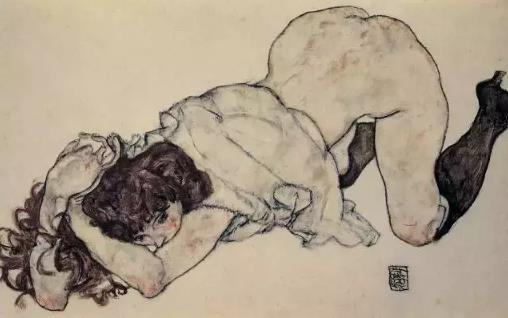
In the process of copying, we do use the "visual" sense, but rather than "observation", it is more accurate to compare through "intuitive observation". Compare and observe the creative techniques of the original artist, the way the original artist handles spatial relations, and how the original artist uses different techniques to distinguish different objects.
At this time, the purpose of using vision is mainly to learn "creative techniques", so as to know what is good, what kind of things can be expressed, and have a preliminary understanding of aesthetic concepts. Although it also emphasizes thinking through critical comparison, emotional awareness is not particularly prominent.
Compared with the "observation" of observational painting, the difference is very big. Copying emphasizes helping learners to establish a certain level of awareness of critical comparison, learning ability, and creative methods; Observing painting emphasizes the use of existing painting forms to discover the other side of things, to discover another possibility of creation, and more emphasis on personal awareness, experimental, and exploratory.
For students, copying is a way of learning, not a medium or way to express ideas. So you asked me whether copied works can be included in the collection? The answer is absolutely no! However, it is undeniable that for students with zero foundation, if they want to reach the stage of observational painting, they really need the help of copying at the initial stage of painting ability learning.
What does observational painting really want to "observe"? How to obtain effective visual information in the process of viewing? And turn it into a stylized and characteristic visual picture?
As we mentioned earlier, the biggest difference between imitated works and observational paintings lies in the originality of the works and personal creative consciousness. The observational paintings are highly original because they are supported by the strong personal subjective feelings of the creators and emphasize the visual display of the unique feelings of the creators in observation. To some extent, copying is a kind of imitation and repetition of existing works of art, and it does not have originality and creativity.
In the impression of most people, what artists say is "sketching" is equal to observational painting. They also emphasize the cultivation of observation awareness, and also pay attention to the visual display of things and phenomena. Fundamentally, observational painting and sketching are indeed interlinked. Observing painting emphasizes students' hand eye cooperation ability, light sense, color sense, and image processing ability, which is the same as what we call "sketching".
But I think students who have had the experience of domestic art examination should also know that the "sketching" in China focuses more on the "standardized" training of painting techniques, and the ability to "restore" things to a high degree, which is very different from the objective sense of sketching.

Under the art examination mode and apprenticeship system, students learn more in order to "cater" to the style preference of schools or teachers and inherit painting skills. For example, in the studios near Zhongchuan, Guangmei and Yangmei, the students trained have very solid basic painting skills. But most students also have a contradiction - the studio label or category label is too clear.
On the one hand, many students from the same studio have a set of painting styles and patterns; Secondly, the style label of the college category, for example, when talking about Guangmei, most people may have a direct reaction that "the picture needs rich colors, and does not emphasize the form accuracy", while when talking about the Tsinghua University of Yangmei, it may be another impression that "the color block is clear and the form accuracy is required".
Such a painting learning environment can certainly cultivate students' solid painting skills, but can students really gain the ability to "observe" from sketching? I'm not sure. In fact, such works are also separated from the personal consciousness and uniqueness required by the observational painting.
So what should the observational painting be under the concept of overseas art schools? What is the "examination point"?
Taking RISD as an example, the first year's foundation year painting course is designed to enable students to jump out of their fixed way of thinking and learn how to have ideas for personal creation. The starting point of RISD foundation year is different from the painting sketch in our existing impression. More importantly, let students spread their thinking, gain critical thinking and comprehensive aesthetic literacy in creation.
The student union will deepen the "observation" ability while mastering certain basic painting ability, RISD Rhode Island School of Design Not only does it regard observational painting as the basis for students to start their study of art design, but it is more to help students start from the simplest and basic form of artistic expression and combine this way to inspire students' awareness of looking at problems from different perspectives.
For example, under the pen of Tiantong, a natural light student who was offered by RISD, Parsons, SAIC and other seven schools, her observational paintings are also very documentary, but also a lot of subjective consciousness creation and extension.
At the early stage of the creation of this work, the teacher advised her to start from herself, to focus on expressing her feelings, to integrate her ideas, and to show her way of understanding. Therefore, in this work, Tiantong depicts a person lying down, but the perspective of observation is very special. She paints from the person's toe to the thigh root.
Accustomed to seeing people from an ordinary perspective, this interesting and strange perspective will be more prominent. Students' creativity and ideas are also magnified. Combine your own feelings, face your own ideas directly, and consciously identify these consciousness, which are "ordinary" and which can be divergent. Only when you "observe" can you stylize and characterize your own ideas, so as to extend them into the process of professional learning.
However, the "observation" points of observational painting are not always "curious", or it is OK to paint differently. Because of the emphasis on personal feelings and ideas, students need to have a solid picture performance ability, hand eye cooperation ability, and color perception, so as to help us start from our own direct feelings, to expand and explore again.
What on earth does observational painting "see"? How to obtain effective visual information in observation? Today, we highlighted the important part of observational painting in the collection of works. As the most easily overlooked part, the comprehensive artistic ability hidden under the creation of observational painting is actually highly valued by most art schools. For the observational painting works required in the application process, although no colleges and universities require students to submit some form of works, it is very certain that the observational painting not only emphasizes the display effect of the picture, but also needs to pay attention to the cultivation and accumulation of students' ability behind the picture.
This article belongs to the original article of Natural Light International Art Education Team. Without permission, it cannot be reproduced commercially in any form. If it is found, it must be investigated for legal responsibility.