Now is the peak of the overseas art study application season, and the pressure of entering a higher school this year is really not small. In addition to the substantial increase in the number of applicants at home and abroad, colleges and universities have also changed their application requirements and assessment methods in turn. In the past, we believed that the biggest difference between domestic and foreign assessment standards was the requirements for basic ability. "interdisciplinary", "experimental" and "creative power" were high-frequency words in the requirements of overseas art schools' works collection, while the art examination focused most on hand painting ability. But now many overseas art schools have added the hard condition of "observational painting" to the collection requirements, causing some students who originally chose the "shortcut" to study abroad to avoid hand-painted, fearing that they would lose competitiveness compared with "good painting" students; However, students who have taken part in the art examination and have a foundation are also troubled. The painting model accumulated over the years has been overturned from the object of observation, topic selection, and standards at one time. Even if "can draw" is still not sure where to start with what to draw. How to get high marks for the observational paintings in the works collection?
Since for most students, the observational painting of the works collection is a big problem, today we will tackle it once! The following is a detailed explanation of how to observe, select a topic for a work, and create a way to teach everyone how to complete the last "big question" in art study abroad, which is an observational painting of a collection of works, through case and technical summary!
1. How to determine the viewing angle
Before we talk about the specific methods, let's first understand the significance of observational painting as an investigation topic for colleges and universities. Since observational drawing has the limitation of "observation", it shows that what we need to study is not only the painting level, but the complete process from vision to thinking and finally presented in the picture.
The biggest difference from our previous study of painting is observation. In the past, no matter what we studied was sketch, color, sketch, and fast design, the most important basic courses were composition and perspective. The ultimate goal of our observation was how to reproduce the real object in the drawing truly and reasonably.
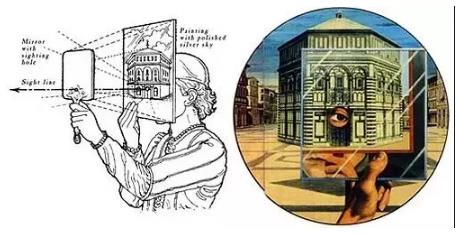
Demonstration of three-point perspective experiment of sculptor Brunelleschi
However, observational painting breaks this principle. We not only need to use "eyes" to observe, as creators, we are no longer passive to receive visual feedback from things, but also need to combine "brain" to think, investigate, locate and compare things we want to express to a certain extent before writing, Select the best form of expression after personalized treatment.
So in the principle of optimal results, if students do not grasp the relationship between "realism" and "innovation", we can consciously avoid the conventional symmetrical composition, perfect perspective ratio, etc. when choosing the observation angle, but to catch some dynamic changes, different perspectives Emotional treatment is integrated into the observational painting creation of the works collection.
Ma Saggio, the founder of the art field in the Renaissance, was the first painter to use "perspective", and also developed the rigorous relationship between painting and geometry, mathematics, and natural science into a recognized creative principle at that time. But at the same time, another painter, Mantegia, broke this principle.
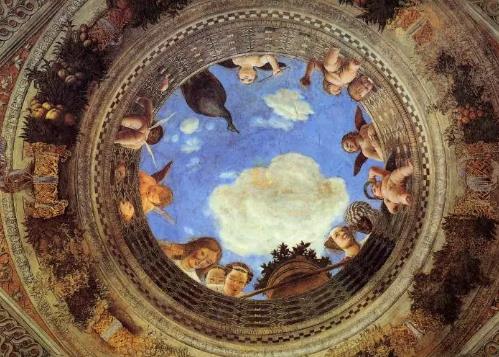
Mantegia, ceiling painting of wedding hall (fresco)
The first elevation mural in the Renaissance
He uses the advanced observation perspective to create the illusion of space in the picture to create a three-dimensional sense of magic reality. In his work Mourning for Christ, the observation angle is almost a squatting angle, as if the audience and the two mourners in the picture are kneeling at the feet of Jesus to mourn for him.
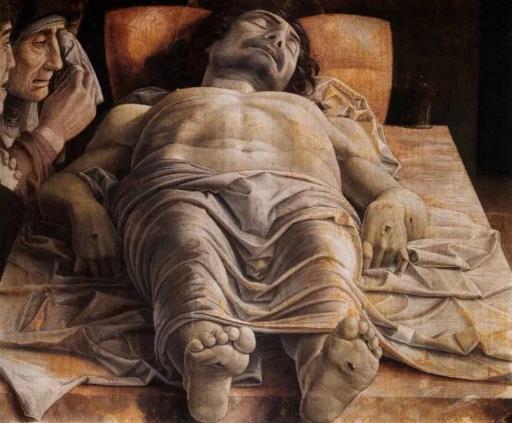
Mantegia, mourning for Christ (cloth and egg color)
The artist also intended to reduce the proportion of Jesus' lower body and tilt it appropriately so as not to block the line of sight too much. However, this unbalanced picture relationship has brought real and credible appeal. Mantegna's depiction of details emphasizes the solemnity and solemnity of this tragic moment, which also unifies the experimental space exploration and emotional expression.
2. How to determine the theme of the work
Like our other portfolio projects, a successful topic selection is also a good start for the observational painting of the portfolio. In the past, our paintings were nothing more than still life, scenery, figures, geometry, etc., and our contact information always started from "copying".
After we understand the changing observation angles, there should be more changes in the topic selection. In view of this, we can choose according to our own advantages, the requirements of colleges and the characteristics of majors.
It is easy to understand how to make good use of advantages. If students have a solid foundation in hand painting and are very proficient in the use of space structure, lines and colors, we can choose topics that can better show the characteristics of topics, such as scenes, human bodies, texture and other details.
But at the same time, we should also understand that techniques are for expression, not just to show off skills to achieve the best performance, but to start from self, to carry out more critical thinking and exploration. Therefore, for those students who have no obvious advantages in hand painting, we can also use materials and some abstract expressions to focus on the portrayal of emotions and texture, and can also complete excellent visual works.
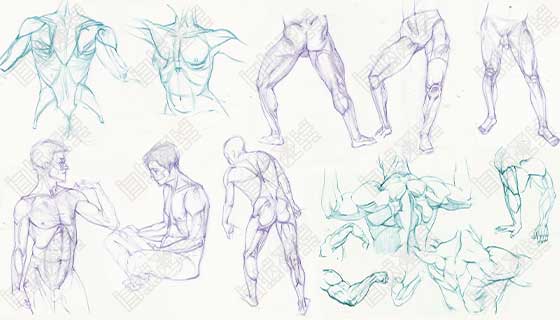
Harvest the observational paintings of Shi from CalArts offer
The second is the requirements of colleges and universities, which can be considered together with the professional direction. For example, CalArts character animation major, as the world's top professional college, CalArts, California Academy of Arts It is believed that students of this major need to use different forms to explore the possibility of animation, so the college hopes to see students' more comprehensive quality through the collection of observational paintings.
Therefore, in addition to animation works, the requirements also need to include creative hand-painted works such as observational painting, and clearly indicate that the subjects that can be referred to are animation samples, figure drawing, scene sketches, etc., and the visual arts that need to reflect uniqueness and creativity are the most important ones that reflect personal style.
There are not a few colleges and universities like CalArts that explicitly stipulate the subject of observational painting in their collections. UCL Bartlett, as the top one of the architectural profession, has a different independent proposition every year in addition to the basic hard requirements, which is usually mainly observational painting.
Taking last year as an example, UCL University College London The form and theme of the works are not specified, but the creation time is limited. A total of six works are divided into four categories, from 5 minutes to 90 minutes. The objects of observation can be objects, people or landscapes.
This setting of proposition requirements also shows that the college is not only assessing our hand painting skills, but also that students can choose what theme is suitable for fine expression and what form is suitable for a short time to show a sense of space. The college focuses on how students allocate time rationally and understand three-dimensional space.
As we can see from the above, some of the colleges and universities that have stipulated the collection of observational paintings will put forward specific requirements according to different majors. Students need to understand the purpose of the colleges and universities through the literal meaning, and show our more comprehensive strength by referring to the investigation focus of the colleges and universities.
In addition, for colleges and universities that have not put forward specific requirements, such as the latest independent proposition of Rhode Island this year, there is no restriction on the theme and theme of observational paintings. For colleges and universities that have no requirements, we choose to start from our own advantages; Secondly, you can also refer to the curriculum and professional requirements of colleges and universities, and use your own hand painting skills to combine with the applied majors, so as to achieve a more perfect ability display in the work collection.
3. Referential creation methods
The choice of observation angle and theme of the work was clarified, and then we summarized some creative methods that can be used for reference:
Capture the dynamics and grasp the relaxation balance
Choose more objects and copy less; Observe more dynamic scenes and select less still life; More attention should be paid to the whole and less to the parts. These three points can be used as the main directions for students to practice observational painting in their works.
An object will produce many subtle changes in the process of movement. We can capture these changes through observation, which can bring a stronger visual impact to our works.
Taking the human body as an example, the direction of each muscle and the relationship of our limbs will change correspondingly with the change of different actions and emotions. If students choose people as the painting theme, they must observe the characters in motion and summarize these rules, capture the dynamics with thinking, and then present them through memory processing, Instead of focusing on the "image" of the external form as the goal.
Add emotional processing
This is to hope that students can get rid of the interference of past experience and rational thinking, and start more from their own emotions. We can try to choose some perceptual themes and use some "wayward" processing methods, and use intuition to process pictures subjectively.
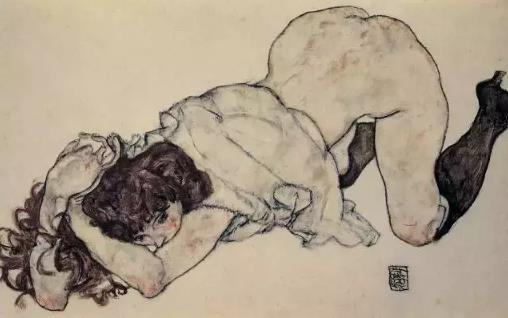
Schiller, The Girl Kneeling on Two Elbows to Rest, 1917
The expressionist painter Schiller, the biggest feature of his works is to depict the painful, helpless and crazy characters by depicting distorted characters, using unmodified lines and contrasting colors. This strange and intense picture also brings strong visual impact on people's ups and downs.
Select "surreal theme"
First of all, observational painting not only refers to observing objects, but also includes many of our imaginations inspired by observation to "create" some characters and scenes. For example, select some science fiction themes, still life personification, virtual creatures and other surreal themes.
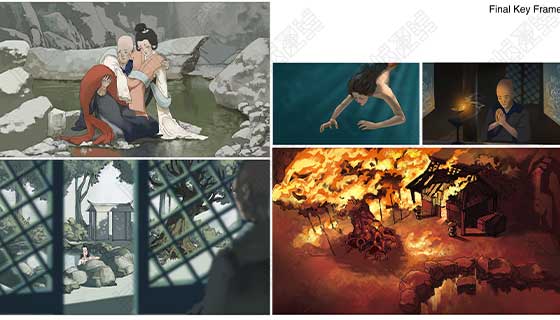
Observational Painting of Xiao's Collected Works from Natural Light Institute
The greatest advantage of this kind of choice is not only to maintain a high degree of originality, but also to directly reflect the students' personal style and innovation; Secondly, this is also very suitable for students who are not proficient in hand painting skills. We can jump out of the framework of "techniques" to break some common physical laws, such as combining exaggerated proportions, diversified materials, and interdisciplinary ways to show our infinite creativity!
Today, we specifically split and explained the creation method and thinking focus of the observational painting in the collection of works. In fact, many students think that observational painting is difficult, first of all, because the concept is relatively new and not comprehensive enough; Secondly, the fixed thinking mode leads to the direct creation content and lack of expressiveness. For these two reasons, we have made specific answers today, and hope that the students can gain something!
This article belongs to the original article of Natural Light International Art Education Team. Without permission, it cannot be reproduced commercially in any form. If it is found, it must be investigated for legal responsibility.