Studying abroad in interactive design is one of the most fashionable and top majors of studying abroad in art. Because there is no university course in this field in China at present, many art students also know how to apply for studying abroad in art British and American art schools You need a collection of overseas works of interaction design. At the same time, students who want to study interaction design also stick to a very creative collection of overseas works of art. So what is it like to create a collection of overseas works of interaction design? The ultimate goal of design creation is to tell your process? Or do you write an assignment according to the requirements of others? Or did you finally solve a problem through research and finding problems?
In fact, I think the first thing to understand when returning to this question is why interaction design or other design work needs interaction design works. From my experience in interviewing various designers, portfolio creation is actually a reflection of a person's design style and thinking process. So based on this point of view, let's talk about how to use the collection of works to convey these information.
I What problems does your interaction design portfolio solve?
I have seen the most common interaction design portfolio creation, and it is also the most common one that I will choose at a glance: no, this candidate interaction design portfolio usually has a fixed format: "my process". UX is a science. In addition to doing user research, wireframes, prototypes, tests and iterations, what else can you do for me? I don't need you to repeat these. What I really want to see is how you solved a specific problem with your design.
Maybe you will say that what I do is all the needs of the product manager, and what I do is all the student projects are just big homework, but in fact, everything changes. The reason why you design a product or a function of a product is always to solve a problem. Even if it is a small example, you have made a design that your friend likes, and there is a reason for this design to exist. How did you think about your final solution? What I care about is this.
Examples of the creation of interactive design portfolio for overseas students:
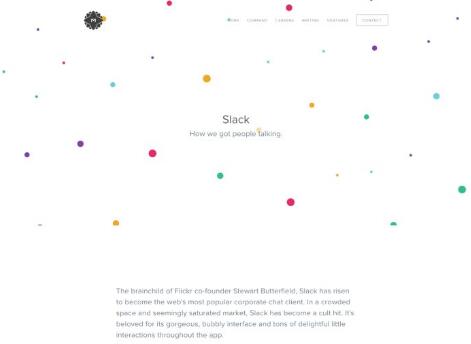
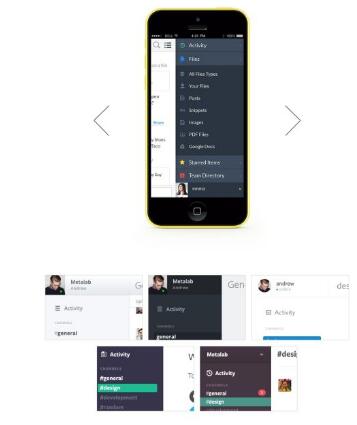
MetaLab, the designer firm I like very much, has designed a famous firm (raised more than 300 million dollars, and its valuation reached 2.8 billion a year ago). How did they show their design for the slack?
Interactive Design Collection Creation for Studying Abroad
Interactive Design Collection of Overseas Students
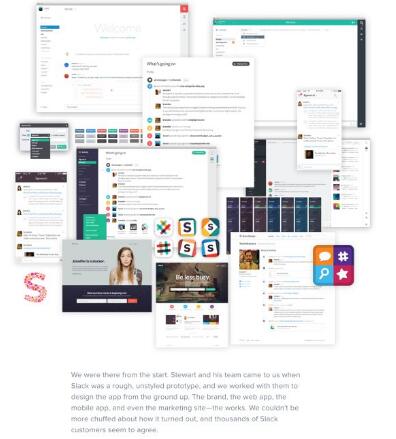
Yes, you are right. There is only such short content. You might say that it's because they don't need to do very advanced portfolio presentations because of their reputation. Then you are wrong. Before Slack, MetaLab was only a small and unknown firm among many old and powerful firms in Silicon Valley. Without portfolio, there were no customers.
Pull it back. The reason why they are good creative chestnuts is not that they have designed Unicorn Startup, but how they have demonstrated their problems solved with design: "How we got people talking, The thinking power invested in the product.
Of course, this chestnut is just to help people realize how to establish a good problem statement, so that others can know what you have done at the first sight. (The following portfolio will be more grounded, but I can't help showing you this awesome portfolio)
II How do you think and solve problems in interaction design
Design creation is not purely subjective, and interaction design is not. The interaction design of art study abroad emphasizes functionality and problem solving. As a person who reviews many interaction design collections every day, I value your thinking power and how you solve problems. To put it mildly, it is your "process". You may be very confused. The first item just said that if I came up, I would pass immediately. Well, this process is not that process. If you still list what you do in this step, tell me that I did user research, then I did wireframe, and then I did high fidelity blah blah, then I'm sorry, you still out. Most of the time, what we need is not a person who can simply repeat a process, but a person who can understand why the characteristic process needs to be used in a specific scenario, that is, the "why" behind the matter. This sounds simple, but I think it is the most difficult step in the practice of interaction design portfolio. Because you need to integrate the problem you solved and the method you used into the process of describing how you solved the problem.
Here are some tips for the collection of overseas works of interactive design:
1. Tell a person who is not in the industry what you have done, what methods you have used to solve what problems, and see where they have questions. This is where your story is not well told.
For example, we made an app to help users find a good milk tea shop nearby (this is a fictional project, please don't be too serious about why milk tea is not coffee). You interviewed 10 people who like milk tea, and then you made a flow chart, and then you made a wireframe. You showed the wireframe to engineers, and they made some suggestions, You made improvements and then made high fidelity. Now you need to put this project into your portfolio.
Tell someone about this process and what you have done in each step. You may be asked: Why do you want to find 10 people who like milk tea, and why are they not? Why do you want to do flow chart and so on. Then you can make improvements.
So the improved version may be: in order to know who our users are and what their pain points are, we interviewed ten people. We hope that our app can bring value to people who like milk tea, so we interviewed all milk tea lovers... (Please open your mind and make it up later)
The point is that you know who your audience is, and explain clearly why you make decisions at each step.
2. Use pictures when you can tell stories with pictures
You have read so many words I have written that you will probably cry now. Think about my mood when I saw your portfolio! Let me give you a chestnut.
Tingyu Li | The Feast Catering is one of the works of my dear cute students listening to the rain. It is also a classroom project. She made some interesting observations, and then cleverly expressed these processes with images in her portfolio. For example, during her interview with the user, she found that it would take a long time for the user to ask for a napkin when ordering a meal. She vividly made this part so that you can feel the same way. At the same time, she also said that the problem was that the customer could not always communicate with the server in a timely manner.
I think the most common question about the collection of overseas works of interaction design is: I have done practical research. What should I do? What should I do if the things I make don't look tall? You can feel the way of listening to the rain. (So the student project can also be very interesting and well packaged)

3. Interactive design overseas works collection can show the results, and must show the results
As just said, interaction design is not purely subjective. Whether a design has played its original role can be measured. For example, for a dating website, if you have the function of making users like other users, in order to enhance the communication between users and strengthen user stickiness, it can be measured whether you have done this. I guess you also like to see more grounded chestnuts, so I'll use students' examples.
During her undergraduate years, XUAN has been making an app for her classmates at school. In the process, she has accumulated many users. Therefore, she clearly wrote her own results in the creation of her interaction design overseas work collection. I suggest that when you have such results again, you must show them.
4. No one doesn't like surprises. Let's have an egg.
There is not much to explain about this. Every time you see a small egg with ingenuity in the applicant's collection of works, it will definitely be a bonus. Take my good friend's portfolio Amway. In addition to being a very good collection of works, please find your own eggs.
III What kind of designer are you?
In fact, after all, what I want to know most when I look at your collection of overseas works of interaction design is what kind of designer you are? Do you have your own creative style and analyze problems and solve problems by yourself. You may say that as an interaction designer, I don't want to limit myself. My style is what the project is. Then you may have misunderstood what I mean by style here. I mean the style that you think as a designer. This time, I Am | Ying Wang Sunny is a very powerful designer in the Bay Area, and she is also a girl I like very much. She was at Google before and recently went to Airbnb. The projects she has worked on, whether in Freelance or in the company, have a large span and can not help but have the same creative style. But what his portfolio shows is a very complete designer with his own system. After you see her portfolio, it's like you can see her. (Yes, she is so cute)
Another example is Melanie Davei, whose style is totally different, but you can directly feel what kind of designer she is from her works. In fact, it is difficult to do this, because projects in different periods and you in different periods will have different thoughts and work processes, so what should we do?
The following are some tips for creating a collection of overseas works in interactive design.
1. Use stock image more often
2. Determine the overall portfolio style first, and then adjust the project one by one
3. Don't use too many fonts in the creation of the entire collection, whether it is the pictures you package or your works. Don't use too many colors.
4. Don't innovate in layout. It is the most important thing for me to browse your collection smoothly. Don't come up with such anti human design as navigation in the lower left corner.
Finally, let me say a few questions you often ask me when talking about portfolio:
1. How many projects are most suitable? There are only six projects in my portfolio Hang's portfolio, and the project of UXOffer is just a link, which is suspected of being redundant. Personally, I think 3-8 are all suitable, so it doesn't need too many.
2. What should I do if my previous work has nothing to do with UX/interaction design
This is actually a little different from person to person, but the first step you need to do is undoubtedly to start doing more projects and start accumulating. But more importantly, don't waste your previous experience, because every part of your experience will be helpful to your life and growth. I have interviewed people who have changed careers from data scientists, architects, Japanese translators and so on to do interaction design, but I think these people are very interesting. When the project is not enough, you can think about how to tell your previous experience into a story and put it on your website. If you want to discuss with me alone, you can also send me a private message.
3. I'm not an artist. I'm not good at visual design. How do I package my own projects
Some suggestions for the creation of interactive design overseas works collection: stock image is good. Don't be stingy and leave blank. Select the font.
Lunyi LCC Service Design Master's Experience of Studying Abroad
What's the use of visual thinking for art works?
This article belongs to the original article of Natural Light International Art Education Team. Without permission, it cannot be reproduced commercially in any form. If it is found, it must be investigated for legal responsibility.