How to do digital media works? The collection of digital media professional works is one of the important ways for students to obtain offers. The exhibition of the collection of works is an important opportunity to show the personal ability and potential of foreign art college admissions officers. Digital media professional portfolio production skills, the production of digital media portfolio can be carried out according to the following steps:
Determine subject: Collection of works is not Freestyle, but to create your own style. You need to choose a theme, which can be a person, an event, a concept, or even an object.
Inspiration: After determining the theme, in-depth study of mature cases in relevant directions for inspiration. These cases can come from books, networks, cases, etc.
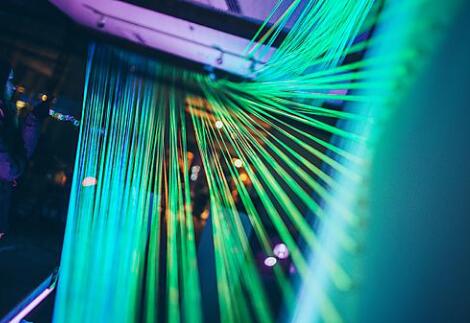
Establish project: The research methods and processes are clear, and can be skillfully applied to the project. They are clear and accurate externally, and visually reflect the concept. After getting inspiration, we need to present the results of the research project in different forms of Diagrams, that is, to visualize the information. This step needs to be discussed in depth in combination with the project.
Conceptual design: From preliminary research to analysis of the project, the expression of design concept needs to reflect the logical relationship. Plate design should be easy to read and also reflect the aesthetic ability of students. In the stage of digital media concept generation, you can sort out your own design ideas through the method of sketch concept recording+storyboard details description+diversified modeling performance, and condense and generate your own design concepts in the attempt.
Preliminary scheme: Refine the scheme according to the design concept. At this time, brainstorming can help students refine keywords and review their initial concepts for further improvement. After the initial scheme is basically finalized, students can generate some model samples accordingly to test the feasibility of their own concepts and schemes, as well as the degree of fit with the theme.
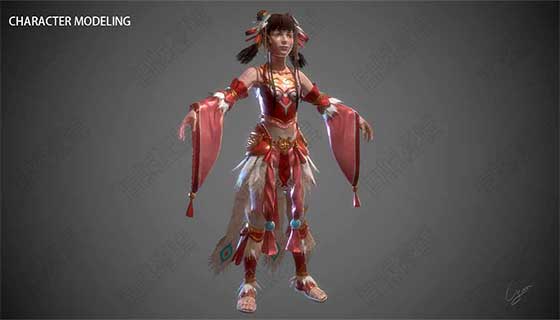
Prototype presentation: The works focus on the application ability of professional basic software of digital media and certain computer programming foundation. At this stage, the prototype can be generated by further processing and polishing the model sample. However, we must confirm the feasibility of the sample before making the prototype, otherwise rework will greatly delay the creation process of the collection. At the same time, in real life, students can make full use of the real scene to simulate the project, keep observing and recording the elements in the scene, and apply inspiration from it to the project, making the prototype more realistic.
Project realization: The actual presentation of digital media professional projects is very difficult. In most cases, students can present the expected effects of their works through renderings and other forms. At the same time, if students have the corresponding hands-on ability and hardware technology background, the actual presentation of the works will be greatly rewarded. Investigate the understanding and application of materials, multiple media, tools and technologies.
Final layout: When composing a book, students must pay attention to leaving blank. Triangle composition/golden section composition can be considered, and the proportion of pictures and words should be properly distributed. If the page exceeds dozens of pages, you can use ID for typesetting, and you can use AI for typesetting within a dozen pages.
Collection of Digital Media Design Works
Collection of works is one of the important materials that art majors need to submit when they apply to study in foreign universities. It consists of several creative works
A school application portfolio generally contains 4-5 projects. Through the portfolio, the school can most intuitively understand whether students have the corresponding professional ability and the potential to become a designer/artist.
Each individual project needs to reflect students' unique understanding of the theme concept. Through research and analysis, design, material and media experiments, and the application of graphic software, a work with complete process and clear expression is finally presented.
Digital media design is an interdisciplinary academic field, which is a systematic discipline integrated by extracting relevant elements from various disciplines. The work collection is required to focus on the application of various media and materials, including the basic elements of art such as art, music, dance, drama, sculpture, architecture, as well as the knowledge of mass media such as publishing, film and television, and the Internet, and the application of computer and information knowledge.
After the above steps are completed, a complete collection of digital media works is ready.
Recommended by digital media universities
New York University
BS in Digital Communications and Media(DCoM)
The Bachelor of Science in Digital Communications and Media (DCoM) prepares you for the demands of a rapidly changing media environment. In this practice based degree, you will develop a range of artistic and technical skills in digital media - from design principles to interaction or action design to film production. The theoretical themes of cultural influence and moral responsibility of mass communication professionals help to establish an overall understanding of contemporary media. This project is a STEM project.
Interactive Media Arts
IMA is an undergraduate program for students who want to explore the creative possibilities of technology and interaction. Students gain technical fluency in various emerging media forms, and learn cultural and social influences in world-class liberal arts education.
IMA Program is an interdisciplinary undergraduate fine arts (BFA) bachelor's degree in Interactive Media Arts (IMA). Its starting point is that computing -- the ability to code, learn new software, manipulate data, and create physical+digital interaction -- is an essential creative ability. Students who master these abilities will be ready to create the future.
University of Southern California
Media Arts and Practice(BA)
The MA+P course focuses on the potential of media, art and technology as tools for change and social impact. The program aims to cultivate future creators and scholars through collaboration, experience and project-based learning and research. The course aims to achieve personalized growth in a collaborative environment and use constructive critical feedback to improve students' academic, artistic, professional and personal pursuits.
This article belongs to the original article of Natural Light International Art Education Team. Without permission, it cannot be reproduced commercially in any form. If it is found, it must be investigated for legal responsibility.