Whether a design work can resonate with the audience, to a large extent, comes from the selection and treatment of design elements. To create a collection of clothing design works, it is also necessary to select the most suitable design elements from the vast "material library" to combine and create, which should not only consider the visual beauty of element matching, but also let the admissions officer see the purpose and intention behind the works. How to select design elements in costume design works? Today we will introduce it from two different perspectives.
A complete set of overseas clothing design works includes complex links, and students usually start thinking from two perspectives when choosing elements at the beginning. The first is to diverge from abstract concepts such as style, emotion, story, and then transform the concept into specific design elements; The second is to take a concrete plate as the starting point, such as function, structure, fabric, color, etc., and then the two angles are slowly integrated in practice until they fall into a complete set of clothing works with depth and rich details. Therefore, in brief, the whole process of fashion design works collection from research to the completion of ready to wear is inseparable from the processing and thinking of design elements.
But the elements are endless, and there is no unified use standard. So in order to help you know how to choose the design elements that are suitable for your work, so as to better convey your design ideas, today we will list some "Fashion Design Element Tables" from two different perspectives!
Design elements of costume design collection:
Abstract concept
1. Bionic design
The concept of "bionics" originated from the field of biological research. Later, in industry and product design, it refers to meeting the needs of users, and refers to "bionics" in function. But when "bionics" is applied to clothing design, it is more applied to the visual level, such as simulating the structure, color, material, etc. of animals and plants in nature, including human body, as design elements of clothing design works.

We have a good understanding of the imitation of structure, such as natural elements commonly used in clothing such as ruffles, fishtail skirts, swallow tails, etc., but students can also be more divergent when choosing reference objects, focusing on key features;
Nature has always been extremely skillful in matching colors, which is also the direction we can learn from. The well-known clothing elements, such as stars and leopard prints, all come from nature. When we choose the color of nature, we should also make a choice according to the style and integrity of the work.
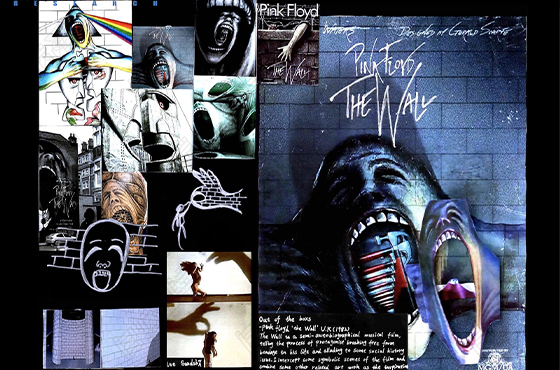
The "bionics" of materials may be rare in the market, but it is a good angle to investigate our creative thinking clothing collection. As the name suggests, "bionic material" is to simulate the texture, touch and even dynamics of animals and plants. Once we find a reasonable way, our works will become more three-dimensional and have visual impact.
2. Oriental elements
In recent years, "oriental elements" have become very popular in the fashion market, which has inspired students who already have "ethnic advantages" in fashion design. They all want to add a touch of "Chinese style" to their works. However, in the specific practice process, they found that because most of the visual elements selected for everyone are stereotyped, there is a risk of "falling into stereotypes".
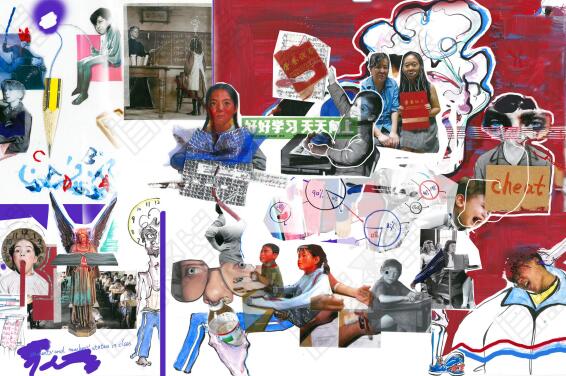
In fact, whether it is Chinese style or oriental characteristics, the students should not just blindly stack the visual elements of clothing works with regional culture as the theme, but should dig deep into its internal cultural connotation and re create on the basis of understanding.

That is to say, students should take culture as a major background of creation, and then study it according to a certain direction they are interested in. This point can be a certain region, traditional stories, ancient lyrics, or even any kind of popular trend in modern China. Find the direction that can be spread, and then create new design elements.
3. Retro trend
We often say that fashion is a cycle. In recent years, the fashion market has seen the trend from decades or even hundreds of years ago. Because these styles from the past have rich cultural and historical deposits, they have also become an important source for students to learn design elements.
But we need to remind you that "retro" is not our theme. If we blindly copy a certain style, what we do is not clothing design, but "pirated vintage".
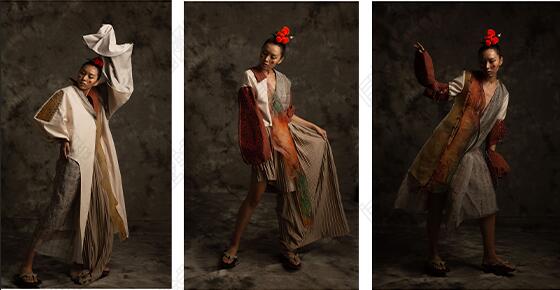
In order to achieve the purpose of design, we should pay more attention to the characteristics of the times and cultural background behind the style, and carefully dig the reasons behind the trend at that time, so as to find more "vivid" elements.
In addition, when choosing the "retro theme", students should also focus on the choice of the past. They should find a specific era with a purpose, such as the 1980s, the Middle Ages, or a dynasty or a region, and then conduct full research to summarize the applicable Art collection style Element.
Concrete plate
4. Fabric
As the basis of carrying all details and structures, the importance of fabrics for clothing design is conceivable. Because of the progress of science and technology and everyone's attention to environmental protection, the space for fabrics to spread is also growing. Many students' inspiration source or theme is about the spread of a special material.
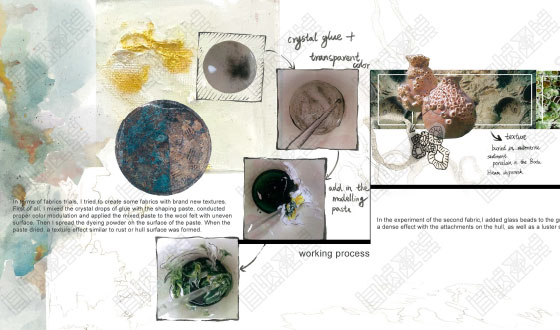
However, when choosing fabrics, students must not ignore the importance of research and early experiments. If we do not fully understand the materials and characteristics of some special fabrics, and do not take into account their specific state in the process of cutting, splicing, sewing, and coloring, it may have an uncontrollable impact on our final clothing.
This is also because the fashion design seems to be unconstrained, in fact, it is a very rigorous process, even many processes are formed at one time, and the fabric is a very important part of the fashion design. We must fully do research, and try and choose our overall form of expression and fashion style with the characteristics of the fabric.
5. Functions
There are two major parts in clothing design. The first is the traditional "wearable", which focuses on the human body structure; The other is the "experimental clothing" that many students try now. Wearability is not the focus of design, but functionality and experimentation are the theme of clothing works.
For functional themes, "interdisciplinary" is a good way of creation, which can help us broaden the design elements and even design techniques that can be borrowed. Previously, the students majoring in natural light clothing design had a set of works called "Survival Jacket", which was based on the theme of functionality. He designed a life jacket to help increase the chances of survival in the event of disasters, which also reflected some problems of life-saving measures.
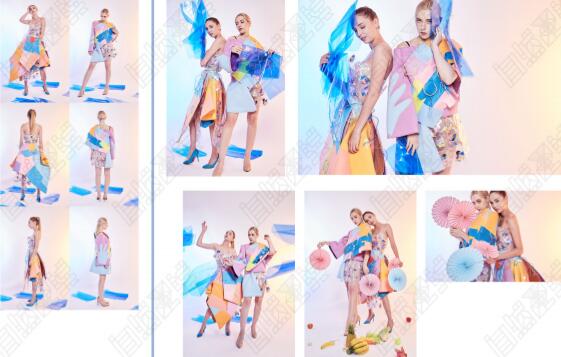
In this project, the students borrowed the means and elements of interactive design. Through a lot of thinking and experiments, he adopted the new technology of integrated molding, which greatly reduced the weight of the clothing, increased the inflation and compression resistance of the clothing. The final clothing renderings also showed rich details on the premise of functionality.
6. Accessories
Accessories are actually an indispensable part of clothing design. A complete look is not only "clothes", but also needs other accessories to improve the whole set of clothing works. Therefore, the design elements of accessories are also very worthy of attention.
First of all, we should clarify the function of accessories. First, we should cooperate with the works to improve the completion; The second is to add details and increase the level of the work. That is to say, when choosing accessories elements, we need to control the integrity first, and we can also make appropriate changes to highlight the highlights. In specific practice, we can extract from the design elements of the existing clothing design portfolio or recreate them.
In addition, we should also avoid excessive repetition of elements. We can add appropriate accessories to the position, shape and density of the clothing structure, and constantly give the audience a different visual experience through the adjustment of details.

The selection of design elements in the collection of clothing design works can not only establish the style and keynote of the works, but also increase the richness of the design works, and at the same time enhance the audience's memory of the design works. To sum up, we only listed six thinking angles of design elements in the collection of clothing design works, but the arrangement and combination of elements are ever-changing, Students are required to obtain the most suitable combination of elements for their own style through continuous observation and trial in practice!
Natural light shares more topics for you:
How to research the collection of works? It is important to combine theory with practice
This article belongs to the original article of Natural Light International Art Education Team. Without permission, it cannot be reproduced commercially in any form. If it is found, it must be investigated for legal responsibility.