There are many ways to pull films. The way to pull films is different in China and the West, as well as in different academic schools. But generally speaking, the general process of film pulling is the same. Next, let's take a look at the correct steps of a complete film pulling process, introduce the template of film pulling, and how to pull the film correctly?
How to pull the sheet correctly?
1. Preparation stage: full "watch" movie
The difference between pulling a film and watching a film does not mean that we do not need to watch the film completely, because understanding the whole film from a macro perspective is the prerequisite for pulling a film.
Just imagine if we are in a fog about the story background, character setting and the shooting purpose of the director, how can we reasonably analyze the role of the director's audio-visual language in the film? Here, "watching a movie" means watching a complete movie, but it is not just watching it. What do you need to do in the "preparation step" before pulling the tab?
Background investigation: After selecting a film, we need to carry out some background investigations on it, including the year of shooting; Time and space in the film and relevant common sense knowledge at that time and place; Relevant materials (if any) of comic books/novels adapted from the script, etc.
But we must remember to avoid seeing too subjective analysis and evaluation of the film before watching the film. Such information may mislead us to judge the film and plant some preconceived ideas for us.
In fact, it is generally advocated in the industry that you should not watch even the trailer. Because the trailer is usually a "commercial means" to create popularity and momentum before the film is released. It does not represent the theme and quality of the whole film.
Watch the whole film: After finishing the preparations, we can find a complete, quiet and undisturbed time to watch the whole movie. The reason why we emphasize the "ritual sense" of watching movies so much is that compared with the recreational entertainment of going to the cinema with popcorn, we have to watch movies here more formally and purposefully.
Therefore, we must ensure that we go to the scene of the film completely and devotedly, and maintain the attitude of "immersion and withdrawal". Immersion here, needless to say, is naturally a serious and dedicated attitude when watching movies. What is worth emphasizing is withdrawal. In fact, when we watch a movie, it is easy to immerse ourselves, but it is difficult to withdraw.
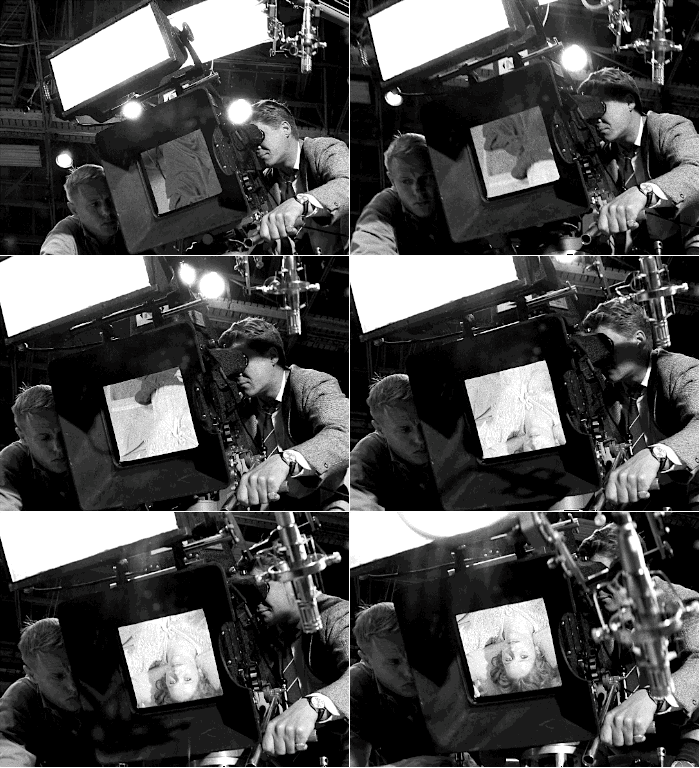
Withdrawal requires that we can see through the director's disguise and not be led by the director's "deception" (such as sensationalism, thriller, anti climax, etc.) to mislead the audience, so as to slightly withdraw. In this way, we can see the film itself through the phenomenon. If immersion is what a qualified audience should do, then withdrawal is the key to distinguish film researchers from film audiences.
Notes and observations: Take notes and experience at the same time during and after the movie. First of all, when watching the film, we need to record the "material" clips that we feel are worth pulling the film for analysis without pausing the film. This step is also the real purpose of watching the film. Of course, in addition to looking for clips to pull the film, we can also write down important plots, key clues to pay attention to, and so on.
After watching the film, we need to sort out a complete experience of watching the film according to the notes recorded during watching the film. Don't bother the students! This insight is the really useful analysis basis for our later pull pieces! Because just after watching the film, our thoughts are still very active, and our brain's ideas about the film are also the most fresh. At this time, we must strike while the iron is hot to write down what we think is interesting and worth paying attention to.
Including but not limited to metaphor and symbol, the relationship between color aesthetics and the theme of the film, narrative structure techniques, etc., all the ideas emerging in our minds can be recorded as impressions. Color aesthetics and story logic are the points that we should not pay too much attention to when we formally enter the film pulling, but they are essential in the overall analysis of the early film.
2. Start pulling films: slow work produces detailed work
As we said earlier, all decorations such as script, performance, art and music are "appearances" of films. What really supports the film skeleton is what we need to analyze when pulling films - audio-visual language.
As the saying goes, beauty is not skin but bone, so is film. No matter how gorgeous the appearance is, if there is no solid skeleton - that is, a complete audio-visual language system to support these gorgeous costumes, it can not be called a complete and excellent film work after all.
Recently, the nomination for the Oscars has been very popular, and nine excellent films have been on the list. Among them, Quentin, the work of Hollywood's "old gun", "Hollywood Past" has been on the list. Quentin's Oscar nomination is also the most uncontroversial popular expectation. We know that Quentin is famous for being a "movie genius". His use of audio-visual language in movies is both transcendental and impressive.
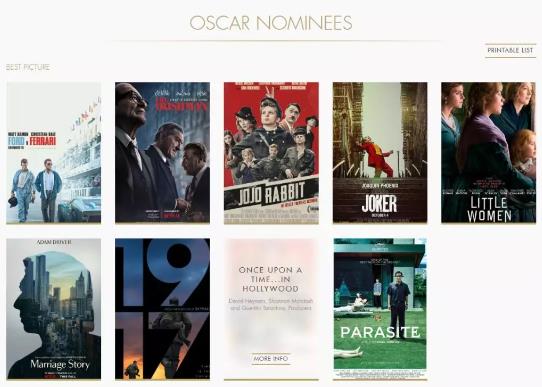
Oscar Best Picture Finalist
His film is also very suitable Studying abroad in film production The students of the class analyzed and used for reference. So today, we will take the game between Beatrice and Bill, the heroine, at the end of his masterpiece Kill Bill 2, as an example to demonstrate the way to pull the film.
So how on earth should we start pulling films? The popular slide analysis mode is generally tabular, which is to analyze and fill in the table item by item according to the scene.
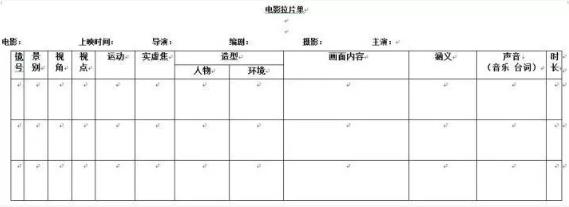
Movie pull template table
The above figure is a more standardized template table of film pulling found by natural light on the Internet. Now film lovers basically complete the pulling analysis of a film according to this idea. Just looking at the table, students may think that the concept is a bit abstract. Next, please follow the steps of natural light to see how to specifically implement the pull analysis into the scene.
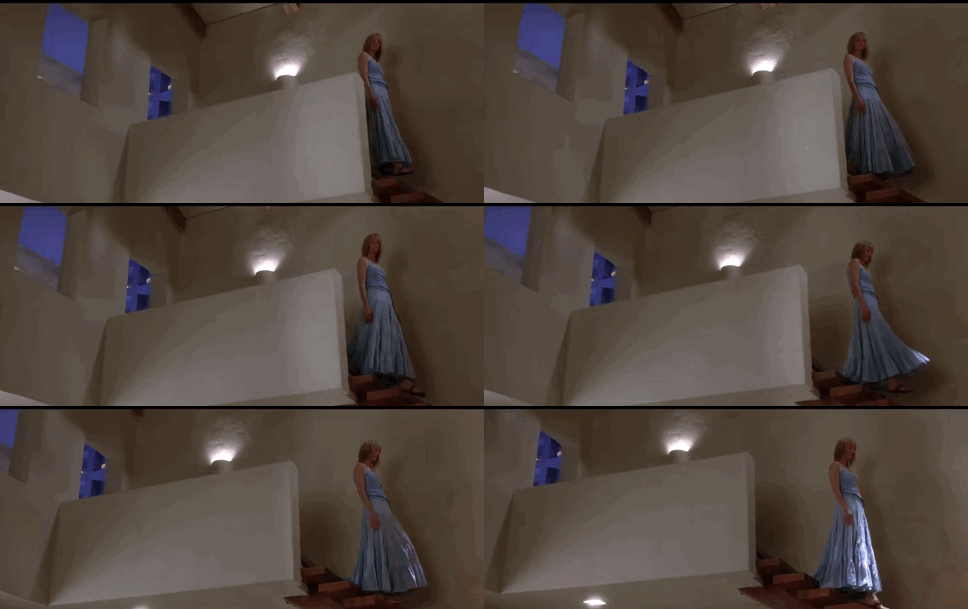
Part of the movie Kill Bill 2
The first scene
The angle of view used for shooting is the large elevation panorama;
The viewpoint is Bill's viewpoint;
The camera movement is following the camera movement;
Real focus shooting;
The figure is a light blue vest with a full-length skirt of the same color;
The environment is Bill's home - the attic of the west coast manor of the United States;
The picture shows Beatrice walking downstairs;
It means the connection between the warmth that just put her daughter to sleep and the murderous spirit of dueling with Bill;
The background music is the popular song But it's too late to say sorry;
The line is that Beatrice and Bill chat about her knife maker, who is also Bill's good friend Hattori Bancang;
The duration is five seconds.
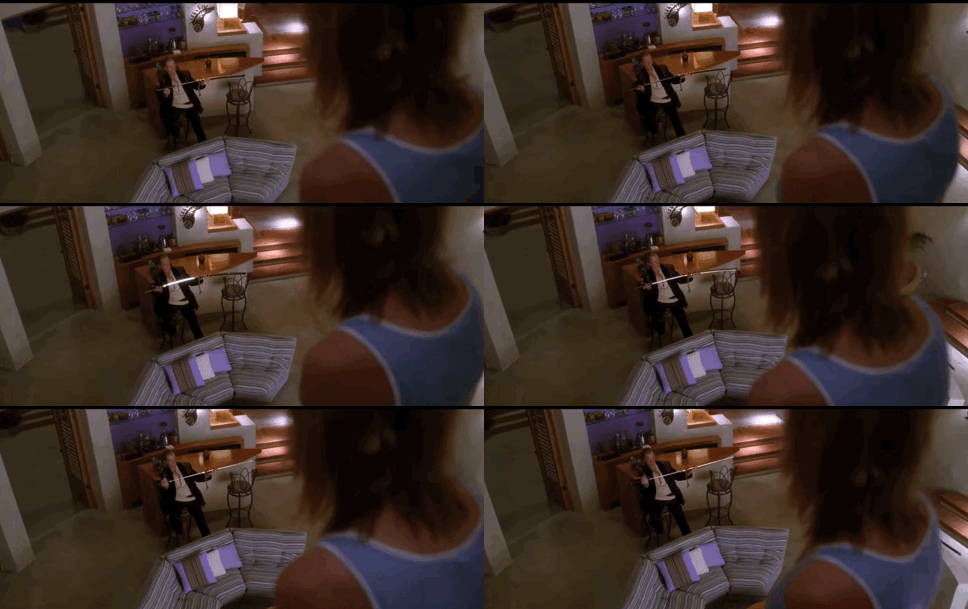
The second scene
The angle of view used for shooting is a depression over shoulder mirror;
The viewpoint is the spectator viewpoint;
The camera movement is still following the camera movement;
Combination of real and virtual focus;
The character modeling is Cui Bess matching the light blue vest with the full-length skirt in the same color, while Bill is a casual suit;
The environment is Bill's home - the attic of the west coast manor of the United States;
The picture shows that while Beatrice goes downstairs, Bill is playing with her knife;
The meaning is to pave the way for the undercurrent surge under the subtle balance of the aura between the two sides;
The background music is the popular song But it's too late to say sorry;
The lines are still Beatrice and Bill chatting about her knife maker, and Bill's friend Hattori Bancang;
The duration is four seconds.
How do you feel after analyzing these two scenes? Is it too long and detailed? Yes, but that's not the point. The point is that it's too complicated. The amount of information is too much and too miscellaneous, which will make it difficult for us to grasp the key points to discuss.
Therefore, another pulling method, element analysis method, was born, which is more suitable for students to learn. Factor analysis means to analyze the audio-visual language of films from a single perspective. For example, if you want to learn the shooting angle and position, only analyze the shooting angle and position characteristics of the summary clips; If you want to learn the scene layout, you only need to analyze the scene rules of the film when pulling the film; If you want to learn the use of natural light, you should find a director who likes to use light to analyze his use methods.
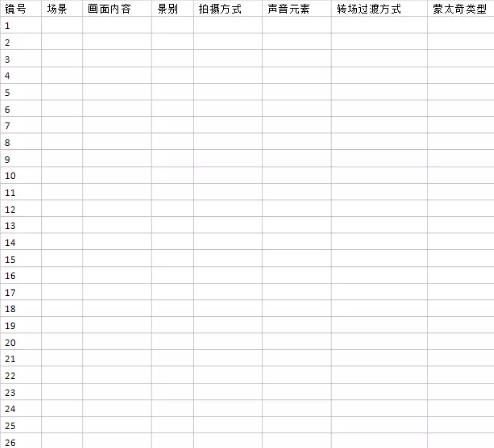
Film pulling template
The above figure is a pull template based on the analysis of lens language. Is it clearer in an instant? The steps are not so complicated. Moreover, this targeted single piece pulling training is more suitable for students to improve purposefully. Finally, there is one thing worth students' attention. In the process of pulling the film, we should not only pay attention to what the director did, but also pay attention to what the director did not do, and why we chose not to do that.
Returning to the end of Kill Bill 2, for example, when Beatrice was about to go down the stairs, the director still chose the perspective of an over shoulder mirror, gave up taking a close-up of the heroine's facial expression, and instead focused the lens on Bill who was closing and releasing the knife; Although this episode is dominated by female emotions. The reason is worth pondering. As for why? The natural light leaves a suspense for everyone here, and students are welcome to actively discuss in the comment area!
Today, we introduced the template of film pulling and how to pull the film correctly? Students should also find the right pulling method for themselves when analyzing pulling pieces. Multi angle and macro pulling is more suitable for senior players who already have certain pulling skills and film production skills; For Mengxin and those students who have a clear demand for their own pulling, it is more suitable to start with the element analysis method of a single technique and carry out pulling in a planned way. I hope that all students can master their own film pulling skills and win in the long march of the film industry!
More recommendations:
How to make a portfolio? How to analyze yourself in the creation of works?
How about Falmouth University College? What are the application requirements?
This article belongs to the original article of Natural Light International Art Education Team. Without permission, it cannot be reproduced commercially in any form. If it is found, it must be investigated for legal responsibility.