The undergraduate textile design major of Chelsea College of Arts is recognized as No.1 among the fabric majors of all universities in the UK, and the textile design major of Central Saint Martin College of Fashion is also the most popular except for the clothing design major. So, what is the difference between Lunyi Chelsea's textile design and Central Saint Martin's textile specialty? Today, we are honored to meet Cindy Moreno Biec, an outstanding alumnus from the Chelsea School of Art and Design, London University of the Arts. As one of the outstanding graduates who received an exclusive interview from the UAL College, Cindy has her own special page on the official website of the UAL.

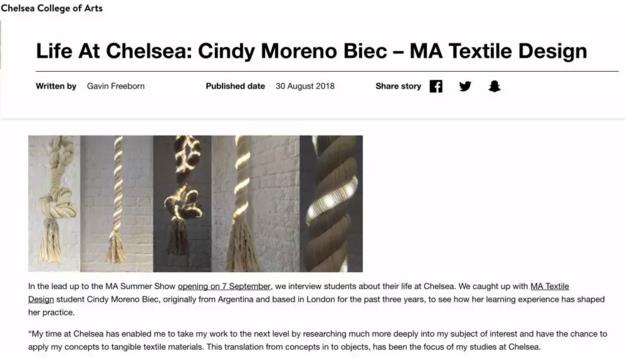
Screenshot from Cindy's homepage on the official UAL website
You know, Cindy Moreno Biec's design talent impressed the admissions officers from Saint Martin's Academy of Arts and Chelsea's Academy of Arts, but Cindy almost "did not hesitate" to choose Chelsea. So, what are the differences between the textile design majors in these two schools? What is the difference in employment after studying textile design in two schools? Why did Cindy choose Chelsea without hesitation? With these questions, let's compare the two schools.
What is the difference between Central Saint Martin and the textile design major of Chelsea Academy of Arts?
Professional Introduction
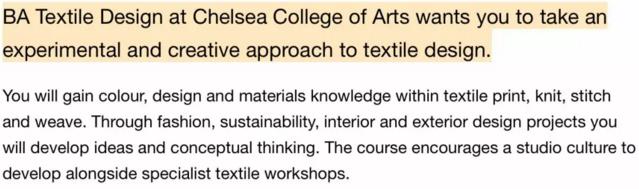
Introduction to BA Textile Design of Chelsea Academy:
Screenshot from the official UAL website
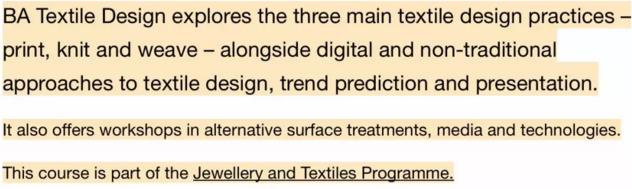
Introduction to CSM Textiles of Saint Martin College:
Screenshot from the official UAL website
From the official website of BA Textile Design of Chelsea Academy of Arts, we can see that the orientation of the school for this course is to "hope students to take an experimental and creative combination of methods to explore textile design"
At this door Textile Design Study Abroad In this course, students will acquire a series of knowledge in textile printing, fabric color, design materials and knitting. At the same time, it will also give you a new understanding of textile design from the perspective of fashion and sustainable development.
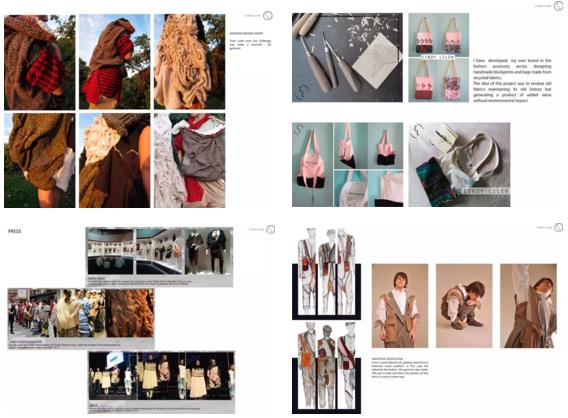
Cindy Collection Exhibition
CSM Textiles, a three-year undergraduate course in Central Saint Martin, mainly explores the trend prediction and display methods of textiles in the field of design practice, printing, knitting and knitting, as well as digital and non-traditional textile design. This major is part of the UAL Jewellery and Textiles program.
Differences in courses:
Introduction to BA Textile Design of Chelsea Academy of Art and Design:
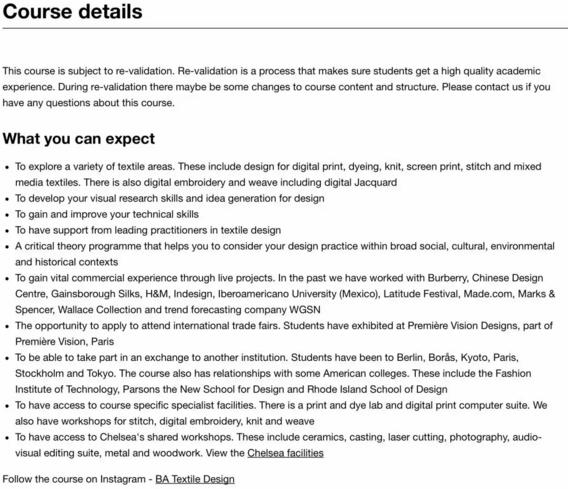
Screenshot from the official UAL website
In addition to many highlights listed on the official website, the summary is:
Explore various textile fields
These fields include digital printing, dyeing, knitting, screen printing, stitch and mixed media textile design, as well as digital embroidery and knitting, including digital jacquard. There is an old saying in China that "more skills do not weigh on the body". The current society also stresses flexible interdisciplinary learning. Mastering more knowledge means having a broader range of career choices and choices in the future, and students are more likely to find their best skills in the process of learning.
critical thinking
The textile industry has gone through many times from its birth to the present, inevitably influenced by cultural trends and politics in different periods. This series of courses will help students to make changes and adjustments to their design practice in speculation.
Practical project
Through practical projects, students can learn important business experience and obtain support from leading practitioners of textile design. In the past, the CHELSEA College of UAL worked with Burberry, the Chinese Design Center, H&M, Indesign, Marks&Spencer, Wallace Collection and the trend forecasting company WGSN have cooperated and accumulated rich project experience and interpersonal resources.
International opportunities
The students' works will be exhibited at the Premier è reVision Designs in Paris; Be able to participate in exchanges between multiple institutions; You can also visit and study in Berlin, Bross, Kyoto, Paris, Stockholm and Tokyo, countries and regions with profound artistic atmosphere; In addition, the course is also related to some American universities, including the College of Fashion Technology, Parsons New Design Institute and Rhode Island Design Institute.
Specific professional facilities
The hardware of the UAL has always enjoyed a reputation in the industry, and students can use specialized facilities specific to the course. In addition to a printing and dye lab and a digital printing computer kit, there are workshops for knitting, digital embroidery, knitting and knitting.
You can imagine what kind of experience it is to use the most advanced equipment in the most professional college in the fabric field?
The curriculum of CSM – Textiles in Central Saint Martin is also interesting:
CSM focuses on teaching students in accordance with their aptitude. Students are required to find the most suitable course for their own direction in their study, which has three stages (three years). The main research directions are as follows:
Knit
Print
Weave
Stage ONE
This stage has a total of three semesters of study time. Through a number of series of projects, the students mainly study the three main fields of printing, knitting and knitting, as well as the field of visual research.
At the same time, it will progress from an introductory design workshop to a series of structured projects, so as to develop your research, drawing, color, design and technical skills in two or three textile majors. Students will also explore digital and non-traditional design, structure and surface methods.
Stage TWO
At this stage, there will be substantive research to help students apply and consolidate all the knowledge and skills acquired in the first year, and put ideas into practice. At the same time, students will also come into contact with other related industries such as marketing, sales, and professional courses related to other design majors (such as clothing, accessories, interior design, product design, etc.), and explore the relationship between them.
Stage THREE
This stage is the time for students to finally determine their own professional direction. Students can determine which field they are going to enter according to their professional reserves and interest preferences.
Employment
In the future industry, Chelsea Academy of Art and Design BA Textile Design students will enter international fashion or interior design studios to participate in work related to trend prediction.
The knowledge of CSM Textiles of Central Saint Martin will penetrate into various fashion fields, from fashion design, fashion buyers, stylists to forecasting future fashion trends, whether in the theater or in the journalism industry. Or in the future graduate majors, they will be exposed to more complex and comprehensive professional content and professional skills. There is a certain similarity between the two.
Cindy, an outstanding alumnus of Chelsea Academy of Art and Design, interviewed and reported:
Q: Why Chelsea instead of St Martin?
Cindy: My time at Chelsea has enabled me to raise my work to a new level by studying more deeply the topics I am interested in, and have the opportunity to apply my concepts to tangible textile materials. The translation from concept to object has always been the focus of my study at Chelsea.
Q: Can you share your interview experience with us?
Cindy: Basically, on Ual Lunyi interview In the process, they will ask you what design concepts you have in past projects, what design ideas you have adopted, and what your main interests are. During the interview, it is very useful to bring your actual collection of works to help you explain your works. At the same time, they will ask you if you have any idea or study plan during your master's study, because master's is a course based on research projects. To be honest, I didn't have any ideas at that time, so I frankly said to the interviewer, "I am determined to do my best to improve my design to a higher level in the course." ---- What they really care about is the design idea of sustainable development. So if it is possible to add something related to your work collection, it would be better. By the way, if you are applying for Central Saint Martin College, you must remember to bring a collection of works to the interview, and don't be stingy to show your works in kind.
Q: Do you have many Group Projects in your study of Chelsea Master Textile Design?
Cindy: We can choose Individual Project or Group Project. The whole course has only two parts. The original intention of the course is very simple - encourage individuals to study and appreciate different design ideas and views. In addition, Chelsea has always provided the opportunity to participate in various awards and competitions. In some of these awards and competitions, you can participate in team events or individual events, but this is optional.
Q: Can you give me an example of your Group Project?
Cindy: The school gave us a situation or a topic: the first is about sustainability and circular economy, and the second is about the importance of the hidden heritage and textile identity in textiles. Then our group must study the topic, and finally we will make a presentation for the class.
Q: Can you introduce the best design you have done in the university?
Cindy: Of course, my final graduation work was the best. In fact, I worked hard all year and finally designed a series of high-quality works, which were exhibited at the school's summer exhibition. At the same time, the graduation exhibition also let students exchange and understand our different ideas: for example, I designed an interior decoration work that can meet different needs. Some people have collected printed textiles, some pay more attention to fashion, and others are engaged in handicrafts.
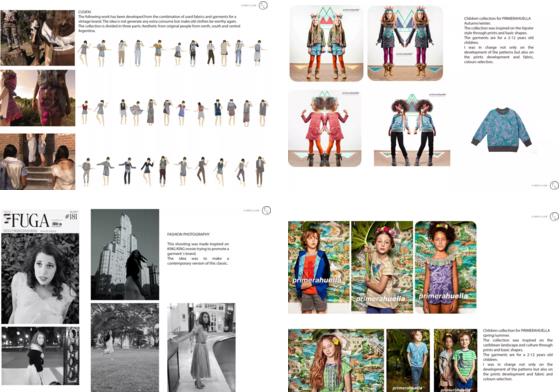
Cindy Collection Exhibition
Q: Have you encountered any difficulties in learning textile design? How did you deal with it?
Cindy: The only difficulty and challenge I face is that no one helps you design. You need to be self motivated, go out of your inherent circle, find the information you need and complete your task on time. Nothing is impossible there, but it is very important to force yourself to finish the work on time.
Q: Can you briefly introduce your graduate work?
Cindy: My goal is to continue to study ancestral languages, explore their way of life, and provide precious cultural heritage for modern society. I attended the Copenhagen Youth Fashion Summit, a two-year project, in which we focused on the sustainable development of textile and fashion industry. I was selected to participate because I studied the design materials I used in the Patagonian Merino Wool project in Chelsea - I studied how to manage livestock responsibly to restore desertification areas. I also did some internships in the studio of interior design and luxury scarves, which helped me understand how the industry works in the UK.
Therefore, my graduation project is to study many unwritten textile languages and how they can transcend language and provide deeper communication through the senses. I studied three languages: Quipu language (the knotting language of Inca people), Bogolanfini Mud Cloth voice from Mali (its female signs printed on the fabric) and the language in Mongolian felt.
My textile design work itself consists of different parts, which can be used in many ways, whether alone or in combination to create other things. The idea is that people can play and create their own works, which can understand the world from the perspective of touch. This textile design work is made of natural materials, so it brings more natural elements into the room and is closer to human beings. When human beings interact with natural substances, they can relax better, which will stimulate happiness. This is a process for those who are confident and eager to work hard - helping people adjust their mood so as to do things well.
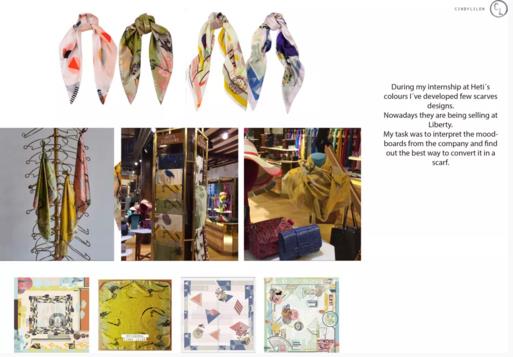
Cindy Collection Exhibition
I also did some internships in the studio of interior design and luxury scarves. They are very useful for understanding how the industry operates in the UK. Now, I am also a freelance designer. If you are considering learning MA textile design in Chelsea, please be ready to become your own development plan. The learning here requires you to have plans and be enthusiastic. Please focus on and make full use of your learning time in Chelsea to constantly develop new skills and knowledge.
Now, I am also a freelance designer. If you are considering studying MA textile design in Chelsea. Chelsea's creative department has helped us go beyond creating products. What we try to do is to create work with profound concepts and provide people's awareness at different levels - this is my third year in this city. I think my design in London will never end. Here, I can find so many inspirations, and there are many activities and opportunities to help me further carry out any creative project.
Natural light shares more topics for you:
Textile Design Major of Chelsea Academy of Arts - Course Introduction - Portfolio Requirements - Entrance Requirements
"Fabric major for studying abroad" Take CSM, FIT, RCA, Parsons as examples to compare fabric major for studying abroad
This article belongs to the original article of Natural Light International Art Education Team. Without permission, it cannot be reproduced commercially in any form. If it is found, it must be investigated for legal responsibility.