If the research of professional art works is not well done, it may end before it starts? Don't think it's impossible. Some students have finished their art study before they started because they didn't do a good job in research. We have introduced a lot about the art study collection Research. Today, the natural light introduces the research throughout the whole process of the art study application, including research selected by the country, professional research, research selected by the institution, and work collection research.
Art major study abroad research is not well done, and may end before it starts?
I met a student before who chose DIY to apply for Germany at the beginning. But because research was not fully prepared, I thought that the application for art schools in Germany was similar to that in Britain and the United States, so I prepared it according to the application procedures in Britain and the United States. The results are predictable. This student ignored the most important thing in the application for art study abroad - the study abroad policy, which led to a one-year extension of the application. In fact, this is due to the lack of research in the early stage. Therefore, don't think that research is just a work link that exists in the early stage of the collection. Research for studying abroad for art majors should be an important tool throughout the application process!
First, Research is a creative and systematic work to increase knowledge reserves, including human, cultural, social and other fields; After that, new designs or applications can be carried out according to the collected results. The role of research is to establish or prove facts by reiterating the results of previous work, solving existing or new problems, and developing new theories or goals. Our research content can also be a "supplement" and "extension" before the research project. The results of research can be used to develop research on a certain topic. For example, in school research projects, research can be used to improve students' research ability and prepare for future work. The two points to pay special attention to in the above part are: first, research is creative and systematic, and second, research is "real". These two points can be applied to all disciplines, as well as art and design majors.
In the above explanation, although the definition of research is not limited to a discipline, it is not difficult to see that it has a deeper "research meaning" than most people understand "questionnaire survey", "visit and check", "return visit and inquiry" and other surveys. What is needed is for researchers to do in-depth mining and thinking. Let's take a look at the role of research in the early, middle and late stages of art study abroad.
Pre application research
"Since 2015, I have been preparing for the application in 2020"
Don't think this is a bluff. Such students are really, really, really not rare. And with the deepening of everyone's independent attention to art study abroad, the number is still increasing.
In my work in recent years, I have found that more and more parents and children are beginning to realize the importance of "planning in advance". For example, several students I have recently communicated with, one of whom has just entered senior three and has already begun to prepare for graduate applications; Another parent, whose child is now in the second year of junior high school, is preparing to go to the United States to study visual communication for undergraduate education. Recently, he has prepared for long-term planning and started to take basic painting classes and participate in creative thinking workshops.
The advantage of planning in advance is that in addition to leaving enough time to prepare a complete collection of works and cultivating children's overseas art learning methods and habits in advance, there is another advantage that is most easily ignored. It is "background improvement". I have seen too many students sharpen their guns before submitting applications and choose to go to some small stores (including but not limited to milk tea stores, clothing stores, restaurants, etc.) Or the community does voluntary labor, eager to get some "background" with application advantages. However, the "background" that supports the application documents for art study abroad cannot be "encountered" in a short time.
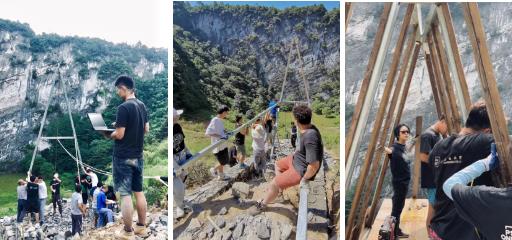
Natural light trainees participate in the construction project
The application background projects with competitive advantages often have a precondition that others cannot or few can. For example, exclusive cooperation projects of colleges and universities; Learning projects with credit conversion; Award winning in international design competition; Design and research projects with a high degree of public welfare, etc. These opportunities and platforms can not be easily grasped in life (which is why I used "encounter" earlier). In natural light, there are service officers who provide students with "practice and internship" opportunities. They can accurately connect the corresponding application resources according to the needs of each student, help students reduce the workload of this part, and also provide more platforms and opportunities for children.
Secondly, the two points that many students are particularly easy to ignore in the preparation stage - country selection and professional direction selection.
One country chooses research. Although in the application, the "excessive" excellence of the collection of works can sometimes determine whether the school will make an exception for admission, the macro application policy of the country will not be easily changed because the collection of works is excellent. Different countries have different policies for studying abroad. Once the preparation is not thorough, the consequences are likely to be delayed or even unable to go.
As for professional research, many students have asked me this question: "I see many art schools say that they do not require to submit a collection of works that fully meet the professional requirements of the application, does that mean that I can not consider the professional direction first?" Students, the school said this just to see your rich multi-dimensional creative ability and give you more freedom to show yourself, Instead of letting you start applying when you are not sure about your major!
We have met a student before who indicated that he wanted to apply when communicating for the first time Studying in Interaction Design , and the collection of works has been basically completed, but during the evaluation of the preliminary collection of works, the teacher found that the collection of works prepared by this student was actually more inclined to web interface design. Although web interface design belongs to interaction, it is only a very specific small professional direction in interaction, rather than all.
Later, the teacher took him to re understand the interaction design, and understood that in addition to the interface and web page, the interaction design also included user experience, service design, even device, programming and other fields, and finally corrected the direction of the work collection.
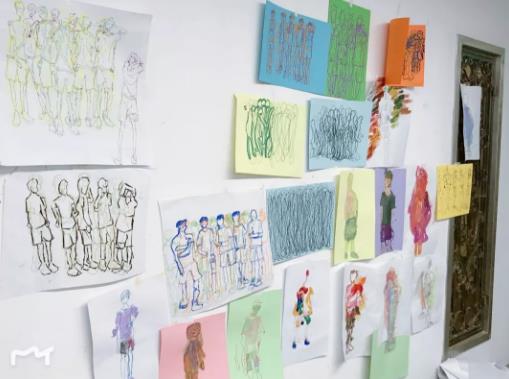
Student Practice Works of Natural Light Overseas Alliance Summer Course
The above kind of professional understanding is relatively limited, and there is also an extreme situation. I also said in my previous tweets that I chose a major based on a temporary interest, and later regretted it. In fact, this situation is also caused by the inadequacy of professional research in the early stage.
When we communicate with students for the first time, we will first determine the professional direction with students. Even if we do not determine a specific major, we will delimit a general professional scope in the "six major departments" according to students' hobbies, current advantages, future development and other fields. After that, through continuous communication with consultants and professional teachers, students can understand the differences between different specific majors; And the difficulties that this major may encounter, so as to finally determine the application goal.
For students who choose DIY, it is necessary to make careful and independent comparisons. For example, different countries, universities and majors can be listed in the form of a table, and the policy of international students, basic requirements for application, school style, future development of majors, curriculum, etc. can be compared horizontally, so as to determine the countries, majors, and specific colleges in turn.
Secondly, a little advice: Don't be too resistant to learning about application information through institutions. Even if you don't sign up for institutions or take courses, institutions have many "free" resources that can be fully utilized. For example, the dry goods tweets or student cases that major institutions occasionally release on their public accounts can help you better understand some current hot trends in art study abroad, And apply for professional direction.
Another example is the occasional overseas alliance short-term courses/portfolio courses, master tour activities, online and offline interactive lectures, courses, workshops, etc.
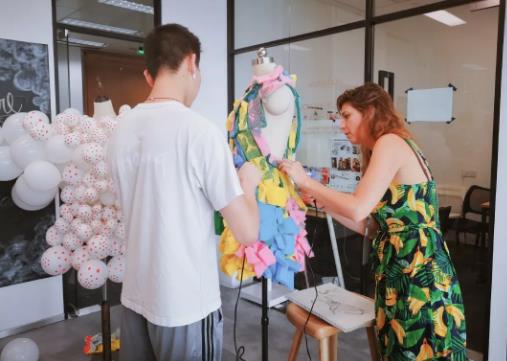
Natural Light Overseas Alliance Summer Course Fashion 360 Scene
Finally, students who choose to seek help from institutions need to do further research on institutions. At present, the common types of institutions in the market are: large institutions that have matured, small and medium-sized institutions that are developing upward, team studios that focus on teaching, and personal studios in the form of a treasure or an individual.
How to research different institutions to choose the best one for yourself? My suggestion is to compare teaching resources, course products, applications/services and other aspects.
Portfolio Stage Research
"How is the collection of works completed? Research+research+research"
In this part, I personally think that research can definitely be said to be a "joint" connecting all links and steps in the stage of collection of works. Every step of advancement and forward development requires constant research.
The collection of works emphasizes "logic" and "creativity", but many students are difficult to balance the relationship between the two in their creation. For example, some students are particularly creative, but when presented in the collection of works, their ideas and creative logic are broken.
As we all know, overseas art colleges and universities define the collection of works as a "whole", which needs a beginning and an end. Therefore, your creative ideas, inspiration sources, and thinking processes need to be demonstrated. Therefore, the creative logic must not jump, which is the continuity of creation.
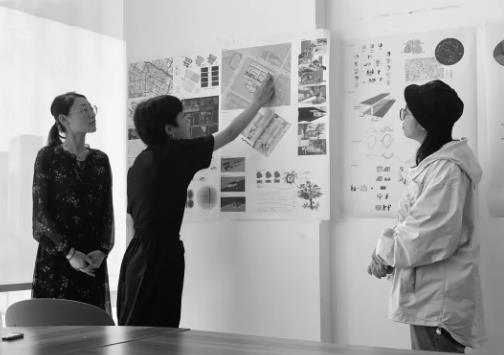
Natural light critical scene
How to balance "logic" and "creativity", and at the same time, how to display their ideas and practical operations in a coherent way in the works, in fact, we need the help of research. For example, we often refer to "review", "review" and "sorting" as another form of research, which is carried out simultaneously with research.
For example, critical/presentation, we all know that critical is very important in the creation stage of works, especially when ideas are blocked or tangled, critical can help us to reorganize our thinking, diverge our thinking from other perspectives, and rethink.
For example, in natural light, each student will experience at least four critical moments in the process of completing a project, first with his or her professional teacher, then with the dean of the "six major departments", then with the teacher of the teaching and research center, and finally with the tutor of the admissions officer for final review and guidance, so as to help students find new ideas while divergent thinking, Control the creative direction and rhythm of the whole work. Improve the quality of works, optimize the creation process and logic, and deepen the depth of themes, so as to maximize the success rate of applications.
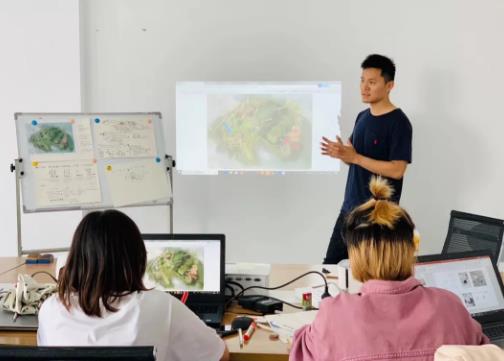
Natural light critical scene
I have seen a lot of students work hard when they are doing projects. They don't think about whether their works have other development ideas, and they don't stop to think about whether there are better options. They even rarely exchange ideas with students in studio. Although this is "single-minded", ideas and creativity are inevitably limited to a single path, and it is difficult to reflect diverse abilities and qualities in one work.
I have always stressed with the students that every work of ours, even an attempt of divergent thinking in the workshop, should stop to think about our own gains. Because every practice or creation we do is not just to get an offer, because the offer is just a process. In the future, you will have to go to overseas art schools to study, and every accumulation before this will help your future development. The same is true for critical/presentation.
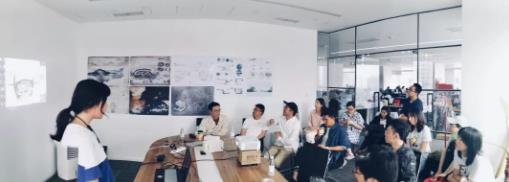
Natural light presentation site
Listen to others' suggestions or ideas, so as to improve your own ideas and make your creation more full. In fact, this is also research, "increase your knowledge reserves, compare the existing status or progress of the project, extend the depth of your views, and thus gain more ideas and directions". This kind of research is not conducted through questionnaires or interviews.
Late application Research
"Do you think the collection of works will be finished? There are still papers and interviews waiting"
Compared with other studies abroad, art studies abroad, because of the existence of work collections, many students will focus on work collections, while ignoring another key - application documents and application materials (special attention should be paid to recommendation letters). In fact, I mentioned the application document briefly earlier, which is mainly the preparation in advance based on the application background.
Students who have chosen institutions have applied for teachers to supervise and pay attention at any time, but students who choose DIY should make their own plans, especially when you have a future to go abroad to study art design, you should make your own planning.
After determining the country, major, and college, we should first research which academic projects, research, competitions, and internships are conducive to our own application and meet the needs of the applicant college. For example, I gave a hint about "standard division" - what others can't do, or what few people can do.
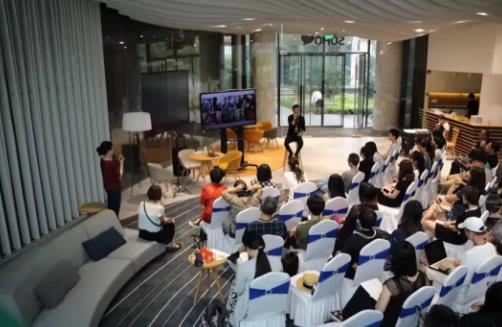
The scene of Natural Light Overseas Alliance Parent Document Sharing Meeting
After that, you should consciously pay attention to which places/channels or institutions can provide you with such help. Here I want to remind you that you should not choose "to do the paperwork" or "to fabricate in the paperwork" because it is "difficult to reach". You know, no admissions staff of any art school is "bullied". Making up one's own experience is more mundane than the description in the text book, and the consequences are more terrible.
For example, in natural light, in addition to regular document sharing for students, there is also a "parents' document sharing meeting" for parents to help parents integrate into children's art study abroad application, which not only allows parents to participate in the growth of students, but also allows parents to better understand the identity of students and help teachers collect and sort out students' application documents. It also allows parents to keep track of students' learning and application progress at any time.
Then there is the interview. Many students think that the interview is nothing more than to practice listening, speaking and dialogue skills. But! First of all, there are many kinds of interviews: colleges and universities come to China for interviews, video interviews, telephone interviews, and students are invited to the university for interviews. In addition to these basic ways, the types of interviews also include 1v1 single person interviews, multiple student groups, one student and multiple teachers groups (and some schools will not tell students about the specific forms).
Interview requirements vary from art school to art school and from major to major. For example, Parsons does not need an interview for undergraduates, but for masters; Another example is SVA. Some majors need interviews, but some don't; Like RISD, some majors even require students to participate in multiple rounds of interviews; Let's talk about RCA Royal College of Art The interview of IDE and GID is not only to talk with the interviewer, but also to complete a proposition creation on the spot within 1/2 hour, and communicate their ideas with the interviewer. This proposition is completely unknown to you before the interview.
Moreover, many students may have heard the sentence "most college interviews are basically 15-30 minutes", but in fact, the specific time is uncertain. For example, one of our 2017 students interviewed for less than 10 minutes, and the interviewer's emotional reaction was also flat. The students must have been rejected after meeting, but the offer was received within two days; For another example, in the application in 2019, there was another student. Because the interviewer was very interested in his personal experience and works, he talked with the interviewer for more than 2 hours in the on-site interview of the ual, and finally won a very good offer.
Such complexity is enough to explain the uncertainty of the interview. Even if the preparation is complete, it is hard to guarantee that 100% of the interview will not encounter emergencies (which does not include a series of high probability events, such as the interview notice is automatically classified as spam and missed the interview, and the interviewers do not receive any information and miss the interview time due to the disconnection during the interview). If you don't have detailed research or basic understanding before the interview, it is really difficult to rely on excellent oral English to play on the spot.
In natural light, not only the application teacher will help students control the interview time node, college docking, email exchanges, information confirmation, interview form, etc., but also the student's professional teacher will help each student conduct a simulated interview before the test. The admissions officer members of the Overseas Alliance will act as the front-line gatekeepers of the college level to help students conduct drills before formal interviews with strict college standards and attitude.
If you currently choose DIY art study abroad application, you must consciously understand the needs of different institutions from the beginning. Do you want to interview? If you want an interview, what is the first form? About what time period? Do you need to pay? The preparation can be targeted through the experience given by the institution or previous applicants. Secondly, I should also pay attention to my previous application background and the accumulation of experience in the creation of works collection to ensure that I am "confident" and "have something to say" during the interview.
Research on studying abroad for art majors is not only a signpost that affects the direction of each link, but also a "key point" that connects each step. From selecting a country, a major, and a school to the creation in the preparation stage of the collection of works, to the preparation of documents and materials in the middle and later stages of the application, research is connecting our art study abroad in a "invisible" state.
Natural light shares more topics for you:
How to let the admissions officer hear the "voice" of your works?
How can the individuality and commonness of the works of foreign art colleges be balanced in design?
This article belongs to the original article of Natural Light International Art Education Team. Without permission, it cannot be reproduced commercially in any form. If it is found, it must be investigated for legal responsibility.