Why do I always fail to meet the teacher's requirements? Or is the college standard really that high? It seems that I have no chance of taking an offer... I have heard a lot of such words in ordinary times, not only this enrollment quarterly review, but also in the usual consultation and student chat, I have been asked this question by students. Why does the teacher always look dissatisfied? Why do teachers or admissions officers say "no"? How to satisfy the admissions officers in the training of art works abroad? Today, we will talk with you about why teachers or admissions officers "don't think so" and what we should do to satisfy the admissions officers in the coming application season?
Jumping too far, thinking without second thought
The creation of works collection really needs creativity, but creativity is not equal to thinking jump, which is why we need brain storm in the process of creation. Although the idea of brain storm is constantly spreading, every divergence and extension of it is based on the divergence of the previous point, not a sudden idea.
Art going abroad Portfolio training In general, it is connected by logic. Even pure arts, which seem to only need to express feelings and sensibility, also need logic. For example, we had a photography professional art training student who had been living abroad since high school, and seldom met the elderly who lived at home in China. Therefore, her works focus on expressing the theme of "memory of ancestors" in different ways.
In her works, she tried to use film, digital, blue sun and other methods to shoot. In the final presentation, it is a combination of pure art, plane, book art, installation, manual book and other art forms. All these are attempts and extensions based on the theme and photography itself. Each piece of work is closely related to the theme, expressing his "memory of ancestors".
For the training of overseas art works collection, no project can be separated from the theme and specialty in the process of creation. Even though we especially emphasize interdisciplinary, it does not mean that you have to create a "hard cross" when creating. All starting points are based on the theme. If the theme is not suitable for interdisciplinary, we do not recommend students to add interdisciplinary nature to it.
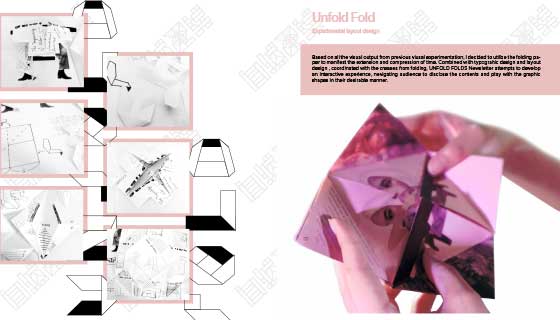
"Large" question "small" do
In fact, this kind of situation often occurs. The most typical phenomenon is that students have many ideas, and when determining the theme, the theme is also very good, but in the process of the project, the content is not enough to support the theme, or the interpretation of the theme is one-sided, which seems to be a tiger's head and a snake's tail.
In this case, there are generally two possibilities of concentration. The first one is that time is short and more divergent thinking cannot be carried out; The second kind is more likely to appear in students who have no basic knowledge or have changed majors. At the beginning of learning, the depth of basic ability and ideas is not enough to meet such a big topic.
For the first kind, students who are pressed for time. At the initial stage of overseas art collection training, it is necessary to plan the time of each project. If the themes of multiple projects in the collection have been determined, you can roughly arrange the timeline of the collection according to the estimated size of each project. However, for students with a strong sense of time or strong professional ability, if there are overlapping parts between projects, they can choose to carry out them at the same time.
Secondly, try to reduce some time consuming processes, such as material testing. It is not that you are not allowed to do material experiments at all, but that you do not have too much time and room to "try and make mistakes". So before the material test, you can find inspiration and ideas from a large number of materials and design cases accumulated at ordinary times, and transform them, so as to conduct material tests in the best several schemes within a limited time, and finally determine your own design project material selection.
The second situation is lack of professional ability or the ability to dig deep into ideas. The former may be easier to solve, and can be completed under the systematic "evil remedy" of professional teachers, but the ability to dig deep into ideas is difficult to make up in a short time.
We met one such student last year who applied for jewelry design major. In one of the projects in her portfolio, she hoped to explore the theme of "invisible communication". The project background of the theme comes from the DNA migration in science fiction films. She proposed the premise that when we go out, we will touch many public facilities, such as cash machines, bus handrails, elevator keys, etc. During the touch process, we will leave some dander or information on these facilities that can be seen only with a microscope. When others touch them, We have an invisible communication with strangers.
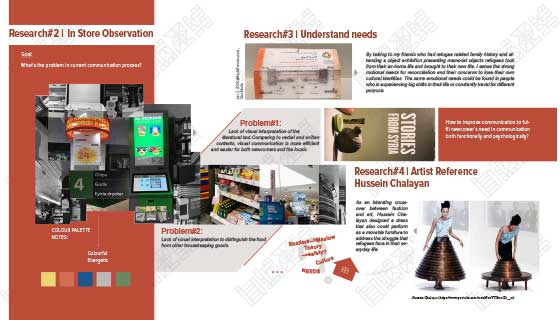
This topic is very interesting, but it is difficult to present in jewelry. The students also imagined that at first they considered recording people's fingerprints with glass slides, but when there are too many fingerprints, the wearing effect will be bulky. Therefore, she spent a long time in the material experiment phase of this project.
Such a long time of "wasting energy" is very terrible for her, who is originally zero based and often not confident. So the professional tutor of Natural Light combed the theme with her, helped her to carry out the brain storm again, reviewed the initial state of the whole project and theme, and finally thought from a different perspective - thinking about "invisible communication" from the psychological perspective, so as to find suitable materials again and complete the collection of works.
Insufficient foundation, just want to "run"
I have met a lot of students who are trained in art works abroad. They may have good ideas, or they may have ideas. Once they put forward ideas, they hope to put them into practice as soon as possible, but they lack the ability to put them into practice. This kind of situation is more common in students who have a certain foundation, or have a certain interest in art design, but have not carried out systematic learning.
For example, a student I met at the beginning of this year, who wanted to apply for a bachelor's degree in fashion design, usually liked to read various fashion magazines, as well as the tweets and sharing of fashion bloggers. He definitely had his own understanding of fashion.
But when the teacher initially communicated with her, the teacher also found that although she usually has her own habit of painting, her basic ability is still not enough to support her to directly start the portfolio course in a short period of time; Secondly, although she has a lot of ideas about fashion, which is very helpful for her subsequent study, she still cannot deal with these ideas because she has not systematically studied fashion related majors, and does not know how to better transform or deepen her ideas.
So when arranging the training course of art works collection going abroad, the teacher first planned 20 class hours of basic courses for her, and then matched with design thinking and speculative projects to help her learn more systematically, so that while mastering the basics, she can gradually understand how to deal with her own ideas, how to express them, and so on.
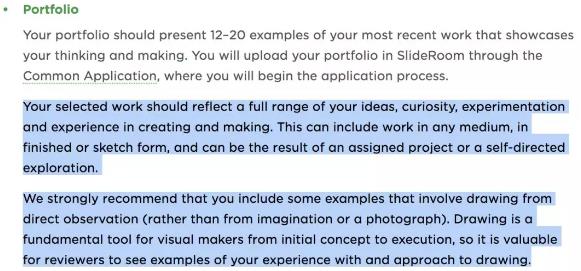
Good ideas are very important in the process of art design, but the ability to put ideas into practice is equally important. Although most overseas art schools emphasize students' creativity, it does not mean that you can ignore the professional foundation. For example, RISD Rhode Island School of Design In this year's updated collection requirements, it is clearly stated that students are required to submit observational paintings as part of the collection. Because "for visual creators, painting is the basic way/tool to realize ideas from the initial concept to the final specific implementation."
Take it for granted
In fact, the most prominent thing about this is that I took it for granted to build a design scene or design scheme in my mind, tried it out in my mind, thought it was OK, and then used it in the training of art overseas works collection. This kind of situation is easy to occur in any profession.
The main reason for this is that many students' works in school are result oriented and pay more attention to the final output effect than the process from 0 to 1. Even if the project contains "process", few students will take the initiative to review or reorganize it.
For example, in the training of the collection of overseas works of fashion design art, there was a student who had a very good idea and wanted to design a set of special clothes for those patients suffering from bone diseases in combination with product design. But in the research stage, the student only considered the family and doctors for the audience group analysis, but did not give much consideration to the patient's comfort and bone bearing capacity.
Therefore, the teacher guided him to consider the patient himself first, because the patient is the person wearing this suit, so he should look at this product from this perspective. At this time, she found that if the clothing was designed according to the previous design, the selected material itself was too "bulky" for patients, and patients could hardly bear such materials. After rethinking and reconsidering, the student began to find fabrics and materials suitable for patients with bone diseases, and finally completed the whole project.
Collection of works cannot be completed by taking for granted, especially for projects that need a large amount of data or facts as theoretical basis, do not take for granted! In the clothing design, it may be "just" that there is a wrong version of the goods, but in the architectural design, a little assumption may lead to the collapse of the whole project.
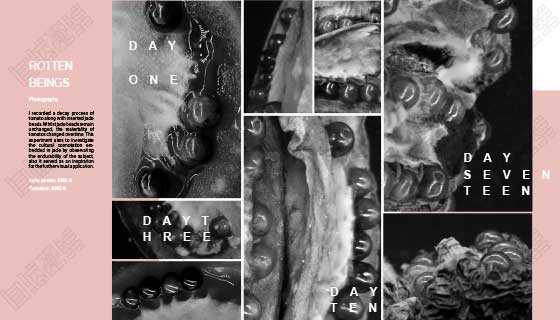
How to satisfy the admissions officers in the training of art works abroad? Overseas art colleges and universities have very comprehensive requirements for students' abilities. Many times, although we apply for a separate major, the abilities we need to show are not limited to the major itself. In addition to the mastery of the skills and knowledge of the major, your ideas, the process of thinking, the way to experiment ideas, and the way to put ideas into practice, Are the key points of the investigation of colleges and universities. Each step is the key, and each step is connected by the "project theme", which cannot and cannot exist alone.
This article belongs to the original article of Natural Light International Art Education Team. Without permission, it cannot be reproduced commercially in any form. If it is found, it must be investigated for legal responsibility.