When students apply to art schools, and when art schools enroll students, many times it is actually a two-way multiple choice question. But in front of this question, how to grasp the dominant power? How to make yourself the leading "chooser"? Then we need to have a deep understanding of the "routine" and audit standards of overseas art schools. This year, no matter in Britain or the United States, art schools have changed a lot. Even at the current application season, some art schools are still adjusting their enrollment strategies. Before the official arrival of the enrollment season, Natural Light also conducted an exclusive interview with Trevor Amery, the former admissions officer of MICA Maryland College, a member of the overseas alliance, and talked with him: What kind of students would art schools never choose? How to avoid the "minefield" of art colleges?
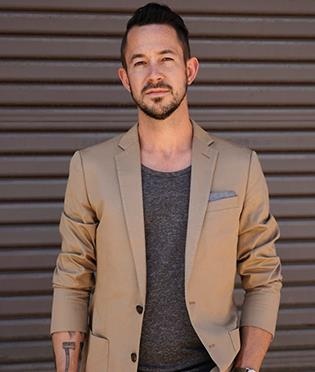
MICA Maryland College of the Arts Former Admissions Advisor
Independent artist
UC San Diego Master of Pure Arts
Bachelor of Arts in Painting, Maryland Academy of Arts
Fulbright Scholar
Trevor Amery is an outstanding artist, painter and sculptor living in San Diego, California. He has held exhibitions in many countries and cities around the world, including Hungary, Finland, Nepal, Mexico, the United States and so on. He received a Bachelor of Arts degree from the Maryland College of the Arts and a Master of Arts degree from the University of California, San Diego. He served as a tutor at the University of California, San Diego, and was a former admissions consultant at MICA Maryland College. He has many years of experience in reviewing student art collections.
Trevor Amery
The student they wouldn’t admit. Case by case always,but I would say a student who has very poor grades,a student who doesn’t seem teachable.So if the admission had exchanged talk about portfolio with the student nothing involved in portfolio didn’t apply any of the feedback theirs received from admission consultor or from staff, student hasn’t been touch with staff or faculty in the college.
That will give us kind of an understanding that maybe they were not a teachable student and they would not succeed.
Environment require a lot of independence, cause we do want every student to succeed every college wants their student to succeed,but in that does require a lot of independence.
Maybe a student who doesn’t seem can handle that independence who doesn’t be the best candidate, they would maybe pick up on that,so maturity is important,hard work is important and portfolio will reflect those things.
In the interview, Trevor mentioned three very important keywords: Very Poor Grades, Teachable, Independence
Very Poor Grades
Poor grades actually mean poor application conditions. Many students often pay special attention to the collection of works while ignoring other application materials, especially the scores of high school/undergraduate students and language scores when applying to art schools.
We have met a classmate who asked before: Is the collection of works particularly excellent, and can we get an offer even if other conditions are not met? Although there are such cases every year, there are very, very few of them. If you want to press your future on an event with a very high probability, it is not reliable at first; Secondly, even if it is possible, you should be prepared to work a hundred times harder than others in your portfolio. Because compared with other students, they will inevitably take more "detours".
For example, in 2019, Shi, a student of Natural Light, won the CalArts role animation offer with only 1-2 places per year in mainland China, which was obtained without passing the language test. This case can be said to be very special. But he also said in the interview: "Your time and energy will be very directly reflected in the final results. I used to sleep four hours a day. Now I think it's really sad, but it's worth it. At that time, the language was not enough. In fact, I was very flustered at the later stage of the application. Finally, I forced myself to apply. When I received the CalArts interview notice, I began to regret why I didn't reach the language score, so that I could be admitted directly. "
It is not difficult to see that even if your collection of works is excellent, your language scores and cultural course scores are also very important. It may even be like a classmate, who can get an offer directly, but still needs another round of interview.

Shi's Collected Works
Therefore, the collection of works is very important, but don't ignore other achievements and materials because in the application process of overseas art schools, every material required to be seen when enrolling students is "useful". Only when these materials are combined, can the school see your comprehensive ability more completely and judge it accordingly, Are you a student that the school needs to enroll.

Shi's Collected Works
Teachable
Speaking of Teachable, this concept is judged from the perspective of the school. As we said at the beginning of today, students applying for art schools and enrolling students in art schools are actually a two-way choice question. Each needs to make a choice based on the other's situation.
For the school, when the admissions officer and the student are in preliminary communication, such as interview, or in some early review opportunities. If the admissions officer has exchanged views (discussions) on the collection of works with students, but there is no feedback they received from the admissions officer or staff in the final presentation of the collection of works, then for the admissions officers, these students are the types that the school will not consider when enrolling. In short, when the admissions officer makes suggestions to the students, the students do not give any feedback and response.
Many students will be asked "why choose xxx college" when interviewing or communicating with the admissions officer. From the perspective of students, the process of learning is actually a process of getting advice from others and improving themselves. Therefore, most students will answer in the form of "praising" the school, for example, because I think the school can bring me xxx; I think I will get a great promotion in this college, because the school can help me xxx

Although as a student, this idea is true, but sometimes, especially in the interview, remember not to ignore what can be brought to the school by showing your excellence? You want the school to choose you, because what are your advantages different from others? What admissions officers and schools want to see at this time is actually the potential of students. In particular, whether students have the potential to teach.
In fact, this is easy to understand, because the school hopes that every student can succeed and develop into a better artist or designer. At this time, although the school itself has teaching ability, students with greater potential tend to accept teachers better Portfolio Coaching And turn it into its own content.
Independence
Independence, for students, independence is actually a reflection of maturity and self-confidence. Restricted by the art examination mode and the teaching environment in the form of large classes, many students often lack the ability to complete a project independently, especially those projects that are carried out independently from beginning to end.
Students who lack independence often lack the element of "courage" in their works. Accustomed to doing what the teacher says, the school does not see the potential of students. Moreover, for students, independence is a reflection of their unique personal style and ability to think deeply independently. For example, when facing the widely discussed topic or theme of "AIDS", if your ideas and creativity are the same as those of most people, colleges and universities will not feel your uniqueness.
Many students will have a particularly obvious feeling when they first come to the natural light, that is, teachers often teach in the form of "chat" and "communication". From the selection of topics, to the determination of plans, to the final implementation, the role of teachers is not only to impart professional knowledge, but also to help students compare different options in the way of "advice" and "guidance". From the perspective of students, choose the scheme that is most suitable for the project theme. In fact, this is to cultivate students' ability to control and judge independently.

In natural light, early teachers learned about students' situation through communication, so as to help students sort out their strengths and weaknesses, and help students build a perfect aesthetic cognitive system and conceptual logic according to the progress of the course.
When students have mastered the overall professional logic, what they need is the divergence and deep excavation of thinking logic and creative ability. At this time, the simple teaching mode of "you talk and I listen" is difficult to play a better role. Because at this time, teachers need to let go, let students do it by themselves, and combine practice to truly master knowledge. For example, in natural light, even in basic skills courses, teachers will guide students to combine hands-on practice and creative thinking to complete. One of the most obvious cases is that students learn not only painting skills, but also the way to create and express with the artistic technique of "painting" after completing the Observation Drawing course.
As a aside guide and collaborator, the teacher helps students to sort out their ideas at different stages, re-examine problems, and review the current process to gain new inspiration. Compared with "promoters", teachers are more like partners of students to discuss and exchange ideas and support each other in the process of teaching portfolio.
During the study period of each student, the professional tutor, the heads of six major departments, the teaching and research center, and the overseas alliance will give students corresponding portfolio review and comprehensive ability guidance and improvement at each stage.
Especially for the core team led by the teaching and research center, teachers, as one of the key points of teaching, want to help students acquire the corresponding ability, first of all, they need to have enough empathy, empathy, teaching ability, high professionalism, rich teaching and working experience, etc. Therefore, in addition to providing review and teaching guidance for students, the Teaching and Research Center is also responsible for providing more rigorous training and review mechanism for tutors.
As the recruitment season for final audit guidance every year, the recruitment consultant teachers will also carry out continuous communication and interaction with the teachers of the Teaching and Research Center, so that the recruitment teachers can understand the current status of domestic students, and at the same time, from the perspective of colleges and universities, provide support and co construction in the teaching, philosophy and value dimensions of the Teaching and Research Center.

In today's special edition of enrollment season, we talked with Trevor Amery, a former enrollment consultant from MICA Maryland College, and talked with him about what kind of students art colleges would never recruit. In this dialogue, Trevor gave us three key keywords - Very Poor Grades; Teachable; Independence。
First of all, although the collection of works is very important for international art students, do not neglect other application materials and, especially, your standardized scores and language scores. Those students who seem relaxed and use their works to impress colleges and universities to be admitted exceptionally, not to mention that they are a minority, most of them also regret this and have made more efforts to do so. Secondly, from the perspective of colleges, no school does not want its students to be unsuccessful, so for schools, potential students are often more able to attract their attention. Finally, independence is very important for any artist or designer to have their own independent characteristics and styles, because they can distinguish you from other applicants and stand out from many competitors.
Trevor Amery, the former admissions officer of MICA Maryland College, shared his experience in enrollment review with us in the first episode of the special edition of the enrollment season. In the second episode, we will still bring surprises to everyone!
This article belongs to the original article of Natural Light International Art Education Team. Without permission, it cannot be reproduced commercially in any form. If it is found, it must be investigated for legal responsibility.