Recently, the world famous architecture magazine Dazeen announced the top 10 of the world's best residential design in 2017, including the Polish ark sitting on the whole prairie, the Spanish pavilion hidden in the forest, the British village villa perfectly integrated with nature, and a pile of "inhuman" houses. Jintai Village residential area rebuilt after the disaster became the only Chinese building selected. today Tutor of Natural Light Art Architectural Design Collection for Studying Abroad Let's take a look at the rural buildings after the Wenchuan earthquake. Students who want to study in British architectural design should not miss it, especially natural light has successfully applied for 14 AA Architectural Alliance College So, the trainer of the collection of professional architectural works will comment on the recycled buildings!
There is no avant-garde style with a sense of science and technology, nor floor to ceiling windows standard for luxury houses. What they looked like ten years ago is even more "horrible". Ten years ago, on May 12, the Wenchuan earthquake, which was the deadliest after the Tangshan earthquake, hit China with a magnitude of 8.3 and damaged more than 100000 square kilometers. The earthquake waves spread around the earth six times. The earthquake affected more than half of China and many Asian countries and regions, causing 69227 deaths, 374643 injuries, and 17923 missing people.
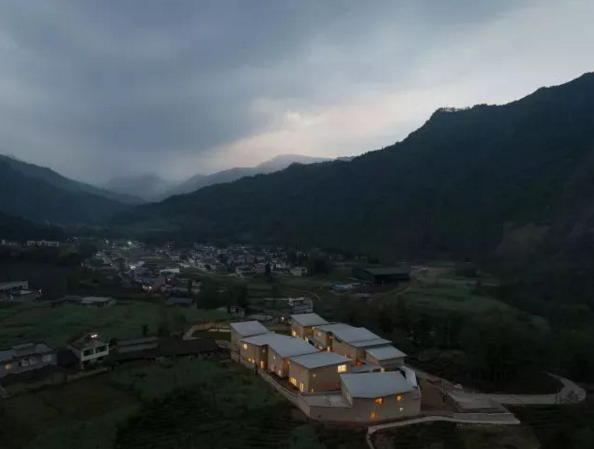
Jintai Village is located in Bazhong, Sichuan Province, where it is rainy. The low adobe houses are extremely damp. In addition to the bad natural conditions, the Wenchuan earthquake almost razed Jintai Village to the ground. The disaster is cruel but people love each other. The earthquake stricken area soon rebuilt a neat and beautiful community house.

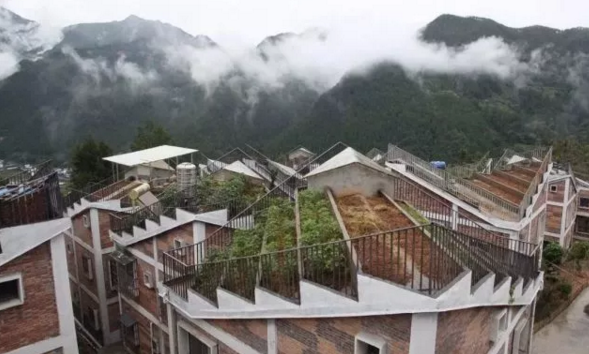
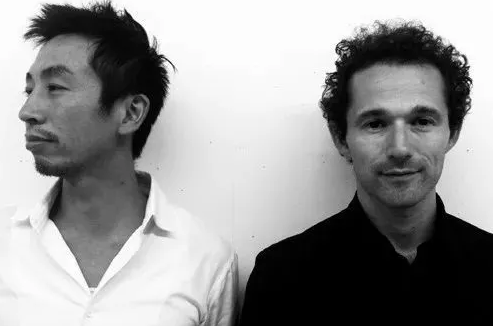
However, the landslide caused by the rainstorm in Bazhong in 2010 made the new houses rebuilt after the disaster disappear in an instant. The villagers who were devastated by the natural disaster only enjoyed a short time of living in peace. Then, with the efforts of the government and architects, the residential area of Jintai Village became 22 small buildings scattered in the mountains, with fog around it, like entering a paradise by mistake. The designers of this residential area in the mountains are from School of Architecture, University of Hong Kong Associate professors Lin Junhan and Joshua Bolchover.
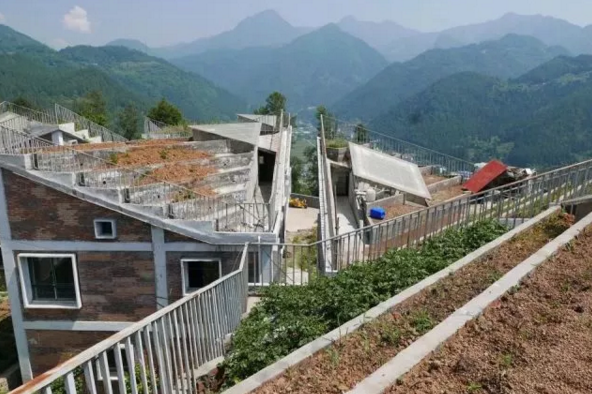
Architectural design Instead of moving the houses in the city to the countryside, they are designed to preserve the characteristics of one area of water and soil, and to meet the villagers' living habits. Every time the design scheme is modified, the architect will invite all villagers to discuss how to choose the wall color, where the wind blows, and where the sun comes from... everything is in every detail. They designed trapezoidal small vegetable gardens on the roof of each household for the villagers who like to be self-sufficient and enjoy themselves, and also designed a rainwater collection system. The villagers only need to turn on the tap for watering.
A corridor connecting the village is designed at the cool spot at the entrance of the village to serve as the public social center of the village. In the evening and during the slack season, villagers can chat, play cards and dance square dances here. If they meet someone who is married or has passed the full moon, they can also buy a table here.
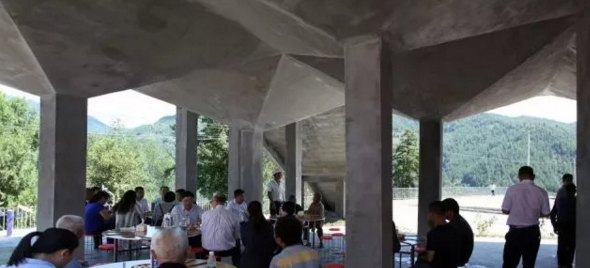
In order to enable the villagers to return to the green natural life, sewage treatment equipment is installed below the village. After treatment, the sewage from each house is discharged into the reed wetland for further purification. The water flowing out is clean. The building is not only beautiful and practical, but also safe. In order to stop the villagers from trembling, the earthquake resistance of the house itself is strictly required, The seismic performance of each building has passed the high strength safety test.
Dazeen magazine commented, "This is one of the most socially responsible housing designs in 2017." In fact, there are many "Jintai Villages" in China and even in the world. On April 20, 2013, a magnitude 7.0 earthquake occurred in Ya'an, Sichuan. One Foundation donated more than a dozen kindergartens to the disaster area, and invited Dashe Architecture Firm to preside over the design.
Kindergarten in Ding Village, Xinchang Township, Tianquan County
Architecture designer Chen Yifeng pays attention to nature and environment, creating a kind of "modest" space intervention in the village, giving the building a gentle sense of closeness, and also integrating and interacting with the surrounding environment of the kindergarten. The appearance of the building respects the traditional style of local cottages, and adopts plain skin, which is quiet and friendly. In consideration of the use needs of children, bright and rich colors are used indoors.
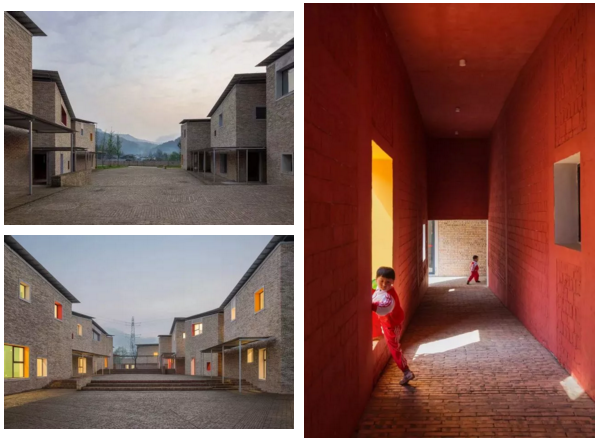
In building buildings in remote remote villages, material transportation has become a major problem. Chen Yifeng finally used the materials commonly used by local villagers to build houses, such as clay bricks and shale bricks, to inject the history and memory of the village into the new building and inject new meaning and value into the ruins after the earthquake.
Japan, as a country prone to earthquakes, also has an architect who always pays attention to the victims of disasters. He is the Japanese architect Ban Mao. After being inspired by an exhibition, Ban Mao began to seriously think about the possibility of paper as a building material, and continued to study and try, successfully building a series of successful buildings with paper as the material.
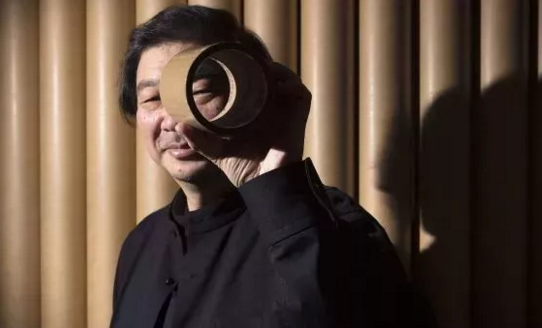
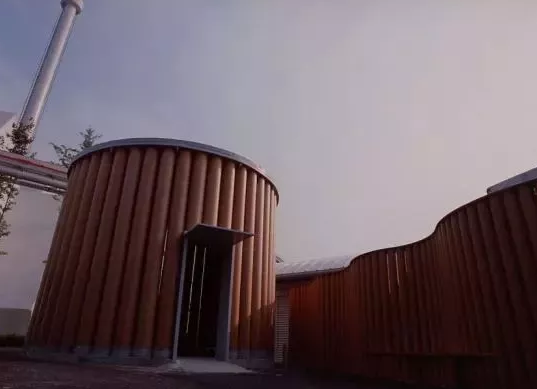
Paper Arbor, a small lounge built by Banmao with paper pipes
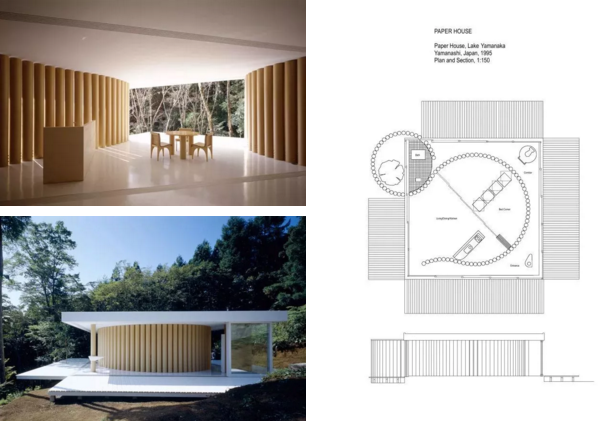
Paper House built of 110 waterproof paper pipes, with toilet, kitchen and movable wardrobe
The house he designed has only two kinds of people to live in: either refugees or very rich. He said, "Many buildings are built for people with power and money. Money and power are invisible, so people hire architects to turn them into tangible things, such as memorial buildings. I can also use my experience and knowledge to do things for more people, to do something for those who lost their homes in natural disasters."
So over the past 20 years, Ban Mao has spent most of his time in the disaster area. He has traveled to China, India, Sri Lanka, Haiti, Nepal, Ecuador and other places to build temporary homes for the victims with paper. After the disaster, the price of building materials will become higher, but paper tubes are still cheap and easy to obtain, And according to the construction process and method designed by Banmao, inexperienced people can also participate in it, and the victims can settle down faster after the efficiency is improved.
"When a disaster occurs, people want shelter not only for their bodies but also for their hearts.".
Not only that, Ban Mao also paid attention to other lives of the victims and built a paper tube church for them so that they could have a good prayer environment.
The construction volunteer teacher network (VAN), a non-governmental organization specially responsible for the implementation of disaster relief activities promoted by Ban Mao, once built a temporary school for the disaster area after the 2008 Wenchuan earthquake.
Another Japanese architect, Toyo Ito, said that Sakamoto created a unique school of architecture: social responsibility. Ban Mao only described himself as saying, "I am not the kind of architect who builds shells. My design is always solving problems."
Okay, for preparation Art study abroad Apply for architectural design You don't know if you can find yourself from these buildings a literary creation Collection of Art Studied Abroad A little inspiration.
In the face of natural disasters, human beings are so small. Although ten years have passed and the Beichuan New Area has been built, the survivors can still live and work in peace and contentment. However, the pain caused by the disaster still exists. The dead are gone. I hope the living will mourn and learn to protect themselves.
Recommended information about studying in Natural Light Art:
Natural light art study abroad | The only private residence of architectural design master Zaha was completed
What kind of overseas works collection of architectural design art can get the offer of AA Architectural Alliance College
The training instructor of the art study abroad collection of architectural design went to the battle in person, and the advantages and disadvantages of five "rendering" software were evaluated
This article belongs to the original article of Natural Light International Art Education Team. Without permission, it cannot be reproduced commercially in any form. If it is found, it must be investigated for legal responsibility.