In the process of studying abroad for the postgraduate entrance examination of interaction design, the production of interaction design works requires a wide range of knowledge, so what should be included in your interaction design postgraduate works collection? What is the relationship between interaction design and product design or interface design? The principles of interaction design. Cognitive psychology provides the basic design principles for interaction design. These principles include mental model, perception/reality mapping, metaphor, and manipulation. These principles are mostly mentioned in The Design of EverydayThings.
Interaction designers first conduct user research related fields, as well as the behavior of potential users to design artifacts, and evaluate the design quality from the aspects of usefulness, usability and emotional factors.
In plain language, this is to establish the design connection between people and products and services according to people's psychology, pay attention to people-oriented user needs, and do user demand oriented behavior design. When you use two different systems, Windows and IOS, you will have different feelings. For example, the placement and size of the close key, the distribution and characteristics of modules will bring different feelings. At this time, you can say that their interaction design is different, so you will have different user experiences.
The Relationship between Interface and Product Field in the Interaction Design of Graduate Students Studying Abroad
History and origin of interaction design
Bill Moggridge put forward the concept of interaction design in the late 1980s. It was initially named "SoftFace" and later renamed as Interactive Design.
In 1989, Gillian Crampton Smith created a master's degree education in interaction design at the Royal College of Art in London (initially called "computer related design", later renamed "interaction design"). In 2001, she founded the Interaction Design Institute in Ivrea, which specializes in research and education of interaction design. At present, many educational institutions around the world have carried out interactive design education.
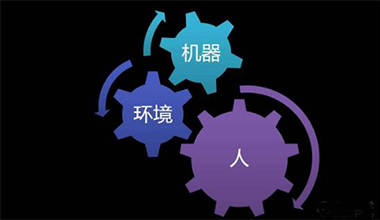
Interaction design should be people-oriented
The interaction design of graduate students studying abroad solves product design from the perspective of "goal orientation":
1. It is necessary to form an opinion on how people want to use the product and why people want to use it.
2. Respect users and their goals.
3. For product features and use attributes, there should be a complete form, not too simple.
4. Looking into the future, to see what products might look like, they are not necessarily like the current situation.
Problems and current development of interaction design
Interaction design In the design and production process of any artifact, it is unavoidable, and the difference only lies in the conscious and unconscious. However, with the increasing complexity of products and user experience, the increasing functions, and the emergence of new artifacts, the increasing cognitive friction caused to users, people's demand for interaction design has become more and more explicit, thus triggering the call for its theory and practice as a separate design discipline has become increasingly urgent.
However, because the researchers and practitioners of interaction design come from different fields, and the field itself is still in the creation stage, people often have not reached a consensus on some problems, and even the understanding and solutions of similar and identical problems may also have different solutions, which are contradictory. For example, the basic elements of interaction design are still under discussion.
However, people still have some non repudiation consensus. For example, interaction design is a dialogue between designers and objects, and the essence of interaction design research and practice may be hidden in this dialogue. The purpose of interaction design includes design and improvement of usefulness, ease of use and attractiveness.
Especially in the digital era, multimedia makes the research of interaction design more diversified, and the analysis from various perspectives of multiple disciplines makes the interaction design theory more abundant. Now more and more products based on interaction design have been put into the market, and many new products have also absorbed the theory of interaction design.
Relevant fields
Research related design fields, graphic design, product design, art design, industrial design, etc.
Relationship between interaction design and interface design
User interface is the natural embodiment of the results of interaction design, but it cannot be said that interaction design is user interface design. The starting point of interaction design is to study the psychological mode and behavior mode of people when they communicate with things, and on the basis of this research, design the interaction modes that can be provided by artifacts to meet the three levels of human needs for the use of artifacts (effectiveness, usability and emotionality). From this perspective, interaction design is a design method, and interface design is the natural result of interaction design. At the same time, interface design is not necessarily driven by explicit interaction design, but interface design must naturally include interaction design (how people and things communicate)
It should be noted that interactivity is not limited to technology related systems. People naturally need to interact with each other. Therefore, interaction design can be applied to various human related activities, such as services. The designers of this kind of interaction will use the methods and principles of interaction design under different names.
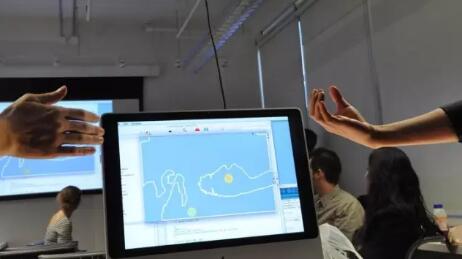
Relationship between interaction design and product development
Before interaction design and experience design were proposed, product design always handed interaction design to relevant personnel for implementation in some way. In this sense, product design has always included interaction design to meet people's use needs; However, when people realized that simple interface planning could not meet people's needs, interaction design began to appear as an independent design phase. And some researchers and practitioners have proposed that interaction design needs to be implemented before technical design after the preliminary product strategy is formulated, which can avoid excessive losses caused by inefficient interaction to product development and release.
Steps of making interactive design portfolio for postgraduate study:
Common software for interactive design portfolio production
Common software requires skilled use of software;
1. Any wireframe drawing tool, such as:
Visio, OG on Mac, PowerPoint, Axure, BalsamiqMockups, etc
2. For any wireframe+visual design tool, vector tools are preferred, such as:
Fireworks, AI, Sketch, etc
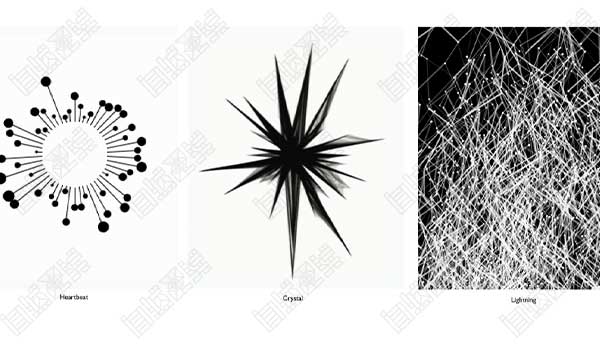
3. Any prototype tool, such as:
Axure, Flash, HTML+Javascript, etc
General steps of interaction design portfolio
Generally speaking, interaction designers follow similar steps to design and provide a solution for a specific design problem (note that there is no absolutely correct solution). The key of the design process is rapid iteration. In other words, establish rapid prototype and improve the design scheme through user testing.
Main contents of interaction design portfolio
Interaction design is a discipline that pays special attention to
1. Define the product form closely related to the behavior and use of the product.
2. Predict how the use of the product affects the relationship between the product and the user, as well as the user's understanding of the product.
3. Explore the dialogue between products, people and material, culture and history.
Key points of the production steps of interactive design portfolio:
User research
By means of user research (intervention observation, non intervention observation, interview, etc.), interaction designers investigate and understand users and their related use scenarios, so as to have a deep understanding of them (mainly including the psychological mode and behavior mode of users when using), so as to provide a good basis for subsequent design.
conceptual design
By comprehensively considering the results of user research, technical feasibility, and business opportunities, interaction designers create concepts for the design goals (the goals may be new software, products, services, or systems). The whole process may iterate back and forth several times, and each process may include brainstorming, conversation (unreserved conversation), refining conceptual models and other activities.
Create user models Scenarios/Personas/Profiles
Based on the user behavior patterns obtained from user calls, designers create scenarios or user stories or storyboards to describe the possible future forms of products in the design. Usually, designers design user models (persona) as the basis for creating scenes
Create interface process
Generally, interaction designers use wireframe to describe the function and behavior of design objects. In the wireframe, the details of the system are described in a pagination or screen splitting manner (with annotations of relevant parts). The interface flow diagram is mainly used to describe the operation flow of the system.
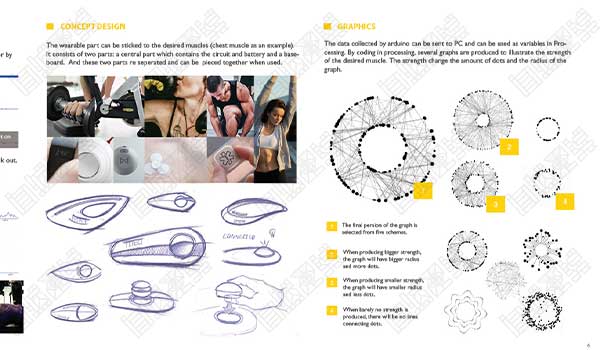
Interactive design test works focus on creating interface process
Prototype development and user testing
Interaction designers test design solutions by designing prototypes. Prototypes can be roughly divided into three categories: functional test prototype, sensory test prototype and implementation test prototype; In summary, these prototypes are used to test the quality of user interaction with the design system. The prototype can be physical or computer simulation; It can be highly simulated or roughly similar.
realization
Interactive designers need to participate in the implementation of the scheme to ensure that the scheme implementation is strictly loyal to the original design; At the same time, necessary scheme modification shall be prepared to ensure that the modification will not damage the complete concept of the original design.
System test
In the testing phase after the system is implemented, design defects may be found through user testing; The designer needs to make reasonable modifications to the scheme according to the situation.
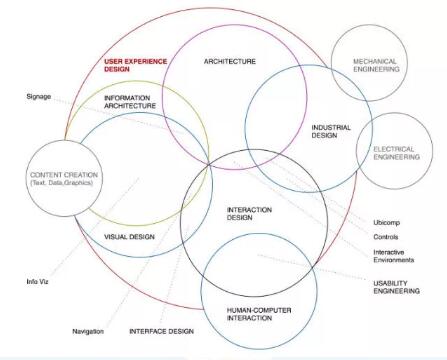
Design principles of interactive design works
Cognitive psychology provides basic design principles for interaction design. These principles include mental model, perception/reality mapping, metaphor, and manipulation. These principles are mostly mentioned in The Design of EverydayThings.
Fields where interaction design can be applied
Interaction designers usually work in the following fields: software interface design, information system design, network design, product design, environment design, service design and comprehensive system design. Each of the above fields needs its own design characteristics, and at the same time, it will also use the general principles and practices of interaction design.
Relationship between interaction design and other product related activities
Interaction designers usually need to participate in different activities in the team, such as graphic design, programming, user psychology, user testing, product design, and so on. Therefore, interaction designers need to have a good understanding of the above fields in order to cooperate with experts in different fields.
Human computer interaction design
The popularity of networked devices has given birth to social interaction design (SxD). Human computer interaction design focuses on the interaction between people and the direct interaction between people and devices. The key elements of human-computer interaction include interpersonal communication, oral communication, written communication, pragmatics of conversation, etc. These related elements can no longer be fully described by the principles of cognitive science. Therefore, sociology, psychology and anthropology need to be introduced as the support of designer design.
Design chaos of domestic interaction design
Design chaos
1. Many products are designed by visual designers without interaction designers, and the user experience of the products is not guaranteed. It can only be changed over and over again.
2. In the process of communication with the visual designer, the interaction designer has differences. Sometimes, the visual designer will delete some practical information or add some lines that have no meaning because of the beauty of the product. The product usage needs to be considered.
Overview of interaction design
As a new discipline focusing on interactive experience, Interaction Design came into being in the 1980s. It was proposed by Bill Mogrich, a founder of IDEO, at a design conference in 1984. He initially named it "Soft Face", Because the name easily reminds people of the popular toy "Cabbage Patch doll" at that time, he later renamed it "Interaction Design" - interaction design.
From the perspective of users, interaction design is a kind of technology to make products easy to use, effective and pleasant. It is committed to understanding target users and their expectations, understanding the behavior of users when interacting with products, and understanding the psychological and behavioral characteristics of "people" themselves. At the same time, it also includes understanding various effective interaction methods, and enhancing and expanding them. Interaction design also involves multiple disciplines, as well as communication with people from multiple fields and backgrounds.
The purpose of interaction design is to establish an organic relationship between the product and its users through interactive design of the product's interface and behavior, so as to effectively achieve the user's goal.
In short, interaction design is the behavior of artifacts, environments and systems, as well as the design and definition of shape elements that convey this behavior. Unlike traditional design disciplines, which mainly focus on form, more recently they focus on content and connotation. Interaction design first aims to plan and describe the behavior of things, and then describe the most effective form to convey this behavior. Interaction design draws on the theories and technologies of traditional design, usability and engineering disciplines. It is a complex with unique methods and practices, not just a partial superposition. It is also an engineering discipline with different methods from other science and engineering disciplines.
Natural light art education article recommendation:
How to choose a school for graduate students studying in American art
Interaction Design of Goldsmith College, University of London _ Postgraduate Student _ Studying Abroad in the UK _ University Ranking
This article belongs to the original article of Natural Light International Art Education Team. Without permission, it cannot be reproduced commercially in any form. If it is found, it must be investigated for legal responsibility.