"Yale's Art Department Commits Suicide". Commentary Magazine used such a sensational headline in its latest news. So what happened to the art department of Yale University? It is because Yale University cancelled the art history course. Let's have a detailed understanding.
The reason why Commentary Magazine adopted such a report is that Yale University today publicly decided to cancel their famous research course "Introduction to Art History: Renaissance to the Present".
If ordinary universities cancel their courses, it will not cause too many related sensations and disputes, but this time Yale University is different. Almost all the mainstream media and news in the art world are reporting and expressing relevant views and positions.
The reason lies in the course itself, which is very important in contemporary art circles, and even can be called the benchmark of western art history. However, this course, which has far-reaching influence in the art world, has caused controversy in recent years because of its excessive reliance on Western themes.
Eventually led to Yale University For the comprehensive consideration of cultural diversity, we chose to suspend the teaching of the introduction to art history, and said that in the future, four equally outstanding introductory courses in art history will appear as alternative courses, including "European and American art history in chronological order", "Introduction to Asian and African traditional art", "Global sacred art", "Global decorative art", and "Silk Road" And other theme courses.

Yale University
This move of Yale University has caused a lot of controversy in the art circle, and also indicates the trend of world art development in the future. Is Yale's art history course suicidal or self saving? Today, we will collect the views of global art practitioners from many aspects for students, and comprehensively analyze the implications behind the changes of Yale University's art history curriculum.
Implications behind the changes of Yale University's art history curriculum
Why has the Renaissance always been the leading role in the study of art history?
Although at first glance, this change is considered from the perspective of artistic diversity. However, many western art media and critics still expressed strong incomprehension, disappointment and protest against Yale's move. Commentary Magazine, which we mentioned at the beginning of the article, declared that "the art department of Yale University decided to commit suicide", is one of them.
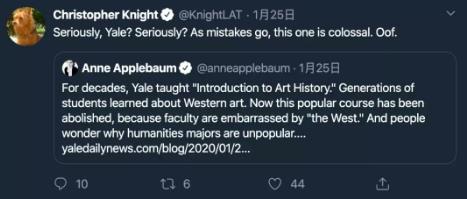
Christopher Knight, a famous art critic, openly believes that Yale's decision is a huge mistake
However, if we want to analyze the reasons for their opposition to the Yale University's reform of the art history curriculum, we must go back hundreds of years ago. The study of art history in art schools is based on the unwritten "convention" of the Renaissance.
Indeed, in the students' cognition and the teaching system of art colleges, European art represented by the Renaissance has always been the protagonist in the history of art, and even many courses have focused on this period of history.
A large number of advanced artists at that time, represented by Leonardo da Vinci, Michelangelo and Rafael, the three great masters of the Renaissance, almost formed the foundation and model of art teaching in later generations. For a long time, mainstream art educators and art critics have also recognized this teaching model.
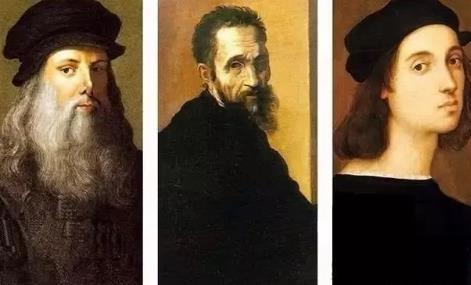
Three heroes of the Renaissance
One reason is that the art history teaching based on the art history of the European Renaissance can basically concentrate on the main features of European art, and have a clear understanding of the main art schools.
The second is that the Renaissance is the most representative of the extensive research on the popularity of art history, and it is also more conducive to learning from the art schools of the Renaissance, so that students can initially form the foundation of art history.
Therefore, among the art practitioners who oppose it, some people also mentioned that although it does add cultural diversity to art students, after all, this course is a public optional undergraduate course for any major. This setting means that students who are not art majors can no longer learn about art history through only one course.
The Causes of the Curriculum Reform of "Art History"
Although we can see some opposition voices, most people still have a positive and supportive attitude towards Yale's decision. After all, since the opening of the art history course, there has been no way out of the stereotyped thinking pattern of westernization, whiteness and even masculinity.
The official explanation of Yale University's art department for their curriculum changes is also for this purpose. In his letter to the University Arts Association, Tim Barringer, chairman of the Yale University Arts Department, mentioned that "art history is a global discipline." "Yale professors have made a transformative contribution to the study of American art, African art, African diaspora, Asian and Islamic art."
"Art is not only European art from ancient times to the present, but also the diversity of our teachers and knowledge interests, which is similar to the diversity of today's student groups. Our view focuses on how to ensure the diversity of research and resources while providing knowledge for our teaching."
Tim Balinger also said that the art department of Yale University has always been committed to studying a variety of arts, architecture and visual culture. Especially in recent years, life has become more and more visual oriented, such as through screens and lenses, and the influence of art history on key visual analysis has become unprecedented important.
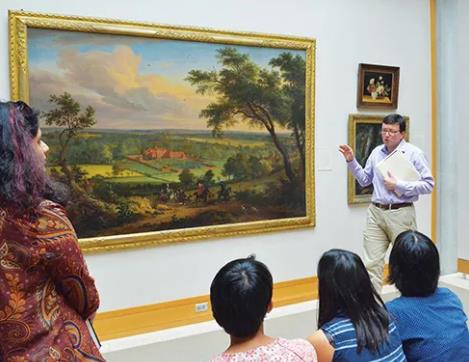
Professor Tim Barringer is teaching
Balinger himself is also a professor of Yale University's "Introduction to Art History: From Revival to the Present" course research. He believes that in the process of teaching, the course is actually teaching with the concept of western art history. "This is not a comprehensive introduction to the global art history. Everything we talk about is from the western perspective."
Because of this, Yale University, as a top university, has carefully changed the course of art history research that originally focused on the Renaissance into four new courses that fully consider the diversity of art.
The inevitable trend of cultural diversity
And if Yale University can decide to publicly stop its flagship courses, it must also reflect that there must be something different in the art world. This change is the inevitable trend of artistic diversity in the world.
In fact, in recent years, the major art schools we are familiar with have taken action in respect of cultural diversity. As early as 2018, Rhode Island took the lead in launching two new majors with far-reaching footholds: Global Arts and Cultures and Nature – Culture – Sustainability Studies; Last October London University of the Arts The newly established Decolonizing Arts Institute of the UAL even points to the serious contemporary social problem of decolonization.
Let's take ten years as a representative to review the outstanding works of art in the past years. In 2000s, most of the works of art still remained in visual art, color matching, genre and other relatively pure art itself. Although there will also be protests and criticisms related to history and current affairs and politics, there are not many outstanding works related to human community and cultural diversity.
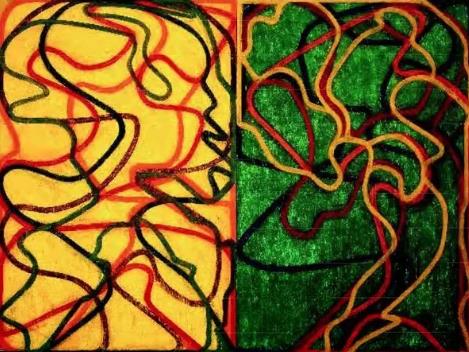
EVENT Brice Marden 2004-7
On the contrary, in 2010s, we saw a large number of "non cognitive mainstream" artists emerge and become outstanding works of art. Kara Walker, an American contemporary painter with black culture as its characteristics, is one of them. It is these artists who belong to the "minority group" in the past art history who began to speak for themselves after their rise, and also for many non western mainstream arts that should have their own history and culture.

The Katastwof Karavan,2018
The necessity of cultural diversity for the development of modern art, or for the teaching of modern art, is far more profound than we imagine. Imagine that if a student starts his study of art history at school, he will understand the so-called "orthodox education" with a single perspective, a single level or even a single style.
Without understanding the art history of various cultural foundations, class perspectives and thinking styles, students' thinking will also be limited to the so-called traditional rules. It is also difficult for art to develop and progress from the root.
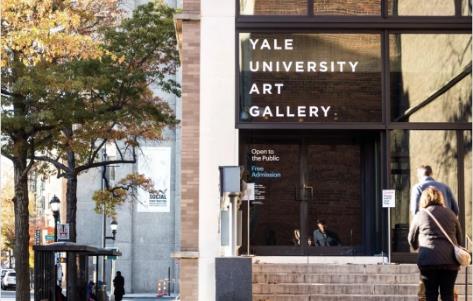
Source: Yale Daily
We believe that Yale University did not make this decision out of its disapproval, denial or even provocation of Renaissance art, as the opponents said. Instead, students should not only accept the art history of the Renaissance, and even the art history should not be limited to "Western art history".
The Renaissance, which we have admired for hundreds of years, was not formed precisely because of the challenge to the feudal religious autocracy in the Middle Ages?
Returning to the current art learning, this decision of Yale University also represents that in the future art education world, the original mode of taking western traditional art as the mainstream will increasingly shift to cultural diversity. Such a change is not a bad thing for students, even a good thing.
In fact, students in foreign art colleges are a manifestation of cultural diversity. The emphasis on cultural diversity will certainly help colleges and universities understand our artistic creation based on our own culture. Especially on the premise that Yale University has set a decisive example for the art world.
Students should also consider how to reflect cultural diversity on the basis that admissions officers and professors can understand when preparing work collections, college interviews and studying abroad.
Because after Yale University started the reform of the art history curriculum, it is estimated that the curriculum changes related to other art colleges will not be too far away. What students can do is to make psychological preparations in advance, and try to choose a creative theme that conforms to the common characteristics while bringing some personal characteristics. We also hope that foreign art schools can increasingly accept multiculturalism with an open and compatible attitude, and every student can get an offer of dream school!!
More Yale articles recommend:
Is Harvard/Yale/Stanford and other "Ivy League colleges" that everyone aspires to really suitable for art study?
How about online art professional collection training? What does the Admissions Officers Alliance say
This article belongs to the original article of Natural Light International Art Education Team. Without permission, it cannot be reproduced commercially in any form. If it is found, it must be investigated for legal responsibility.