Oxford University has a long history, but no one can tell exactly when it was founded. The founding story of Oxford University is quite vivid. According to local people, Oxford University was founded in 1167, when King Henry II ordered that theological students in Britain be forbidden to study theology or religion at the University of Paris. As a result, a group of religious scholars and students slowly gathered here and gradually became the prototype of the college. 2020QS World University Ranking, Oxford University Ranking 42020USNews World University Ranks 5th in the World
In other words, the establishment of Oxford University was due to the early "brain drain" problem. However, there are also data indicating that its teaching activities can be traced back to 1096. If we calculate from then on, Oxford has a history of more than 900 years. There is no doubt that Oxford University is one of the oldest universities in human history. Some historians said that Merton College was the earliest college; Others say that University College is the origin of universities. No matter which statement is correct, it will not damage the lofty academic status of Oxford University, which is composed of 46 colleges today. At present, Oxford University is composed of 39 colleges and seven permanent private colleges established by the church.
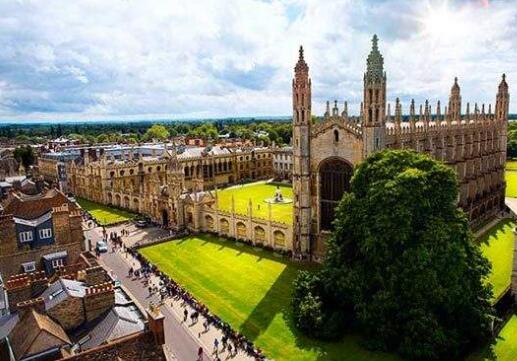
Colleges are not divided by specialty, but in the process of development, each college has gradually formed its own characteristics. For example, Christ Church is famous for its strong aristocratic atmosphere; Merton College has produced many poets; St Edmund Hall particularly likes to recruit athletes; Oriel College focuses on cultivating priests; Magdalen College has many rowing masters. These colleges are equal to each other, and students can study in any college until graduation. With the exception of seven colleges, which are limited to graduate students, the remaining 32 colleges and seven permanent private colleges all enroll university students (or part-time graduate students). Some of these colleges only accept male students (such as Oriel) or female students (such as St. Hilda's, St. Hugh's and Somerville), while most of them accept both. As far as the colleges themselves are concerned, they all have quite independent management power. The college formulates its own rules, raises the necessary financial resources, and enrolls students of its own choice. However, anyone who wants to study at Oxford University must obtain the consent of the university department and college at the same time, which is regarded as the requirement of official admission, and is also a special feature of Oxford University and Cambridge University.
The biggest function of the college is to take care of students' accommodation, arrange various sports and group social activities, and assign tutors to take care of students. Due to the different financial status of each college, some colleges are very rich, with vast venues and good facilities or benefits, such as guest houses, libraries and research rooms. The role played by the university is mainly to represent each college externally, uniformly arrange lectures and seminars, and uniformly issue diplomas. Therefore, in essence, the relationship between students and their colleges is far more than that of universities.
Today, Oxford University has about 250 undergraduate courses and more than 300 graduate courses, attracting more than 22000 students to study here. About 40% of Oxford students come from all over the world.
Oxford University is the largest research center in Britain. The university has published more scientific research and academic reports in the world's top journals than any other university in the UK. At the same time, Oxford University is also the academic institution with the largest number of scientific research patents in the UK, with more than 100 companies. At present, most of the more than 1500 high-tech enterprises in Oxford have deep cooperation with schools.
More relevant UK universities:
What are the highlights of the second brush illustration of Cambridge Master's degree?
How much is the cost of studying in Cambridge University? What are the application requirements of Cambridge University
This article belongs to the original article of Natural Light International Art Education Team. Without permission, it cannot be reproduced commercially in any form. If it is found, it must be investigated for legal responsibility.