In the first half of the 20th century, many Chinese artists went to France to study abroad National Institute of Fine Arts, Paris Based on the analysis of the archives of the French National Archives, due to the large number of Chinese students, this phenomenon can be called the "China Wave of Paris Gaomei". From 1914 to 1955, more than 130 Chinese students were registered in the preparatory classes (les galeries) and oil painting and sculpture studios (les ateliers).
At the same time, this phenomenon is the most important and unique in the wave of Chinese artists studying in France and even studying in the West. It basically reflects the situation of Chinese artists in France at that time, or more generally, in the whole Western society. Thus, in the evolution process of China's modern art field, this wave played a crucial role through the process of "cultural transfer", which was mainly reflected in the social, technical and artistic levels, thanks to the special relationship between China and France at the beginning of the 20th century (that is, "the dialogue between the two republics"). However, as the leaders of various art schools study in different studios, Paris Gome has also become a place of competition between different schools of Chinese modern art. Among them, Xu Beihong (1895-1953) is the most important because he has a unique and clear social and artistic strategy, which is consistent with the academic art training and experience he received in Gaomei, Paris. His course is to create an unprecedented original art in China's western painting, ink painting and many other art fields by fully mastering college painting, artistic anatomy and historical theme painting. In addition, after the 10th and 20th centuries, since the 1930s, the wave of "Paris Gaomei China" has bred Xu Beihong's central position in the field of Chinese and French education and art. This high and beautiful Chinese wave in Paris, which is attached to academic education and French academic art, has become an important element to explain the modernity of Chinese art in the 20th century.
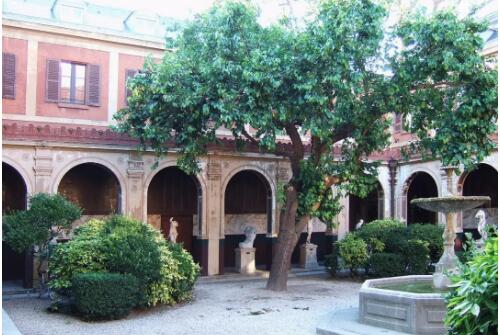
go National Institute of Fine Arts, Paris reason
1. The number of Chinese students is very small
2. Beautiful environment, suitable for learning
3. Language teaching in public universities with sufficient class hours
4. The art course helps students transition, and it is easier to enter the professional stage after the preparatory course
Major setup of Paris National Academy of Fine Arts
Fine Arts (Plastic Arts): French oil painting , sculpture, engraving, etc
Space design (environmental art): interior design, environmental design
2D game design, costume design, film
regular academic offerings
It not only involves theoretical teaching (art history, aesthetics, art psychoanalysis, art history and theory, anthropology and history, film, literature), but also includes technical courses (morphology, oil painting skills, architectural design, model making, casting, carving, casting, lithography, screen printing, murals, sculpture, painted glass, photography, computer and digital technology, etc.).
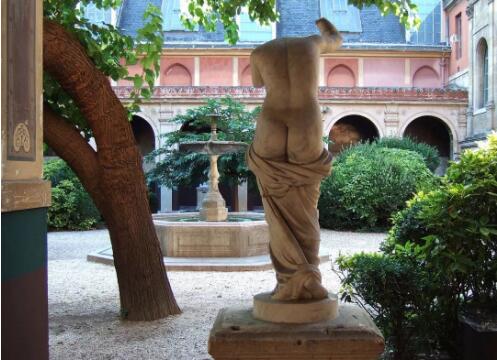
Teaching courses
The college combines traditional art education with contemporary art Provide students with five grades of higher education in three directions: art practice, theory, and skills In order to effectively and flexibly improve students' skills, in addition to providing professional guidance from studios and tutors, the school regularly organizes meetings and exchanges with artists from all over the world, as well as travel creation. Each student can choose different countries to learn and create according to their own creative direction.
Diploma awarding
The college has awarded 3-year DNAP (National Diploma in Plastic Arts) and 5-year DNSAP (National Diploma in Advanced Plastic Performance).
Special plan and scholarship subsidy
The college's highest diploma Post dip ô me (post diploma) "Senna" special program. Its target audience is young French or foreign art students; Select 2~6 artists every year (planned for 2 years); The candidates can obtain relevant resources to carry out a personal creation plan that has already started through research, criticism and experiment.
Application conditions:
Candidates must have a master's degree (Stage 2) or equivalent; In addition, the time for obtaining a diploma must be more than one year; Foreign candidates must have good French proficiency The admission procedure for candidates of "Senna" special plan: first, pre selection is conducted according to the art archives, and then an interview is conducted for the pre selected candidates by a review committee composed of famous people in the art world. Candidates can receive a subsidy of 3000 euros per year.
How about the National Academy of Fine Arts in Paris
The Paris National Academy of Fine Arts is located in the Saint Germandepe area, leaning against the left bank of the Seine River and facing the Louvre, which has witnessed the development of the entire European art. The classical sculptures in the Academy, whose arms were broken and heads turned by the French Red Guards, also told special stories; Its staircase classroom has no wooden stool with neither shape nor decoration, which also records its long and heavy history. In a sense, the Paris Academy of Fine Arts has long existed not only as a national institution for education, exhibition and communication, but also as an artistic and cultural heritage of France and even Europe as a whole.
The Paris Academy of Fine Arts has spanned 300 years of rise and fall, and each change of it has an unusual impact on art education in France and even the world. As the only existing art institute in France that aims to cultivate pure artists, the purpose of case study on it is obvious. The National Academy of Fine Arts in Paris came from the glorious tradition and studied the whole process of its formation, development, crisis and decline. As well as the various responses made by the Academy of Fine Arts to the artistic reality in various historical periods, it is of great significance for us to study the Western Academy of Fine Arts to provide positive reference for the reform of higher art education in China.
Since the founding of the Paris National Academy of Fine Arts in the 17th century, students have been required to receive training in some theoretical benchmarks, including anatomy, perspective, etc., but all these requirements have been applied to the practice of drawing male body sketches out of the inheritance and respect for the academic theory. For three centuries, until today, the term "college" has contained such a second level implication: that is, painting a nude model, or a nude statue of an ancient mythological hero, and introducing the spirit of reason into it. In painting, the dessin is more important than the color - the initial form of this word in French has the meaning of abstraction, meaning "the initial, main structure". The line sketch copied by the model includes and condenses all aspects of artistic creation: beauty, expression, emotion, composition, ethical value, literary allusions, scientific knowledge, belief in classicism and divinity, etc.
At the entrance of the campus, there are two busts of two French artists who established the two major trends of French art in the era of Louis XIV. One is Nicolas Poussin (1594-1665). His creation is famous for the beauty of tranquility and optimism. For 250 years, he has been an important reference and model of French art education, The other is Pierre Puget, whose skepticism and resistance in his art are reflecting on Poussin's confident spirit.
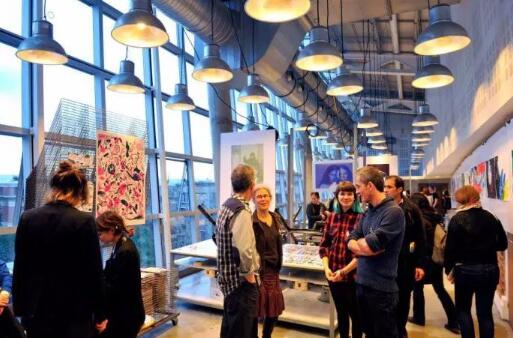
As a famous art school, it is very strict in enrollment. It is one of the most difficult schools to enroll in the national GRAND ECOLE university system.
The Paris Academy of Fine Arts still stands quietly on the left bank of the Seine River after three hundred years of wind and frost baptism. In a sense, the Paris Academy of Fine Arts has long existed not only as a national institution for education, exhibition and communication, but also as the artistic and cultural heritage of France and even Europe as a whole. It is also a place where many artists with artistic achievements in the world study. Now it has always attracted the eyes of art talents all over the world. There are not many people walking around the college, but in twos and threes. Everyone is very quiet, sitting or standing, walking or running, enjoying a quiet literary time.
If you want to apply for the art major of the Paris National Academy of Fine Arts, you can come to the Natural Light Art Study Abroad Training Works Collection.
More articles related to the major of Paris National Academy of Fine Arts:
Application requirements and fees of Paris National Institute of Fine Arts
Design portfolio training [interior/architecture/landscape/architecture], classic case analysis of overseas portfolio
This article belongs to the original article of Natural Light International Art Education Team. Without permission, it cannot be reproduced commercially in any form. If it is found, it must be investigated for legal responsibility.