The design concepts related to sustainable development are also hot for art majors in recent years. Although the Royal College of Arts has not set up an independent sustainable design major, almost every discipline of its architecture school has mentioned the importance of sustainable development, especially the MA course of environmental architecture, which is run through by sustainable development. How about the environment and architecture major of Royal Academy of Arts? Today, we will take a look at how RCA, as the leader of design colleges, delivered its answer paper in the face of the new global proposition of sustainable development.
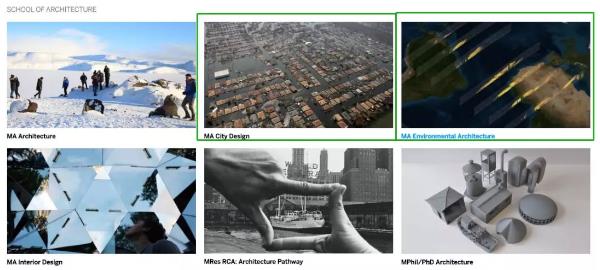
Source: Home page of RCA official website
MA Environment Architecture
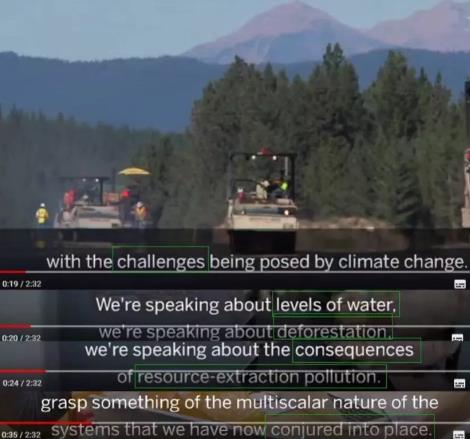
The Royal Academy of Arts Environmental Architecture is a 15 month postgraduate course. When we enter Royal College of Art On the introduction page of environmental architecture on RCA's official website, the first thing introduced was not a large text introduction, but a video featuring Godofredo Pereira, the head of environmental architecture.
Source: Home page of environmental architecture major of RCA's official website
In such a short two-and-a-half minute video, Professor Godofredo highly succinctly summarized the significance of environmental architecture and its differences from other design majors.
In his video, he repeatedly stressed that in the face of severe global climate change, water level, deforestation, resource plunder and environmental pollution are very serious, so environmental architecture is a very important and challenging discipline.
Therefore, his requirements for environmental architecture are not only architecture, but also simple design. Professor Godofredo highly emphasized the concept that the subject of the whole academic project must finally be put into practice.
At the same time, the cooperation projects provided for students majoring in environmental architecture are not limited to RCA, or even just professionals in architectural design disciplines. Professor Godofredo mentioned that when students finish their courses and enter the society, it is impossible to only cooperate with professionals.
The engineers, economists and even scientists, politicians and philosophers that students need to face in practice are the real challenges that should be "practiced" in the learning process. Based on this concept, we can easily see that this subject, which is clearly called MA, actually has higher requirements for students' comprehensive abilities in all aspects, especially the concepts of politics and philosophy, than other art disciplines.
Curriculum of Environment and Architecture of Royal Academy of Arts:

Curriculum of Environment and Architecture of Royal Academy of Arts
First of all, from a macro perspective, the environmental architecture major of the Royal Academy of Arts is not divided into courses according to subjects as we generally know. Based on the teaching form, the curriculum is divided into six parts——
Research studios based on practice;
Seminars focusing on student debate;
Technical workshops dominated by professors and visiting experts;
Media studies based on media practice;
One to one practice instructors for independent research projects
And the unified critical history research curriculum of the whole school.
Do you still feel a little abstract? It doesn't matter. Let's expand to see the specific course objectives and tasks of the subject, as well as examples of student assignments.
Royal Academy of Arts Environmental Architecture
Research Studios Curriculum
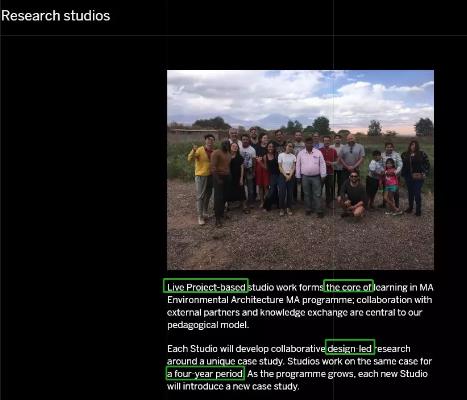
The first research studio course is also known as the core of the whole environmental architecture specialty. The feature of the course is that it is all composed of practical on-site projects. Although the official still emphasizes "design leadership", it can be seen from the drawings on the official website that this is by no means a course that you can draw design drawings in a studio. Let's take a look at the relevant display pictures on the official website.
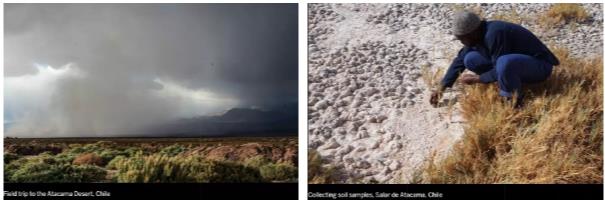
Sample photos of environmental architecture of Royal Academy of Arts
The above picture shows the project photos of the field survey in the Acatama Desert in Chile. We can feel the landing and authenticity of the so-called field project. Due to the timeliness of environmental issues, the research topics of the research studio are updated every four years.
In 2019-2020, the research will be divided into two topics: Lithium Triangle Research Studio, The Orange range and the Hutan.
The first topic is Lithium Triangle Research Studio - "Lithium Triangle", which means the triangle area of lithium raw material chemical extraction composed of Chile, Argentina and Bolivia. The research goal is to change the environment with buildings, and to solve the two problems of non carbonized technology and non western ecological concepts.
The second project, The Orange range and the Hutan, is about the topic of forest fire that we are familiar with recently, which aims to study the reconstruction of forest system after fire and the impact of human habitation on natural forest structure. Also worthy of attention of the students is the tutor assignment of the second project.
Royal Academy of Arts Environmental Architecture Tutor Settings
In addition to the professional professor (Dr Irenda Radjawali), the research partners include a government reformer (Monica Tanuhandaru) who is good at managing corruption and security issues, and a non-profit environmental protection organization (BRG). This lineup of tutors also echoes the idea advocated in the subject introduction that students should not only cooperate across disciplines in the academic field, but also jump out of the design itself to cooperate with people in different fields and discuss environmental protection issues.
Although such projects will update and iterate, we should see through the project the good intentions of the college in carrying out such courses. What the school really wants students to master is not only limited to architecture or design, but also they hope that through the medium of design, students can have more macro concepts about sustainable development and earth ecology.
In addition, the seminar course focusing on student debate is also very interesting. Let's take a look at the course introduction:
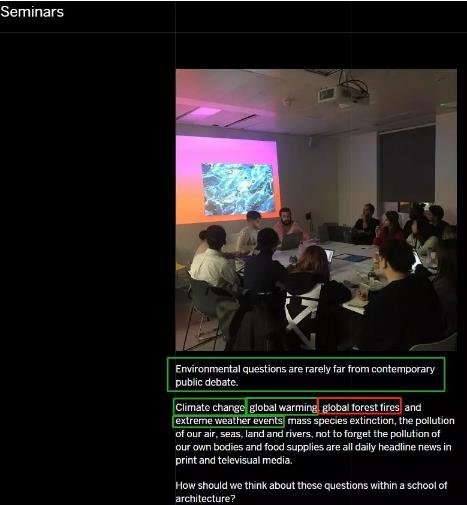
Royal Academy of Arts Environmental Architecture
Seminars Course Introduction
The first sentence seems to point out the doubts in the minds of the students. The topic of general environmental architecture is rarely mentioned on the contemporary public debate platform as a topic of inquiry. But it is precisely because of this that the college has set up such courses with originality. In the course introduction, in addition to the recent global forest fires, the officials also cited several environmental protection topics that are common in the news and media, such as climate change and global warming.
On the basis of these high public opinion on environmental protection issues, the college official also proposed a guiding methodology. In addition to the most basic academic guidance and design research, there are also activism, law and law, scientific and technological research, and even the public opinion influence of mainstream media, which are listed in the methods that students may apply. This multifaceted and multi angle discussion based on the same problem also shows RCA's determination to make academic research grounded and grounded when setting up the course of environmental architecture.
Another characteristic course that also deserves students' attention is the one-on-one tutor training for independent research projects.
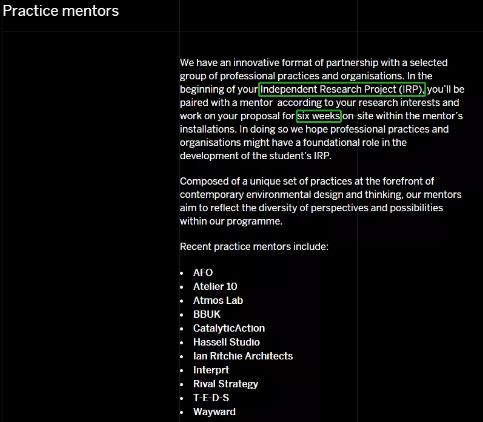
Royal Academy of Arts Environmental Architecture
Course setting of practice instructors
This is an internship course before the final independent project research. Students can choose the project they are interested in in this project, and can follow the tutor for six weeks of practical learning based on one project. The interns are all from the most advanced experimental groups in the environmental architecture design industry.
Taking Atmoslab as an example, it is an environmental designer group that has cooperated with many mature commercial projects such as Lafayette Department Store in France and Crystal Palace in Korea. The internship experience in such a mature designer group is very valuable for both the professional progress and future career.
From this long analysis, the 15 month postgraduate project is full of dry goods, which only accounts for half of the course. It can be seen that RCA is really ambitious in setting up environmental architecture. Such careful curriculum allocation also indirectly proves to students that today, when environmental problems are increasingly serious, as the world's top art schools, they attach importance to sustainable development and environmental protection.
We can clearly feel that the environmental architecture major of the Royal Academy of Arts is not satisfied with the current situation of environmental protection in the design industry in the curriculum and introduction. RCA does not want the concept of environmental protection to simply stay on the realization of design methods, but more to consider the various factors that design ideas need to face when they are launched, and to coach students to solve them.
More recommendations:
How about Manchester City University? What are the entry requirements?
This article belongs to the original article of Natural Light International Art Education Team. Without permission, it cannot be reproduced commercially in any form. If it is found, it must be investigated for legal responsibility.