Photography seems to be an art discipline with the lowest threshold. What are the photography majors in colleges and universities learning about this simple "press the shutter" action? Today, instead of everyone, I "mixed" into the Central Saint Martin School of Art and Design, Lunyi CSM Master of Photography class, became a student of Master of Photography, "tried to learn" contemporary photography, and led you to explore what kind of methodology is there in this truly recorded major?
Lunyi CSM Master of Photography Classroom Experience:
Since photography majors focus on the expression of personal feelings, there are great differences in the professional settings in each university. Let's first understand from the perspective of Course Leader Professor Daniel Rubinstein Central St Martins Major in photography.
The full name of Central Saint Martin's contemporary photography specialty is MA Contemporary Photography; As Professor Daniel Rubinstein said, everyone is a photographer in the 21st century. The new software and technology have promoted the development of photography diversity, and also overturned the meaning of photography in our hearts. Therefore, in Saint Martin's courses, we pay more attention to helping people consider these new forms of contact with photography.
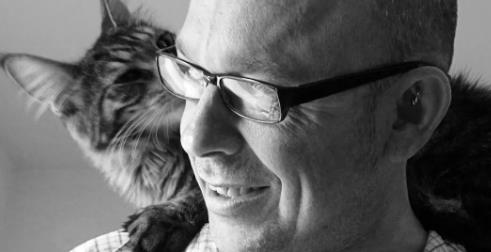
Professor Daniel Rubinstein Image source: UAL official website
The focus of the Master of Arts CSM Photography course is "learning while doing", and the development of practice across the fields of art, visual media, contemporary philosophy and technology. In the course, we try to provide support and encouragement for students' curiosity. Photography is not used as a record or media to study and research, but as a fine art.
"Tough" Professor Daniel Rubinstein
Professor Daniel Rubinstein attended my first day of classes in Central Saint Martin. I had heard about him before I came here. Professor Daniel Rubinstein is not only an excellent artist but also a philosopher. His "Philosophy of Photography" miscellaneous chronicles published by him are considered to be the most authoritative literature research in this field.
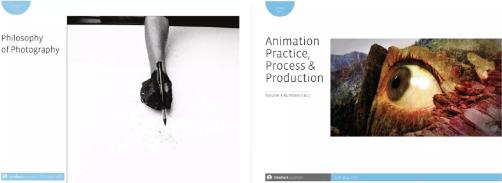
Philosophy of Photography Magazine
At 10:30 in the morning, I have already sat down London University of the Arts In the classroom of Central Saint Martin, the irregular graffiti on the wall and the disorderly placement of props on the ground can vaguely show the usual learning atmosphere of everyone. Professor Daniel Rubinstein entered the classroom on time and first glanced at all the students with a serious face. Then ask: Why didn't A come, and why didn't B. The two students quickly explained that A asked me to take a leave because today was uncomfortable. Another student quickly explained that B asked me to take a leave because he had something to do today. Such a conscientious and responsible professor with such a clear grasp of each student's attendance is not common in British universities, which gives me a sense of urgency to call and sign in at domestic universities.
Next, Daniel Rubinstein asked everyone to explain their harvest last week one by one. Because at the paper stage, people basically talk about their current research topics: for example, migration art/what is body? How to deal with art work after exhibition? Modernism and Post Modernism in art; Art Community and other topics. Daniel Rubinstein's comment is also to the point: what is the body? On this topic, he said, as an artist, you should pay more attention to yourself, so what is your body? What is the end of me? Is life really framed in the body knot? If life can be extended, what is the form of life?
Professor Daniel Rubinstein is also very strict with his classmates. A boy reads according to his notes. Daniel Rubinstein asks him to stop, and then says, look up and tell your research in his own words.
The world is the relationship between "root" and "stem"
The whole question and answer period lasted about half an hour. At 11:00 sharp, today's main course began to analyze the philosophy in A Through Plateaus, and analyze the corresponding works of art according to the philosophy.
Professor Daniel Rubinstein mainly analyzed the philosophical principles in the book:
Principles of connection and heterogeneity:
The professor talked about the first two principles together. In this book, we believe that our current world is the relationship between roots and stems. All things are connected under the surface. There are only lines, no points, no subjects or objects, which also replaces the tree like spirit of traditional western logic.
According to this point, Daniel Rubinstein also said that we can and must connect to anything else, the clothes we wear and the objects we use, all of which are the embodiment of the connection principle. Therefore, all industries, including photography, are experiencing interdisciplinary thinking and ideas, which is an imperative change in the social structure.
Principle of multiplicity:
According to the "rhizome principle", we can understand that any thing is connected to countless other things and can develop other branches. Only when we recognize the multiplicity of the world, we will find that the natural or spiritual reality and phenomena are related to anyone in the world.
Just as we are reading this book now, we also have an emotional connection with it invisibly. When we create, we can use this rule to try to construct our own spiritual thinking structure with all things in the world.
Principle of identifying failure:
We need not be afraid of breaking the connection with an object, because the root may break, but it will repair and re-establish the connection on the original basis. Just like we can never destroy the ant team, because they have formed a root system, which can re form the corresponding system again and again after most of them are destroyed.
Viewing Art from the Perspective of Philosophy
In order to help us understand the application of these philosophical principles in works of art, Professor Daniel Rubinstein also gave us two cases:
-Gift-
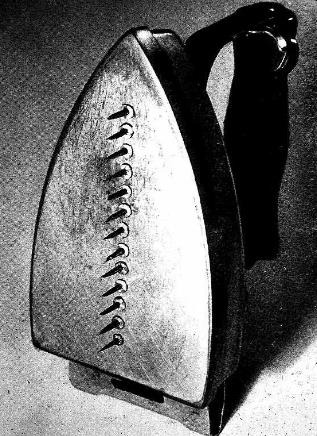
This work was created on the afternoon of the opening day of Man Ray's first solo exhibition in Paris. It was originally a gift for the owner of the exhibition hall, the poet Philippe Soufault. Lei didn't put it in the exhibition until the last minute. However, this work attracted much attention and disappeared after the opening ceremony.
Ray chose a simple and practical object - an iron. He stuck a tack on the bottom of the iron, changing its original function and producing different connections. Since the tack is tightly attached to the iron, which means it can slide smoothly, the combination of these two different objects makes them useless.
-The Head of the Bull-
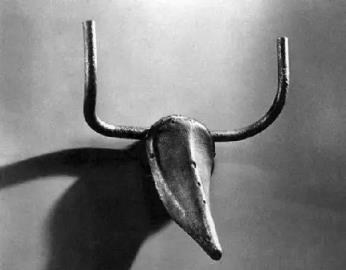
Picasso is a typical change of art from vision to philosophy, which is related to the change of thinking mode. For example, this process is a process of gradually moving from different elements to symbolization. The recognizable features gradually decrease, while the image remains relatively stable. This is the artist's ability to capture features, and also the embodiment of modeling ability.
There are countless attempts in the middle, which is also a change in thinking adjustment, and finally attributed to a totem like primitive people. Some people may say that this is not a show or an expression of incompetence.
Exactly not. Picasso lived in a time when the old and the new were alternating. In the era of war, all good and bad, new and old, were crushed and redistributed. Realistic art has declined for decades, and it is time for a new direction.
Professor Daniel Rubinstein returns to this picture, which involves speculation:
For example, when we identify an object, can we conclude that it is a cow rather than a horse only when it has enough natural features (only when it is painted like a cow)?
If simple symbols can express enough meanings, is it really necessary to have a high realistic ability (the ability to simulate nature)?
If we need to use the simplest and most direct means to express something, how can we retain its characteristics and artistic interest?
Does this highly refined figure have other meanings?
Does the figure have to be descriptive? Can the figure be both functional and beautiful?
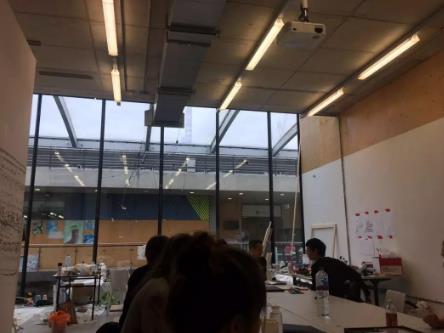
Professor Daniel Rubinstein has constantly triggered our discussion through these questions and changed our thinking angle on painting, images and art through these speculations. After this lesson, I believe that we should not be stuck in the relatively shallow debate about whether the painting is good or not, and our thinking will become more free and accessible.
Impression on Chinese students
The 3-hour Lunyi CSM Master of Photography course ended with everyone's full thought. After class, I also took the opportunity to stop Professor Daniel Rubinstein and had a brief exchange with him.
Daniel Rubinstein told me that he once taught many Chinese students. In his eyes, Chinese students have great potential, talent and understanding. He clearly remembered that a Chinese student had obtained the highest score in his course, and his graduation work had also won the grand prize.
When it comes to the possible problems of Chinese students, Daniel Rubinstein said that "language is a big problem, which will affect their understanding of art concepts, which is a pity." Today, most of Daniel Rubinstein's Chinese students have also grown into excellent artists, curators and photographers.
Finally, referring to the development of photography, Daniel Rubinstein said that it all depends on the students' curiosity about the possibility of photography in the new era, hoping that students can use new materials to become real artists in the contemporary society. Lunyi CSM Master of Photography class experience, the "trial learning" of contemporary photography has ended, and we are walking on the campus. Now it is the early stage of St. Martin's graduation exhibition season. The campus is full of exhibition scenes. Students sit on the ground and communicate while busy. I sincerely hope that our students can also appear in this group of people full of curiosity, expectation and confidence one day.
Natural light shares more topics for you:
Photography major for studying in the UK Introduction to photography schools in the UK
Central Saint Martin College tuition/scholarship/application requirements, is it difficult to apply for CSM
This article belongs to the original article of Natural Light International Art Education Team. Without permission, it cannot be reproduced commercially in any form. If it is found, it must be investigated for legal responsibility.