Is it the second choice for art students to study abroad? Many years ago, art study abroad was the choice of a few rich people, and some people chose it because of their poor performance in China, but now it is not the case. The art industry is increasingly valued. Excellent overseas resources and a large number of international brands have made many people who are full of desire for art choose to go abroad for further education. Today we have summarized a part of the "misunderstood art study circle".
"It's very easy to study abroad in the arts with money!"
This is an old saying. Now the application requirements of various countries are increasingly strict, especially some top universities. Colleges and universities need talents with real talent and practical learning, rather than the rich second generation who come to waste their time.
Many art students who can't study abroad will subconsciously have such a prejudice that foreign colleges and universities can pay for it, which is much easier than domestic college entrance examination and postgraduate entrance examination. In fact, this is not the case. It is common for students who are preparing to study abroad in art to stay up all night during the production of works collection. It is not uncommon that the scheme that takes one or two months to make has problems in the implementation process and needs to be overturned and restarted.

Natural Light Guangzhou Campus Art Student Works Collection Project
It's not easy to get the offer you want. There will also be some cases where students have made great efforts and finally missed the dream school. There is no difference between application and examination, even more difficult. Therefore, this is not a matter that can be solved with money.
In addition, the number of places for international students in top art schools is also limited. The only places for international students are sought by art students all over the world, and the competition is fierce.
Therefore, to say that art study abroad is not just a talk, nor is it a matter of getting what you want with your wallet. Behind the success must be filled with the sweat and tears of the students. Now that you have chosen, don't let down your blood and artistic passion.
"At your CET-4 level, you failed the IELTS/TOEFL test. Where are you from?"
I believe that every art student who studies abroad has heard this sentence, which is generally said by our parents. In their impression, it is the first step to want to go abroad. They even made a military order to their children: if you can't pass the TOEFL/IELTS test, you can't go abroad!
When domestic graduates apply for studying abroad in overseas art colleges, most of them will be required to submit language scores. The purpose is to ensure that your learning will not be a problem due to language barriers. The school usually lists this standard in the basic requirements, which makes many people have the wrong understanding that "language is not enough to go abroad".
In fact, it's not quite true. It's a bit extreme. On the one hand, compared with other majors, art majors do not have very high requirements for language scores, and students do not need to repeatedly brush their language scores to a super high level; On the other hand, many schools will set up language classes for students who have excellent collection of professional works but slightly poor language performance. Such students will also get offers from the school, but will be required to participate in language learning before formal enrollment.

Language courses on the official UAL website
Therefore, it is not so absolute that you cannot go abroad if you cannot brush the language. Most overseas colleges and universities have bridging courses for international students to improve their English ability, such as Lunyi, Edinburgh University of Southampton , New York Vision, Parsons, etc. As long as students' language scores reach a certain level, such as applying for IELTS 5.5 in the UK and TOEFL 75 in the US, they may be admitted to the above schools. As long as they complete language courses abroad, they can successfully enter.
"My teacher said that art study abroad mainly focuses on the part of collection of works. It is OK to do a good job of collection of works. Nothing else is important!"
The collection of works can be said to be the most important part in the art study application, which is beyond doubt, but it does not mean that other links can be omitted. Many applicants will choose to spend most of their application time on the preparation of the portfolio, thus ignoring the improvement of background, standardized scores and other materials.

Photos of art works of students studying abroad in natural light
For any major in any university in any country, the quality of the portfolio in the admission requirements is not the only criterion. The assessment of application also involves comprehensive assessment of background, standardization, documents, etc.
Excellent comprehensive conditions are the powerful weapon for us to win Dream School at one fell swoop. When preparing the application, we should not only focus on the collection of works, and cover the entire application period with the collection of works. This will cause your overall performance to be insufficient in other aspects, leading to the final application failure. Taking the collection of works as the core, it is the wisest choice to improve other materials and professional ability around your works. Everyone must have a balance in time planning and implementation.
"Then I will go abroad for a few years and come back to find a job to win!"
In the 1990s, when going abroad was rare, Chinese young people with dreams rushed to study and work abroad. Overseas metropolises represented by New York were equivalent to gold diggings and dreamland at that time.
But now is no longer the time when we can naturally reap high salaries by virtue of our overseas returnee status. The rational return of the academic value makes foreign students pay more attention to the cultivation of their personal ability. The overseas education has an extra stepping stone in the job search stage. However, if you are just an "embroidered pillow", no amount of good opportunities will slip through your fingers.
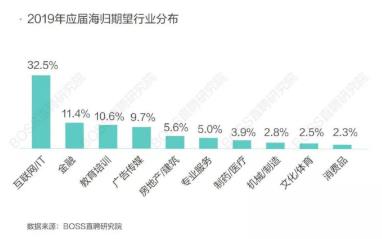
In recent years, China's economy has developed rapidly, and the employment and entrepreneurship environment has been continuously optimized, setting off a new wave of returning home. The latest data from the Ministry of Education shows that in 2019, the total number of Chinese students studying abroad reached 682100, up 8.8% year on year. In the same year, the number of returned students increased by 8% over the previous year, reaching 519400, a record high. recommend: What is the employment prospect of overseas returnees?
The employment prospect of the art study abroad major has always been considerable. When considering the employment problem of a major, we usually think from two aspects: the employment direction of the major and the development trend of the industry in which the major is located.
Whether staying abroad or returning home, entering a large enterprise or choosing to start a business, or entering a national design institute or a university with a design major, it is extremely impressive.
In addition, for graduates from British and American art schools, the designer's salary has entered the top ten of all professional salaries. At the same time, the differentiation of employment competitiveness within the returnees group is more prominent. The ability of domestic employers to screen and identify overseas returnees is also gradually increasing. Without real talent and knowledge, it is difficult for foreign students to find a job without an overseas college diploma.
According to the sampling analysis, foreign students from European and American countries are generally more popular with employers. The average competitiveness of returnees graduated from France, the United States and Germany is the highest, and the average British returnees rank fifth.
To sum up, the ability of art students to study abroad in their own major determines your future development prospects, and overseas learning opportunities should be closely grasped. Constantly improve their professional skills, learn independently and actively participate in social practice and brand internship opportunities. If you have a good plan from the beginning, and will make all-round preparations for your goals in the whole process of studying abroad, the future development will be expected.
More recommendations for studying abroad in arts:
The most complete summary of art study abroad application degree and common art study abroad degree
Is it better for art majors to study abroad in art colleges or comprehensive universities?
This article belongs to the original article of Natural Light International Art Education Team. Without permission, it cannot be reproduced commercially in any form. If it is found, it must be investigated for legal responsibility.